US-Iran war escalates further: second wave of strikes, naval blockade, and threat of "existential war"Amid the fighting: Iran releases US citizen held since 2024Russian missiles hit Kyiv, fires in the capitalZelensky dismisses Defense Minister Fedorov in the midst of warEpstein files: Vance concedes the government "completely botched" their releaseWildfires in Canada: Toronto briefly has the world's worst airFrance passes assisted-dying lawCuba: third nationwide power outage within a weekSouth Korea's central bank raises rates for the first time in three and a half yearsTrump announces new tariffs on BrazilOil and gas prices rise on the Middle East escalationChina's EV offensive pressures Western manufacturersNvidia advances AI robots in Japan, Hyundai takes full control of Boston DynamicsChina clears Apple Intelligence, with Alibaba and Baidu as partnersTSMC heads for record profit thanks to AI boomEU accepts improvements from Musk's platform XUS-Iran war escalates further: second wave of strikes, naval blockade, and threat of "existential war"Amid the fighting: Iran releases US citizen held since 2024Russian missiles hit Kyiv, fires in the capitalZelensky dismisses Defense Minister Fedorov in the midst of warEpstein files: Vance concedes the government "completely botched" their releaseWildfires in Canada: Toronto briefly has the world's worst airFrance passes assisted-dying lawCuba: third nationwide power outage within a weekSouth Korea's central bank raises rates for the first time in three and a half yearsTrump announces new tariffs on BrazilOil and gas prices rise on the Middle East escalationChina's EV offensive pressures Western manufacturersNvidia advances AI robots in Japan, Hyundai takes full control of Boston DynamicsChina clears Apple Intelligence, with Alibaba and Baidu as partnersTSMC heads for record profit thanks to AI boomEU accepts improvements from Musk's platform X
← Archive

The Situation · Edition 13

Monday, 13 July 2026

The war between the United States and Iran has reached a new level: the US military flew its third consecutive night of strikes against Iranian targets, while the Revolutionary Guards responded with missiles against US bases in the region. President Trump openly threatened to destroy underground nuclear facilities and simultaneously imposed a naval blockade as well as a 20 percent levy on all cargo passing through the Strait of Hormuz, to be enforced from Tuesday. Washington and Tehran have thus effectively returned to open war.

In parallel, the Coalition of the Willing showed unity for Ukraine at the Bastille Day parade in Paris, while Russia again struck Kyiv and other cities with missiles. In Hungary, parliament voted to remove Orban loyalist President Sulyok, and following the death of Senator Lindsey Graham his sister Darline Graham Nordone moved into the US Senate. Washington also launched a campaign against the International Criminal Court, while a second death during an ICE operation prompted Mexico to demand criminal proceedings in the United States. In Israel, the Knesset made it easier for the ultra-Orthodox to refuse military service, dividing society in the middle of the war, while in Berlin a coalition dispute over Israel's settlement policy flared up and Serbia's President Vucic advocated a group accession of the Western Balkans to the EU.

Economically, the escalation drove the price of oil to a monthly high and weighed on stock markets, while China's foreign trade grew sharply by almost 17 percent in the first half of the year, carried by the AI boom.

In the technology sector, SoftBank founder Masayoshi Son predicted an annual AI capital requirement of five trillion dollars by 2040, while TSMC is heading for another record quarter and, at the same time, a black market for banned AI chips bound for China is growing.

Hormus-Iran-KriseEuropas WirtschaftUSANahostLieferketten-GeopolitikÖlmarkt

Top story of the day

Geopolitics
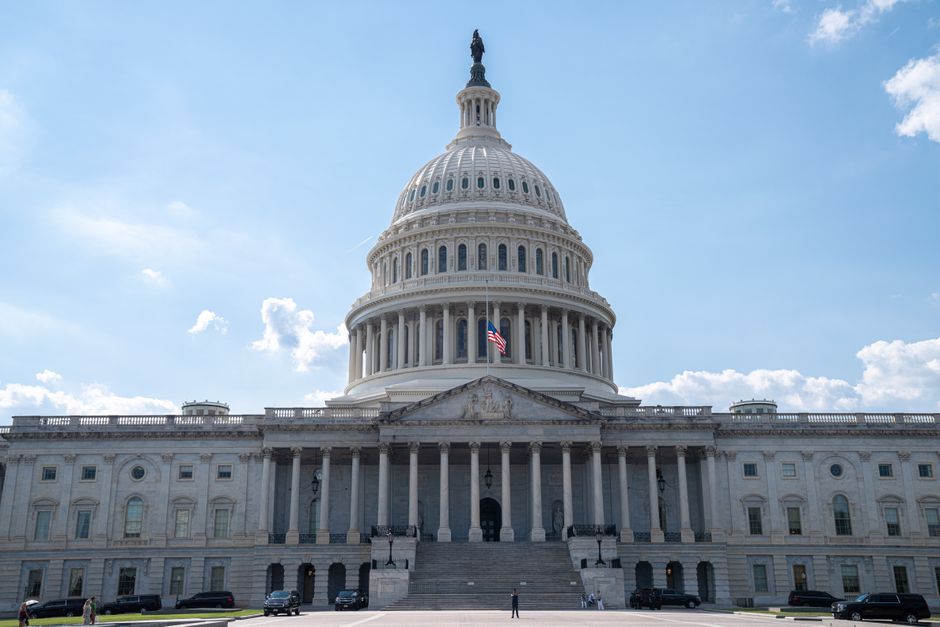
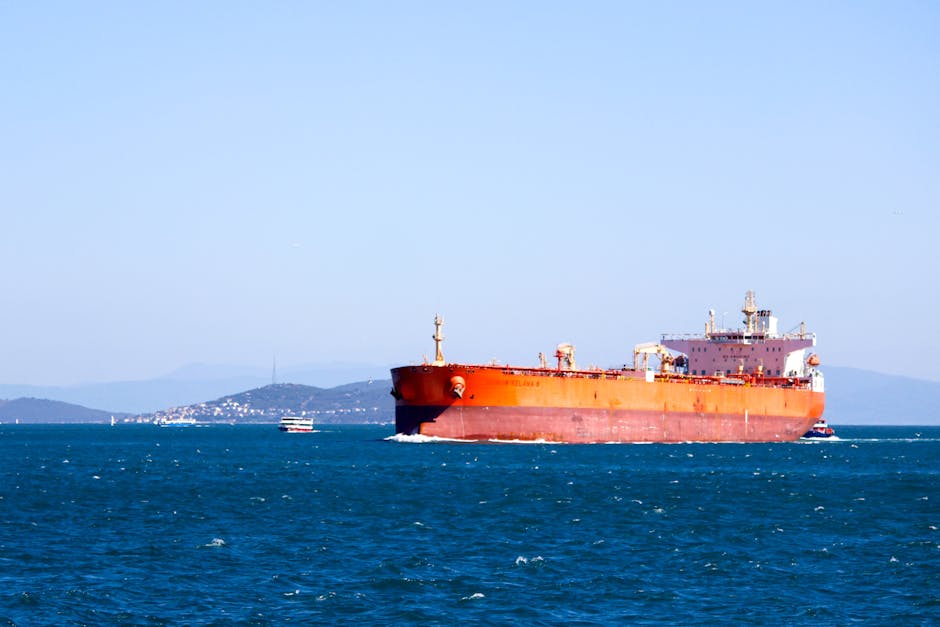
Symbolic image

US strikes Iran for a third night, Tehran hits back

Hormus-Iran-KriseNahost

The US military flew its third consecutive wave of strikes against Iranian targets overnight, while the Revolutionary Guards responded with missiles against bases in the region. Trump openly threatened to destroy underground nuclear facilities. Washington and Tehran have effectively returned to open war.+ more perspectives

According to US Central Command, the attack began around 22:45 Central European Time and hit military targets at several locations in Iran; more than 50,000 US soldiers are stationed in the region. Iran fired missiles at a US air base in Jordan, whose military intercepted four projectiles, and Bahrain and Saudi Arabia's Abha airport also reported attacks (Houthi retaliation). Western mainstream outlets (NYT, Zeit) portray a controlled but rapidly escalating situation; Serbia's Politika (state-aligned) and Qatar's Al Jazeera place greater emphasis on US aggression and Trump's threat against the nuclear mountain "Pickaxe Mountain." The NYT also reports on a failed Israeli operation to build up former President Ahmadinejad as a tool for regime change. Iranian voices barely feature directly in the available sources, and the picture remains dominated by Western and Gulf Arab perspectives. What is undisputed: the brief ceasefire is over, and the front line now runs openly.

New York TimesDie ZeitAl JazeeraReuters

Geopolitics

Coalition of the Willing shows unity at Bastille Day parade in Paris

Europas RaketenabwehrEuropas VerteidigungUkraine-Krieg

To mark France's national holiday, soldiers and fighter jets from several allies of the "Coalition of the Willing" marched through Paris as a sign of support for Ukraine. Macron announced joint maneuvers in countries neighboring Ukraine and intends to allow Kyiv to produce SCALP cruise missiles under license. Ukrainian President Zelensky was guest of honor.+ more perspectives

According to Le Monde, around 500 soldiers from Germany, Australia, Canada, Romania, the United Kingdom, Poland and Ukraine took part in the parade. Macron announced joint coalition exercises in countries neighboring Ukraine and pledged to grant Kyiv a license to produce French SCALP cruise missiles itself, as well as to deliver fighter jets (Meduza, Daily Maverick). Politico Europe emphasizes the European partnership in building a missile defense of its own ("not just for Ukraine"). From a Russian perspective, Serbia's Politika mocks that in the Kremlin the Coalition of the Willing is called the "Coalition of Warmongers." Notably, Serbia's President Vucic was, as the first Serbian head of state, a guest at the parade, which Belgrade celebrates as geostrategic recognition. The sources range from Western-sympathetic to pro-Russian and dismissive.

Le MondeAssociated PressPolitico EuropeDie Welt

Russia again strikes Kyiv and other cities with missiles

RusslandUkraine-Krieg

Russian forces hit Kyiv and other Ukrainian cities overnight with a series of missile strikes. Authorities reported fires in several districts, while Moscow speaks of attacks on arms factories. In parallel, the Kremlin accuses Kyiv of an "unprecedented" campaign against civilian ships in the Sea of Azov.+ more perspectives

The Sueddeutsche Zeitung reports fires in several Kyiv districts, including a burning warehouse; there was initially no information on casualties. The Russian Defense Ministry stated, according to Politika (state-aligned), that it had deliberately hit military factories in Kyiv. Moscow also reports that two sailors were killed in Ukrainian attacks on ships in the Sea of Azov and speaks of an "unprecedented" Ukrainian campaign against civilian vessels. Die Welt, in parallel, examines the use of increasingly autonomous Russian AI drones that identify targets on their own. The accounts of the warring parties are irreconcilable: Western and Ukrainian sources emphasize the shelling of residential areas, Russian ones the destruction of arms targets and their own civilian casualties.

Süddeutsche ZeitungPolitikaDie Welt

Hungary's parliament votes to remove Orban loyalist president

Europas WirtschaftUngarn-Machtkampf

Hungary's parliament has passed a constitutional amendment allowing President Sulyok, a confidant of former Prime Minister Orban, to be removed from office. Prime Minister Peter Magyar defended the extraordinary step. Human rights organizations criticized the move.+ more perspectives

Al Jazeera and the NYT report that parliament passed an amendment enabling the removal of President Sulyok, who was appointed under Orban. Head of government Peter Magyar, who had replaced Orban, defended the process as a necessary break with the old apparatus of power. Critics, including human rights groups, view the action as a problematic encroachment on the separation of powers. The sources (Gulf state-aligned and US center-left) report largely in sober, factual terms; a decidedly Orban-friendly counter-voice is missing from the selection, which makes the situation appear somewhat one-sidedly as a "clean-up."

Al JazeeraNew York Times

After Lindsey Graham's death: sister moves into the Senate

Tod Lindsey GrahamsUSA

Following the sudden death of Republican Senator Lindsey Graham, his sister Darline Graham Nordone takes over his seat for the remainder of the term. Trump dismissed speculation about Russian involvement in Graham's death. The case fuels the debate over the age and health transparency of US politicians.+ more perspectives

The Sueddeutsche Zeitung reports that Darline Graham Nordone is taking over her deceased brother's seat for the remainder of the term. The AP uses the case for a debate about aging top politicians and a lack of health transparency. The pro-Russian Politika highlights that Trump explicitly rejected suspicions of Russian involvement in the death of the prominent opponent of Russia. Politico Europe examines the foreign policy gap that Graham, a vocal advocate of strikes on Iran and a close ally of Israel, leaves behind in Washington. The sources cover US, German and pro-Russian perspectives.

Süddeutsche ZeitungAssociated PressPolitico EuropePolitika

US launches campaign against the International Criminal Court

Trump und die JustizUSA

The US government is moving against the International Criminal Court in The Hague with a campaign. Secretary of State Rubio accuses the tribunal of interfering in US military and law enforcement matters. The State Department says it will rule out no diplomatic options.+ more perspectives

The Handelsblatt reports that the US State Department is openly examining means of pressure against the ICC and does not want to rule out any diplomatic options. The Guardian (center-left) portrays Rubio's push as an attempt to "smash" the global tribunal because it allegedly interferes in US military and law enforcement operations. The move fits into Trump's broader conflict with international institutions and his pressure on the press (NYT subpoenas). Critics see it as an attack on the rules-based order; supporters in the Trump camp regard the ICC as a threat to US sovereignty. The sources are predominantly critical of Washington.

HandelsblattThe Guardian

Second death in ICE operation: Mexico demands criminal proceedings in the US

US-MigrationspolitikUSA

During an operation by the US immigration agency ICE in Maine, a 26-year-old Colombian was shot dead, the second fatal incident within a week. Mexico's President Sheinbaum announced that she would formally file for criminal proceedings in the US over the deaths of Mexican citizens. The cases sharpen criticism of Trump's hardline migration policy.+ more perspectives

Le Monde and the BBC report that Joan Sebastian Guerrero, a 26-year-old Colombian, was shot dead in his car by an ICE agent on Monday in Biddeford, Maine, apparently after a case of mistaken identity. It is the second death within a week, after a migrant was previously killed in Houston. Al Jazeera reports that Mexico's President Sheinbaum intends to formally file for criminal proceedings in US courts over the deaths of Mexican citizens in immigration operations. The conservative Welt reports soberly on the incident, while center-left sources (Le Monde, SZ) emphasize the escalation of ICE violence. The perspective of the US government remains thin in the selection.

Le MondeBBC NewsAl JazeeraDie Welt

Israel's parliament makes it easier for the ultra-Orthodox to refuse military service

Israels InnenpolitikNahost

The Knesset has passed a controversial law that makes it easier for ultra-Orthodox Jews to refuse military service. Critics see it as an affront to the fighting troops. The debate divides Israeli society in the middle of the war.+ more perspectives

Deutschlandfunk reports that Israel's parliament has passed a law that eases military service for the Haredim. The center-left Haaretz comments sharply: the "Torah study law spits in the soldiers' faces," and accuses the ultra-Orthodox of letting secular Tel Avivians die for the flag while they themselves remain in the yeshiva. The sources here are deliberately domestic Israeli and clearly critical of the law; a detailed defense from the religious camp is missing, so the picture comes out one-sidedly at the expense of the Haredim. The dispute hits Israel at a time when conscription is already strained by the ongoing state of war.

DeutschlandfunkHaaretz

Dispute in Berlin coalition over Israel's settlement policy

Europas WirtschaftIsraels Siedlungspolitik

SPD foreign policymakers distance themselves from CDU Foreign Minister Wadephul, who rejects EU sanctions over Israel's settlement policy. In the EU deliberations on punitive measures against Israeli settlers, Germany is blocking. The conflict weighs on the federal government's Middle East line.+ more perspectives

Der Spiegel and Die Zeit report that SPD foreign policymakers criticized Foreign Minister Johann Wadephul (CDU) for his stance in the EU deliberations. The EU foreign ministers discussed sanctions against Israeli settlers and trade in goods from illegal settlements; Germany rejects such steps. The SPD politicians openly disagree and demand consequences regarding Israel's settlement policy. The sources are German and range from center-left to liberal (Spiegel, Zeit, Welt), and they mainly trace the rift within the coalition; Wadephul's official rationale features only briefly. The dispute reveals the growing tension between German solidarity with Israel and European pressure for sanctions.

Der SpiegelDie ZeitDie Welt

Vucic advocates group accession of the Western Balkans to the EU

Europas WirtschaftWestbalkan

Serbia's President Vucic is calling on the EU to admit the states of the Western Balkans together as a group. On the same day he was, as the first Serbian president, a guest at the Bastille Day parade in Paris. Belgrade regards the invitation as geostrategic recognition.+ more perspectives

The Financial Times reports that Vucic is urging the EU to admit the Western Balkan states as a bloc rather than individually; in the same newsletter, Spain's agriculture minister warns that the EU is doing too little to protect its farmers. The Serbian B92 (independent) highlights that Vucic was the first Serbian head of state to take part in the Paris military parade, which Belgrade celebrates as geostrategic recognition. The sources are thin and one-sidedly Serbian or Serbia-friendly; critical voices from the EU or from neighboring states on the Kosovo and rule-of-law question are largely absent, so EU accession here appears above all from Belgrade's perspective.

Financial TimesB92

Economy

Trump imposes naval blockade and 20 percent levy on Hormuz transit

Hormus-Iran-KriseLieferketten-GeopolitikÖlmarkt

President Trump has reinstated the US naval blockade against Iranian ships and demanded a 20 percent levy on all goods passing through the Strait of Hormuz. The measure is to be enforced from Tuesday. Economists warn of a doubling of freight costs for oil and goods.+ more perspectives

Roughly a fifth of the world's traded oil passes through the strait; the NYT calculates that the 20 percent toll could double transport costs. Trump ties the blockade to a demand that the wealthy Gulf states pay for their protection against Iranian attacks (Al Jazeera). The Berliner Zeitung and the AP stress the consequences for consumers: gasoline, gas and heating costs are likely to rise, and oil prices have already climbed by around nine percent. Critics see the levy as a legally questionable charge imposed on international waters; the AP also asks how difficult it actually is to keep the strait open militarily. The sources are broad (US, Germany, Gulf) but weigh Washington's cost-and-power perspective heavily; Iranian counterarguments are largely absent.

New York TimesBerliner ZeitungAssociated PressAl Jazeera

Oil price at monthly high, stock markets under pressure from Middle East escalation

Hormus-Iran-KriseÖlmarktUS-Inflation

Brent crude has risen above 85 dollars for the first time in a month, driven by tensions over the Strait of Hormuz. On the stock markets, dashed hopes of an early end to the war and a retreat from AI stocks weighed on prices. At the same time, investors are awaiting US inflation data and bank earnings.+ more perspectives

Al Jazeera and Reuters report Brent near 85 dollars at a monthly high because of the US-Iran fighting and the blockade announcement. The AP reports that oil prices jumped while AI-driven Asian stocks gave way. Reuters points to the upcoming US consumer prices: falling gasoline prices are likely to have dampened June inflation, but the newly reignited Iran war could undo the progress. Australian economists warn, according to the Guardian, that sustained attacks could drive oil above 100 dollars and make further interest rate hikes more likely. The sources are broad (Gulf, US, UK) and agree in their diagnosis that Hormuz is the central price driver; what remains disputed is how lasting it will be.

Al JazeeraReutersAssociated PressThe Guardian

China's foreign trade grows strongly in the first half of the year

Chinas WirtschaftLieferketten-Geopolitik

China's foreign trade grew by 16.9 percent in the first half of 2026 and exceeded 25 trillion yuan, with imports rising by 22 percent. June exports jumped by 27 percent, driven by the AI boom. Deliveries to Germany also rose markedly once again.+ more perspectives

The state-run Global Times and Xinhua celebrate the half-year gain of 16.9 percent to over 25 trillion yuan, along with an import increase of 22 percent, as proof of China's opening and strength of demand; for the 15th Five-Year Plan, Beijing announces more imports for "balanced" trade development. The AP and the WSJ confirm the 27 percent jump in June exports, driven by AI demand. The Handelsblatt highlights that China's exports to Germany again rose strongly. At the same time, Global Times rejects German criticism: Chancellor Merz's accusation of an undervalued currency is "unilateral pressure." The sources span the arc from state-optimistic (China) to sober (US/Germany); doubts about the sustainability of the growth (weak domestic demand) remain underexposed in this selection.

Global TimesAssociated PressWall Street JournalHandelsblatt

Technology

AI boom drives chip demand: Son predicts five-trillion-dollar requirement

Chip-ExportkontrollenKI-Boom

SoftBank founder Masayoshi Son declared that artificial intelligence will require five trillion dollars annually by 2040, and dismissed warnings of a bubble. TSMC is heading for its fifth record quarter in a row thanks to AI demand, and South Korea raised its growth forecast because of Samsung and SK Hynix. At the same time, a black market for banned AI chips bound for China is growing.+ more perspectives

Reuters and the Financial Times report that Son mocked critics of AI technology ("spitting upward") and puts the AI capital requirement from 2040 at five trillion dollars a year; he sees nuclear fusion as the key to the AI future. TSMC is likely, according to Reuters, to deliver its fifth record quarter in a row, and South Korea, according to the Handelsblatt, raised its growth forecast markedly, supported by the memory chip giants Samsung and SK Hynix. At the same time, an FT feature examines the flourishing black market through which advanced AI semiconductors reach China despite US export controls. The sources are predominantly economically liberal and share the growth euphoria; cautionary voices on the danger of a bubble appear almost only as the target of Son's mockery, which skews the picture optimistically.

ReutersFinancial TimesReutersHandelsblatt