US-Iran war escalates further: second wave of strikes, naval blockade, and threat of "existential war"Amid the fighting: Iran releases US citizen held since 2024Russian missiles hit Kyiv, fires in the capitalZelensky dismisses Defense Minister Fedorov in the midst of warEpstein files: Vance concedes the government "completely botched" their releaseWildfires in Canada: Toronto briefly has the world's worst airFrance passes assisted-dying lawCuba: third nationwide power outage within a weekSouth Korea's central bank raises rates for the first time in three and a half yearsTrump announces new tariffs on BrazilOil and gas prices rise on the Middle East escalationChina's EV offensive pressures Western manufacturersNvidia advances AI robots in Japan, Hyundai takes full control of Boston DynamicsChina clears Apple Intelligence, with Alibaba and Baidu as partnersTSMC heads for record profit thanks to AI boomEU accepts improvements from Musk's platform XUS-Iran war escalates further: second wave of strikes, naval blockade, and threat of "existential war"Amid the fighting: Iran releases US citizen held since 2024Russian missiles hit Kyiv, fires in the capitalZelensky dismisses Defense Minister Fedorov in the midst of warEpstein files: Vance concedes the government "completely botched" their releaseWildfires in Canada: Toronto briefly has the world's worst airFrance passes assisted-dying lawCuba: third nationwide power outage within a weekSouth Korea's central bank raises rates for the first time in three and a half yearsTrump announces new tariffs on BrazilOil and gas prices rise on the Middle East escalationChina's EV offensive pressures Western manufacturersNvidia advances AI robots in Japan, Hyundai takes full control of Boston DynamicsChina clears Apple Intelligence, with Alibaba and Baidu as partnersTSMC heads for record profit thanks to AI boomEU accepts improvements from Musk's platform X
← Archive

The Situation · Edition 12

Sunday, 12 July 2026

The conflict in the Gulf continues to escalate: US Central Command reported a new, completed wave of strikes hitting dozens of targets in Iran, while Tehran responded with Revolutionary Guard attacks on US positions in several Gulf states. The Strait of Hormuz remained effectively blocked, and there is no sign of de-escalation.

Geopolitics shaped the rest of the day as well. In Paris, the Coalition of the Willing discussed joint military exercises and a defense against Russian missiles, while President Zelensky announced a shake-up of Ukraine's leadership, including the removal of the prime minister. Two prominent international figures died: Republican US Senator Lindsey Graham, a longtime foreign-policy hawk and supporter of Israel, at the age of 71, and Qatar's former emir Sheikh Hamad bin Khalifa Al Thani, who shaped the Gulf emirate into a globally influential player from 1995 to 2013, at the age of 74. In Hungary, parliament passed a law to remove the head of state, a move in the power struggle surrounding opposition leader Peter Magyar.

Economically, the Hormuz escalation hit markets hard: oil prices made their biggest jump since April after Trump demanded a 20 percent levy on cargo passing through the strait, while stocks and bonds fell and traders priced in a possible Fed rate hike. VW chief Oliver Blume, meanwhile, reaffirmed that there were smarter solutions than plant closures, without specifying them, leaving the works council and the union skeptical.

In the technology sector, Asian chip stocks came under pressure despite record revenue from TSMC: SK Hynix shares fell sharply after an AI-driven sell-off in South Korea, as investors feared the AI boom was overheating.

Hormus-Iran-KriseÖlmarktUS-InflationEuropas VerteidigungNATOUkraine-Krieg

Top story of the day

Geopolitics
Symbolic image

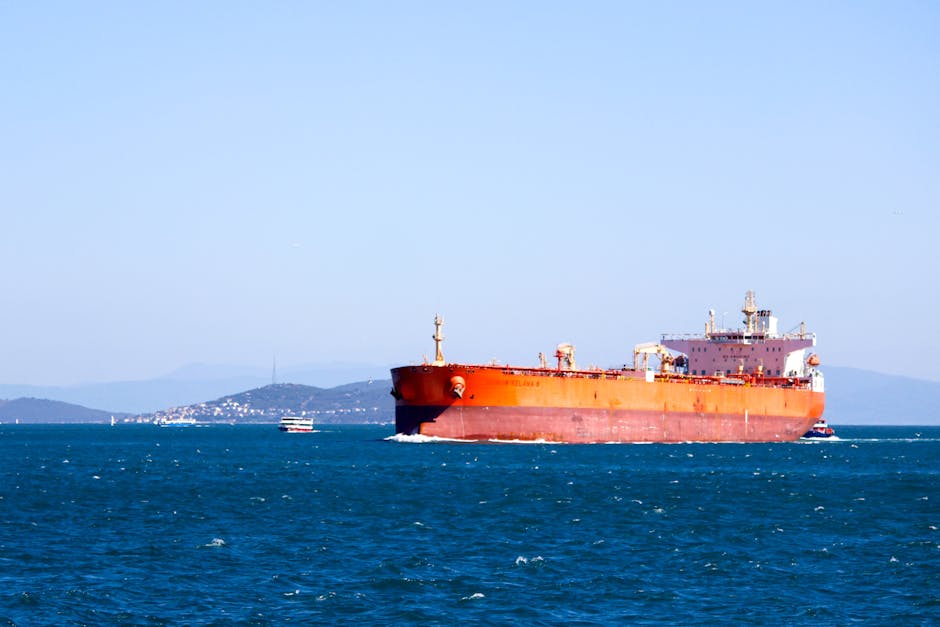
US launches new wave of strikes against Iran, Tehran widens Gulf retaliation

Hormus-Iran-KriseÖlmarkt

US Central Command reported a completed new wave of strikes hitting dozens of targets in Iran. Tehran responded with Revolutionary Guard attacks on US positions in several Gulf states, and the Strait of Hormuz remained effectively blocked.+ more perspectives

On July 12, US Central Command said its latest wave of strikes against Iran had ended and had hit dozens of targets. In return, Iran's Revolutionary Guards reported strikes against US facilities in Jordan, Bahrain and Kuwait, while the Strait of Hormuz remained largely closed to regular traffic. Western and Arab sources (AP, AFP, Daily Sabah) describe a dangerous spiral with no discernible line of de-escalation. State-linked Xinhua stresses US aggression, while a commentary in Israel's Haaretz argues that killing Khamenei has strengthened the regime rather than toppled it. The New York Times puts into context how Trump's earlier Iran deal effectively failed to secure control over the waterway. The range of sources is broad, but on concrete casualty and hit figures it depends largely on claims from the warring parties, which cannot be independently verified.
Associated PressNew York TimesDaily SabahHaaretzXinhua

Geopolitics

Coalition of the Willing meets in Paris, Zelensky reshuffles leadership

Europas VerteidigungNATOUkraine-Krieg

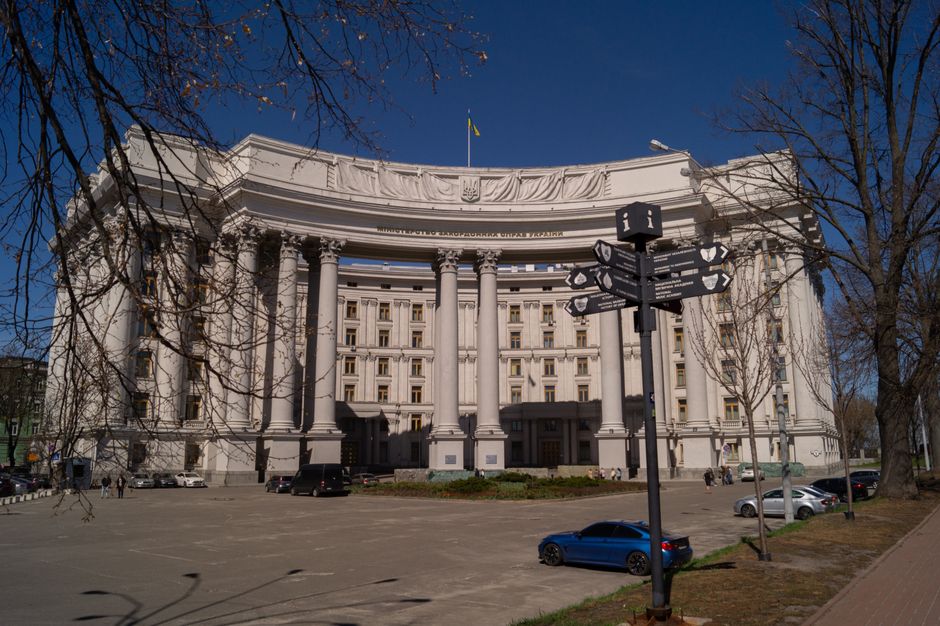
The Coalition of the Willing convened in Paris and discussed joint military exercises and a defense against Russian missiles. At the same time, Zelensky announced a shake-up of Ukraine's leadership, including the removal of the prime minister.+ more perspectives

On July 12, the Coalition of the Willing for Ukraine met in Paris, as FAZ and Der Spiegel reported, with possible joint military exercises and closer cooperation against the Russian missile threat on the agenda. Reuters reported the formation of a coalition designed specifically to counter Russia's ballistic missiles. Turkish Foreign Minister Hakan Fidan took part in the talks after the NATO summit, according to Daily Sabah, underscoring Ankara's involvement. In parallel, President Zelensky announced a broad leadership reshuffle, according to the New York Times, in which Prime Minister Yuliia Svyrydenko is to give up her post, while the war, in Ukraine's reading, is turning in Kyiv's favor. At the same time, both sides reported at least six dead in mutual attacks on infrastructure, according to Daily Sabah. The Western sources paint a picture of stepped-up support, but independent confirmation of the claimed turn in the war is lacking.

FAZNew York TimesReutersDaily Sabah

US Senator Lindsey Graham dies at 71

Tod Lindsey GrahamsHormus-Iran-Krise

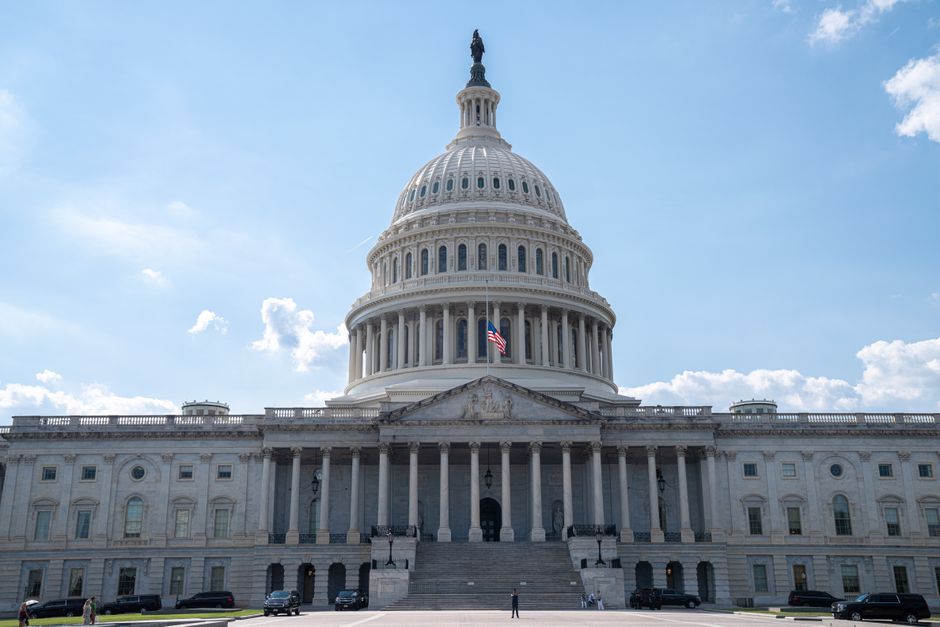
The influential Republican senator and longtime foreign-policy hawk Lindsey Graham has died at the age of 71. He was regarded as a staunch supporter of Israel and of the US strikes on Iran.+ more perspectives

On July 12, AFP, the NYT and The Economist reported the death of Republican Senator Lindsey Graham of South Carolina at the age of 71. For more than two decades Graham was one of the defining foreign-policy voices in the Senate, a hardliner who favored military interventions and a tough Iran policy and firmly supported Israel. The NYT highlights that he backed the US strikes on Iran, even as the wars were eroding American support. Germany's taz portrays him as an old-school Republican, at once friend and foe to Trump. The Berliner Zeitung speaks of a sudden vacuum in US foreign policy. His death comes in the middle of the acute Iran escalation, splitting the assessments between tribute and a critical reckoning with his interventionist course.

New York TimesThe EconomisttazDaily Sabah

Qatar's former emir Sheikh Hamad bin Khalifa Al Thani dies at 74

Tod von Katars Alt-Emir

Qatar's former emir Sheikh Hamad bin Khalifa Al Thani, who ruled the country from 1995 to 2013 and shaped it into a global power, has died at the age of 74. President Erdogan offered his condolences.+ more perspectives

The Qatari government announced on July 12 the death of former emir Sheikh Hamad bin Khalifa Al Thani at the age of 74, as AP and Daily Sabah reported. Hamad had seized power in 1995 in a bloodless palace coup and ruled Qatar until abdicating in favor of his son in 2013. During that time he built the small gas-rich Gulf emirate, with its Al Jazeera broadcaster and active mediation diplomacy, into a globally influential player. Turkish President Erdogan offered his condolences, according to Daily Sabah, and paid tribute to the close partnership. The range of sources is sparse and largely laudatory, with critical assessments of his role, for instance in regional conflicts, absent on this day.

Associated PressDaily SabahDaily Sabah

Hungary's parliament passes law to remove the president

Ungarn-Machtkampf

The Hungarian parliament passed a law enabling the removal of the head of state. The move is seen as part of a power realignment surrounding opposition leader Magyar.+ more perspectives

On July 12, the Hungarian parliament passed a law allowing the removal of the head of state, according to Reuters. The move is placed in the context of the power struggle surrounding the rising challenger Peter Magyar, whose camp is working on a realignment of power relations. The range of sources on this day is extremely thin and one-sided, with only a single report, so that the precise motives, the people affected and the constitutional significance can only be assessed to a limited extent on the basis of the available information. What is clear is that the move comes in a politically charged environment ahead of important domestic political decisions.

Reuters

Economy

Oil price jumps after Hormuz escalation, stocks fall, rate-hike bets rise

Hormus-Iran-KriseÖlmarktUS-Inflation

Oil prices made their biggest jump since April after Trump demanded a 20 percent levy on cargo passing through the Strait of Hormuz. Stocks and bonds fell, and traders priced in a possible Fed rate hike.+ more perspectives

The renewed US-Iran escalation at the Strait of Hormuz hit markets hard on July 12. According to Bloomberg, oil posted its biggest daily jump since April after Trump said he wanted to impose a 20 percent levy on all cargo passing through the strait. Stocks and bonds fell together, as a possible supply disruption revived inflation fears. According to Bloomberg, traders now see roughly a 50 percent chance that the Fed, led by Kevin Warsh, will raise rates as soon as July, with the WSJ calling this Warsh's first major directional decision. Reuters warns that Europe's kerosene stocks would last less than a month if the disruption persists. The conservative Welt criticizes that it is above all the Europeans who are paying the price for Trump's protection-money maneuver. The assessment differs depending on the camp: market-liberal outlets emphasize the inflation risk, European voices the geopolitical dependence.

BloombergBloombergReutersDie Welt

Asian chip stocks in sell-off despite TSMC record

KI-BoomLieferketten-Geopolitik

An AI-driven sell-off in South Korea spilled over into the US, and SK Hynix shares fell sharply. At the same time, TSMC reported record revenue, but investors fear the boom is overheating.+ more perspectives

On July 12, the sell-off in Asian semiconductor stocks continued. Bloomberg reported that SK Hynix ADRs fell about 9 percent in the US after an AI-driven sell-off in South Korea, underscoring growing concerns about an overstretched AI rally. At the same time, the Financial Times warned that TSMC, SK Hynix and Samsung together already account for 29 percent of the MSCI Emerging Markets Index and that investors view this concentration with unease. Set against this was a record quarter for TSMC on the back of strong AI demand, with the company also announcing two new packaging plants in Taiwan, according to Reuters. Daily Sabah points to the downside for consumers, according to which laptops, smartphones and consoles are becoming more expensive due to the AI-driven chip shortage. The camps are at odds: optimists see the TSMC record as proof of the ongoing strength of AI demand, while skeptics warn of a dangerous index concentration and bubble formation.

BloombergFinancial TimesFinancial TimesReuters

VW chief Blume seeks alternatives to plant closures

Europas WirtschaftVW-Krise

VW group chief Oliver Blume said there were smarter solutions than plant closures for cutting costs. The works council and the union are nonetheless preparing the next escalation stage.+ more perspectives

In the battle over tens of thousands of jobs at Volkswagen, group chief Oliver Blume signaled over the weekend that he wanted to avoid plant closures. Speaking to Bild am Sonntag, he said there were smarter solutions, without specifying them, as Welt and Daily Sabah reported. The Süddeutsche Zeitung describes how Blume is becoming publicly isolated and how, in the face of vague hints, both the works council and the union are already preparing the next escalation stage. Daily Sabah places the case in a broader German auto crisis, from which young engineers are also suffering, unable to find a position despite numerous applications. The camps are at odds: management stresses flexibility and alternatives, while the labor side distrusts the unclear savings plans and is gearing up for conflict.

Die WeltSüddeutsche ZeitungDaily Sabah