
US-Iran war escalates further: second wave of strikes, naval blockade, and threat of "existential war"Amid the fighting: Iran releases US citizen held since 2024Russian missiles hit Kyiv, fires in the capitalZelensky dismisses Defense Minister Fedorov in the midst of warEpstein files: Vance concedes the government "completely botched" their releaseWildfires in Canada: Toronto briefly has the world's worst airFrance passes assisted-dying lawCuba: third nationwide power outage within a weekSouth Korea's central bank raises rates for the first time in three and a half yearsTrump announces new tariffs on BrazilOil and gas prices rise on the Middle East escalationChina's EV offensive pressures Western manufacturersNvidia advances AI robots in Japan, Hyundai takes full control of Boston DynamicsChina clears Apple Intelligence, with Alibaba and Baidu as partnersTSMC heads for record profit thanks to AI boomEU accepts improvements from Musk's platform XUS-Iran war escalates further: second wave of strikes, naval blockade, and threat of "existential war"Amid the fighting: Iran releases US citizen held since 2024Russian missiles hit Kyiv, fires in the capitalZelensky dismisses Defense Minister Fedorov in the midst of warEpstein files: Vance concedes the government "completely botched" their releaseWildfires in Canada: Toronto briefly has the world's worst airFrance passes assisted-dying lawCuba: third nationwide power outage within a weekSouth Korea's central bank raises rates for the first time in three and a half yearsTrump announces new tariffs on BrazilOil and gas prices rise on the Middle East escalationChina's EV offensive pressures Western manufacturersNvidia advances AI robots in Japan, Hyundai takes full control of Boston DynamicsChina clears Apple Intelligence, with Alibaba and Baidu as partnersTSMC heads for record profit thanks to AI boomEU accepts improvements from Musk's platform X
Thema.alleThemen

Narrative thread · 15 events

Ukraine War

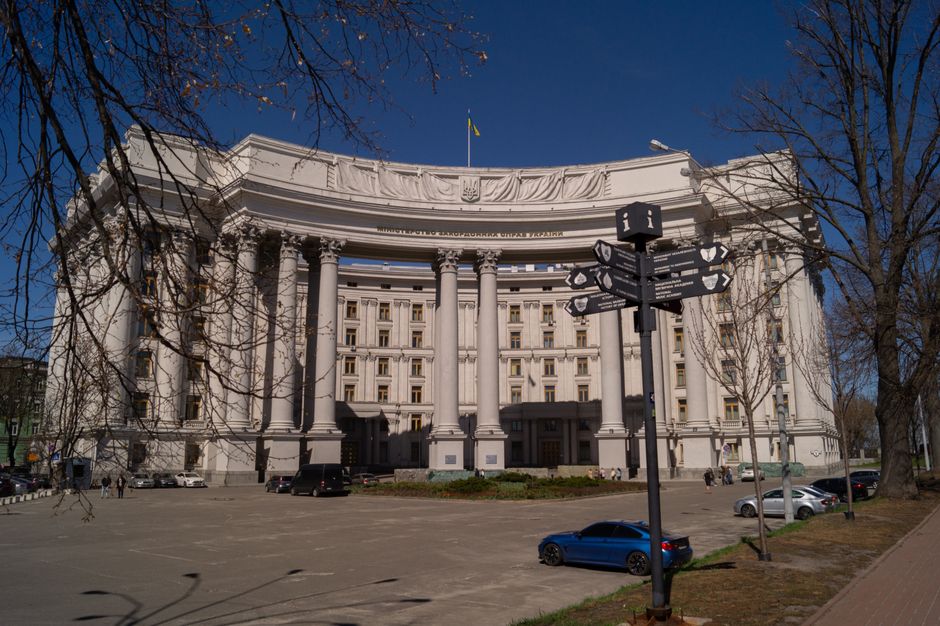
Symbolic image

Since Russia's full-scale invasion of Ukraine in February 2022, Western states have supported Kyiv with weapons, money and training. Since 2025, France and Britain have led the so-called Coalition of the Willing, an alliance of currently around 35 states that are discussing security guarantees for Ukraine after a possible ceasefire and, if necessary, intend to station a reassurance contingent. At the NATO summit in Ankara in early July 2026, the alliance partners pledged Ukraine more than 70 billion euros in military aid for both 2026 and 2027, but the final declaration refrained from offering a concrete membership prospect. At the same time, critical voices are growing: the number of EU states still actually providing military aid fell from 21 in 2023 to 14 in mid-2026, and observers doubt that the Coalition of the Willing could enforce a genuine ceasefire.

WikipediaBundesregierungZDFheute

Timeline in detail

Thursday, 16 July 2026Geopolitics

Zelensky dismisses Defense Minister Fedorov in the midst of war

The Ukrainian president has unexpectedly pushed out Defense Minister Mykhailo Fedorov, a champion of drone warfare, after six months in office. Interior Minister Ihor Klymenko is reportedly in line to succeed him. The move triggered bewilderment and protests, with a prominent volunteer calling it a "fatal mistake."

In a surprise cabinet reshuffle, President Volodymyr Zelensky has removed Defense Minister Mykhailo Fedorov, regarded as a reformer and driving force of Ukraine's drone and robotic warfare. The New York Times attributes the departure to ongoing conflicts with the military top brass and with defense firms over the role of innovative weapons. Politico quotes a prominent military volunteer as saying this was "a fatal mistake that will cost us dearly," and describes Fedorov as a popular reformer. The Russian exile newspaper Meduza reports matter-of-factly that Interior Minister Ihor Klymenko is to take over the post, stressing the short six-month tenure. Le Monde highlights that the departure of the very popular minister comes in the middle of a Ukrainian offensive in Crimea and has triggered bewilderment nationwide as well as solidarity rallies announced for Thursday. Government-aligned voices interpret the move as a consolidation of Zelensky's control, critics as a weakening of a successful arms policy; an official justification from the president is still pending.

Politico EuropeNew York TimesLe MondeMeduzaDie Zeit

Thursday, 16 July 2026GeopoliticsRussian missiles hit Kyiv, fires in the capital

Russian missiles hit Kyiv, fires in the capital

Russia again struck Kyiv with ballistic missiles; explosions were heard in the city during the air-raid alert, and Mayor Klitschko reported several fires. The attacks came shortly after the signing of a drone agreement between the EU and Ukraine. At the same time, Russia accused Kyiv of killing a nuclear plant's chief engineer.

Overnight, Russian ballistic missiles again struck Kyiv; the news agency AFP reported explosions during a missile alert, and Mayor Vitali Klitschko said emergency services were fighting fires in the capital. Al Jazeera places the shelling in the context of a freshly signed drone agreement between the EU and Ukraine intended to bolster Ukrainian arms production. The FAZ additionally points to renewed deaths after Russian strikes in Zaporizhzhia and to the Russian accusation that Ukraine killed the chief engineer of a nuclear power plant; Kyiv responded cautiously, and the accusation is not independently confirmed. The Western and Ukrainian accounts emphasize the continued Russian terror against civilian infrastructure, while Moscow frames its attacks as a response to Ukrainian strikes. The shelling underscores that the war of attrition continues unabated despite diplomatic movement in Europe.

Al JazeeraFAZAFP

Forecast · Assessment
  • Most likely60%

    Russia continues its missile and drone attacks on Ukrainian cities, while EU arms aid and drone cooperation gradually strengthen Ukraine's defenses.

  • Worst case20%

    The attacks hit critical energy or nuclear infrastructure so severely that a humanitarian or nuclear emergency results.

  • Best case20%

    Expanded air defenses and Western deliveries reduce the effectiveness of the attacks and give Kyiv room for negotiations.

Wednesday, 15 July 2026GeopoliticsKyiv reshuffles the government, Russia hits cargo ships in the Black Sea

Kyiv reshuffles the government, Russia hits cargo ships in the Black Sea

Ukraine has accepted the resignation of Prime Minister Yulia Svyrydenko, part of a leadership reshuffle initiated by President Zelensky; the head of the arms conglomerate Ukroboronprom also stepped down after a deadly Russian attack. At the same time, Russian forces fired on two more merchant ships off Odesa, killing one captain.

After only a year in office, Svyrydenko resigned at Zelensky's request; she brusquely turned down an offer to become ambassador in Washington ("Go to hell"), according to Ukrainska Pravda, as the independent Russian outlet Meduza reports. Herman Smetanin gave up leadership of Ukroboronprom after a Russian strike on a depot near Kyiv killed nine people. On these personnel changes the pro-government Turkish Daily Sabah and Meduza report largely in agreement. On the military situation the camps stress different things: the conservative Die Welt and The Wall Street Journal highlight Ukrainian successes, targeted drone strikes on Russian oil refineries that caused Moscow "big problems," and a sea drone that sank a Russian ship near an estate reputedly linked to Putin. Meduza documents the Russian side: the shelling of two cargo ships flying the Tanzanian and Liberian flags in the Black Sea corridor, with one captain killed and three wounded. Across the camps it is a fact that the war is raging on at the front, in the air and at sea simultaneously, and that Kyiv's leadership reshuffle comes in the midst of that strain.

Die WeltWall Street JournalDaily SabahMeduza

Forecast · Assessment
  • Most likely60%

    The reshuffle consolidates Zelensky's control, and the war of attrition on land, in the air and at sea continues without any territorial shift.

  • Worst case15%

    The attacks in the Black Sea corridor escalate and draw civilian shipping and coastal states into the war.

  • Best case25%

    Ukrainian strikes on Russia's energy infrastructure and the government reshuffle improve Kyiv's position and open a window for negotiations.

Tuesday, 14 July 2026GeopoliticsEU fails to pass 21st Russia sanctions package

EU fails to pass 21st Russia sanctions package

The planned 21st EU sanctions package against Russia was not adopted. According to reports, France and Italy blocked an entry ban for Russian fighters in Ukraine.

According to both sources, the fact is: the EU did not adopt the 21st sanctions package against Russia. The conservative French Le Figaro provides the detailed account: France and Italy allegedly torpedoed an EU-wide entry ban for Russian fighters demanded by around ten countries, and the measure was postponed. The liberal Taiwanese Taipei Times reports the failure itself soberly and without assigning blame. The perspectives complement each other, with Le Figaro exposing the intra-European blockade constellation, while the Taipei Times, from an Asian distance, registers the episode as a sign of European disunity. A Russian view is not present in the raw reports; the main point of contention is whether the postponement marks pragmatism or weakness in the EU's Russia policy.

Le FigaroTaipei Times

Forecast · Assessment
  • Most likely55%

    The package is ultimately adopted in a watered-down form after further negotiations.

  • Worst case20%

    The blockade hardens and permanently paralyzes the EU's common Russia policy.

  • Best case25%

    Pressure from the countries in favor quickly leads to a viable compromise including the entry ban.

Monday, 13 July 2026GeopoliticsRussia again strikes Kyiv and other cities with missiles

Russia again strikes Kyiv and other cities with missiles

Russian forces hit Kyiv and other Ukrainian cities overnight with a series of missile strikes. Authorities reported fires in several districts, while Moscow speaks of attacks on arms factories. In parallel, the Kremlin accuses Kyiv of an "unprecedented" campaign against civilian ships in the Sea of Azov.

The Sueddeutsche Zeitung reports fires in several Kyiv districts, including a burning warehouse; there was initially no information on casualties. The Russian Defense Ministry stated, according to Politika (state-aligned), that it had deliberately hit military factories in Kyiv. Moscow also reports that two sailors were killed in Ukrainian attacks on ships in the Sea of Azov and speaks of an "unprecedented" Ukrainian campaign against civilian vessels. Die Welt, in parallel, examines the use of increasingly autonomous Russian AI drones that identify targets on their own. The accounts of the warring parties are irreconcilable: Western and Ukrainian sources emphasize the shelling of residential areas, Russian ones the destruction of arms targets and their own civilian casualties.

Süddeutsche ZeitungPolitikaDie Welt

Forecast · Assessment
  • Most likely65%

    The Russian air raids and Ukrainian counterstrikes continue in the familiar pattern, without a territorial shift along the front.

  • Worst case15%

    The escalation in the Sea of Azov and the drone war widen and draw civilian shipping and neighboring states more deeply into the conflict.

  • Best case20%

    Western pressure from Paris and new air defense deliveries noticeably dampen the Russian attacks.

Monday, 13 July 2026GeopoliticsCoalition of the Willing shows unity at Bastille Day parade in Paris

Coalition of the Willing shows unity at Bastille Day parade in Paris

To mark France's national holiday, soldiers and fighter jets from several allies of the "Coalition of the Willing" marched through Paris as a sign of support for Ukraine. Macron announced joint maneuvers in countries neighboring Ukraine and intends to allow Kyiv to produce SCALP cruise missiles under license. Ukrainian President Zelensky was guest of honor.

According to Le Monde, around 500 soldiers from Germany, Australia, Canada, Romania, the United Kingdom, Poland and Ukraine took part in the parade. Macron announced joint coalition exercises in countries neighboring Ukraine and pledged to grant Kyiv a license to produce French SCALP cruise missiles itself, as well as to deliver fighter jets (Meduza, Daily Maverick). Politico Europe emphasizes the European partnership in building a missile defense of its own ("not just for Ukraine"). From a Russian perspective, Serbia's Politika mocks that in the Kremlin the Coalition of the Willing is called the "Coalition of Warmongers." Notably, Serbia's President Vucic was, as the first Serbian head of state, a guest at the parade, which Belgrade celebrates as geostrategic recognition. The sources range from Western-sympathetic to pro-Russian and dismissive.

Le MondeAssociated PressPolitico EuropeDie Welt

Forecast · Assessment
  • Most likely60%

    The announced maneuvers and license production are implemented step by step, and Europe deepens its own defense cooperation without an immediate military leap.

  • Worst case15%

    Russia treats the joint exercises on its border as a provocation and escalates attacks or hybrid actions against coalition states.

  • Best case25%

    European unity strengthens Kyiv's negotiating position and accelerates talks on a ceasefire.

Sunday, 12 July 2026GeopoliticsCoalition of the Willing meets in Paris, Zelensky reshuffles leadership

Coalition of the Willing meets in Paris, Zelensky reshuffles leadership

The Coalition of the Willing convened in Paris and discussed joint military exercises and a defense against Russian missiles. At the same time, Zelensky announced a shake-up of Ukraine's leadership, including the removal of the prime minister.

On July 12, the Coalition of the Willing for Ukraine met in Paris, as FAZ and Der Spiegel reported, with possible joint military exercises and closer cooperation against the Russian missile threat on the agenda. Reuters reported the formation of a coalition designed specifically to counter Russia's ballistic missiles. Turkish Foreign Minister Hakan Fidan took part in the talks after the NATO summit, according to Daily Sabah, underscoring Ankara's involvement. In parallel, President Zelensky announced a broad leadership reshuffle, according to the New York Times, in which Prime Minister Yuliia Svyrydenko is to give up her post, while the war, in Ukraine's reading, is turning in Kyiv's favor. At the same time, both sides reported at least six dead in mutual attacks on infrastructure, according to Daily Sabah. The Western sources paint a picture of stepped-up support, but independent confirmation of the claimed turn in the war is lacking.

FAZNew York TimesReutersDaily Sabah

Forecast · Assessment
  • Most likely60%

    The coalition agrees on further pledges of support and defense projects, but concrete joint troop deployments remain vague and the war drags on.

  • Worst case15%

    Russia treats the Western exercise plans as an escalation and responds with massive strikes, while the Ukrainian leadership reshuffle turns into a domestic political crisis.

  • Best case25%

    The pooled European missile defense has a noticeable effect, Kyiv's military situation stabilizes, and the reshuffle produces a more capable government.

Saturday, 11 July 2026GeopoliticsUkraine expands war capacity: secret drone factory in Germany and attacks on Russian oil tankers

Ukraine expands war capacity: secret drone factory in Germany and attacks on Russian oil tankers

According to reports, a secret factory in Germany is producing AI drones for Ukraine, with the involvement of the defense start-up Helsing. At the same time, Ukraine reportedly attacked Russian oil tankers in the Sea of Azov. Kyiv is thus increasingly shifting the war onto Russia's supply lines and exports.

Ukraine is expanding its military capabilities on several fronts: according to corroborating reports, a secret factory in Germany is producing AI-assisted drones for the Ukrainian armed forces, with the defense start-up Helsing playing a central role. This brings European high technology directly into Ukraine's war logistics. In parallel, Ukraine reportedly attacked Russian oil tankers in the Sea of Azov, continuing its strategy of hitting Russia's energy revenues and supply lines. This approach has shown effect lately, as strikes on refineries have noticeably squeezed Russian processing capacity and triggered fuel shortages inside the country. From the Russian point of view, the tanker attacks are likely to be seen as an escalation, and independent confirmation of the damage is still pending. The reports rest in part on individual outlets (Berliner Zeitung, NYT DealBook), so details are still to be treated with caution. Against the backdrop of Putin's rejection of new peace overtures, the situation is deteriorating further.

New York Times (DealBook)Berliner ZeitungBerliner Zeitung

Forecast · Assessment
  • Most likely55%

    Ukraine continues its deep-strike and tanker attacks and expands drone production further with European partners.

  • Worst case20%

    Russia retaliates for the tanker attacks with massive strikes and widens the front, putting a peace settlement far out of reach.

  • Best case25%

    The growing pressure on Russia's economy brings Moscow to the negotiating table after all.

Friday, 10 July 2026GeopoliticsPutin rejects peace overture as Trump presses for negotiations

Putin rejects peace overture as Trump presses for negotiations

Kremlin chief Putin rejects renewed calls for negotiations to end the war in Ukraine and, according to sources, is preparing a possible military escalation. At the same time, US President Trump is pressing for talks. Russia denies reports of planned exit visas to restrict travel to NATO countries.

According to a report by the Daily Sabah, Vladimir Putin rejects renewed calls for negotiations to end the war in Ukraine and is instead preparing a possible military escalation. This stands in contrast to the efforts of US President Trump, who is pressing for talks, leaving the two camps clearly opposed. In parallel, the Russian Foreign Ministry, through spokeswoman Zakharova, denied reports that Russia intends to introduce exit visas to restrict travel to NATO countries. Meduza also reports that many Russian soldiers would rather accept a prison sentence than go to the front: by May 2025, more than 28,000 Russians had been convicted of unauthorized absence from their units, and the military is increasingly bringing deserters back. The sources are divided: pro-government Turkish and Kremlin-critical Russian outlets, with neutral confirmation lacking.

Daily SabahMeduza (Deserteure)Meduza (Ausreisevisa)

Forecast · Assessment
  • Most likely55%

    The war continues without a negotiating breakthrough, Trump increases diplomatic pressure, and Russia bets militarily on escalation.

  • Worst case25%

    Russia launches a new major offensive, peace talks collapse entirely, and the conflict widens further.

  • Best case20%

    Trump's pressure moves both sides to the negotiating table and leads to a first ceasefire discussion.

Friday, 10 July 2026GeopoliticsRussia's fuel crisis deepens amid Ukrainian drone strikes

Russia's fuel crisis deepens amid Ukrainian drone strikes

Russia, one of the world's largest oil producers, now has to import gasoline and is struggling with supply shortages. Ukrainian drone strikes on refineries have severely dented processing capacity. Consumer gasoline prices rose by 6.88 percent in June 2026 and are nearly 20 percent higher than a year earlier.

Despite vast crude oil reserves, Russia is experiencing an acute fuel crisis: in several regions, residents report long lines and fuel-card rationing. The cause is that Russian crude cannot be turned into sufficient quantities of gasoline because Ukrainian drone strikes are crippling key refineries. Citing exchange data, Meduza puts the price increase at 6.88 percent in June 2026 alone, nearly 20 percent more than a year ago. The crisis developed within a month, and there is no end in sight. Fittingly, Ukrainian President Zelensky signed a decree creating a dedicated "long-range capability command" against Russia, meant to institutionalize deep strikes. From the Russian perspective, the situation is publicly played down; independent data here rely mainly on the Kremlin-critical outlet Meduza and the Berliner Zeitung, which makes the perspective somewhat one-sided.

Berliner ZeitungMeduza (Analyse)Meduza (Preise)Meduza (Selenskyj)

Forecast · Assessment
  • Most likely55%

    The shortages persist for weeks as Russia expands imports and export bans, while Ukraine continues its strikes on refineries.

  • Worst case25%

    Supply collapses in some regions, leading to rationing and unrest, and Russia escalates militarily in response.

  • Best case20%

    Russia quickly repairs refinery capacity and stabilizes the market through imports, and prices calm down.

Wednesday, 8 July 2026GeopoliticsUS Allows Ukraine Local Production of Patriot Missiles

US Allows Ukraine Local Production of Patriot Missiles

President Trump announced that Washington would permit Kyiv to produce guided missiles for the Patriot air defense system in Ukraine itself. The aim is to reduce dependence on deliveries from the West.

Trump stated that the US would allow Ukraine to manufacture Patriot missiles locally, which could ease Kyiv’s chronic shortage of air-defense munitions amid ongoing Russian air strikes. The move would be strategically significant, as it would make Ukraine more independent of protracted foreign deliveries and shift production closer to the front and more resilient to crisis. Details on timeline, scope and licensing terms remained open for now. The report rests so far on a single source and Trump’s own announcement, so its implementation and reach should be assessed with caution.

Daily Sabah

Forecast · Assessment
  • Most likely55%

    Local production comes, but more slowly and on a smaller scale than announced, so the effect on air defense will only become noticeable in the medium term.

  • Worst case20%

    The announcement remains largely without consequence or is later withdrawn, while Russian air strikes keep Ukraine under pressure.

  • Best case25%

    Manufacturing gets underway swiftly and visibly gives Ukraine more defensive capacity against Russian missiles and drones.

Tuesday, 7 July 2026EconomyRussia: Fuel Shortage Drives Motorists to Convert to Autogas

Russia: Fuel Shortage Drives Motorists to Convert to Autogas

In Russia, more and more motorists are having their vehicles converted to liquefied petroleum gas (LPG) after Ukrainian attacks on refineries caused nationwide gasoline shortages and rising prices. Queues are forming outside workshops.

Ukrainian attacks on Russian refineries have led to gasoline shortages and rising fuel prices nationwide, prompting more and more Russians to have their cars converted to liquefied petroleum gas (LPG). Queues are forming outside such workshops, as autogas is considered a cheaper and more available alternative. The development is a visible sign of how Ukrainian deep strikes are hitting the Russian war economy in everyday life and straining the supply situation. The report comes solely from the state-aligned Turkish Daily Sabah, which describes the extent of the shortages; independent confirmation of the scale is missing in this source situation, and official Russian bodies as a rule deny such problems.

Daily Sabah

Forecast · Assessment
  • Most likely60%

    The shortages persist as long as Ukrainian attacks hit the refineries; prices stay high and discontent among the population grows.

  • Worst case15%

    Escalating outages trigger a broad supply crisis with rationing and economic pressure on the war effort.

  • Best case25%

    Russia stabilizes supplies through repairs and imports, so that the shortages ease quickly.

Tuesday, 7 July 2026GeopoliticsAfter Phone Calls with Putin and Zelensky, Trump Hopes for an Early End to the War

After Phone Calls with Putin and Zelensky, Trump Hopes for an Early End to the War

On the sidelines of the NATO summit, Trump said he had spoken by phone with Putin and Zelensky and hoped the war in Ukraine would end ‘soon.’ No concrete commitments or negotiating framework were named.

On July 7, Trump said he had spoken with both Russian President Putin and Ukrainian President Zelensky, and expressed the hope that the war in Ukraine would end ‘soon.’ Details on content, conditions or a possible negotiating format were absent. The statement fits into Trump’s repeated announcements that he could quickly end the war, without any viable framework being discernible so far. The report comes solely from the state-aligned Turkish Daily Sabah, which makes independent assessment difficult; independent confirmations from Moscow or Kyiv are not available in this source situation. Whether words will be followed by deeds remains open.

Daily Sabah

Forecast · Assessment
  • Most likely60%

    The phone calls remain inconsequential symbolism; the front barely moves and a negotiating breakthrough fails to materialize.

  • Worst case15%

    Excessive expectations of a quick end to the war weaken Kyiv’s position, and Russia uses the diplomatic pause for new offensives.

  • Best case25%

    The contacts actually lead to first ceasefire talks with a robust negotiating format.

Saturday, 4 July 2026GeopoliticsUkraine Pushes Russia’s Refining Capacity Down to Just Over 42 Percent

Ukraine Pushes Russia’s Refining Capacity Down to Just Over 42 Percent

On 4 July, the Ukrainian General Staff reported that Russia’s oil refining industry had been pushed down to around 42.5 percent of its design capacity by sustained strikes. Neither Russian nor Ukrainian ground troops advanced that day. According to the ISW, Russia spread exaggerated reports of success.

On 4 July 2026, the Ukrainian General Staff announced that Russia’s oil refining industry had fallen to 42.47 percent of its total design capacity as a result of the ongoing Ukrainian long-range strike campaign. In June 2026, eight Russian refineries were reportedly hit and more than 60 oil tanks were destroyed or severely damaged, 58 percent of them holding petroleum products and 42 percent holding crude oil. According to assessments by the Institute for the Study of War (ISW) and Critical Threats, neither Ukrainian nor Russian ground troops advanced on 4 July. On the evening of 3 July, Putin had conferred with Chief of the General Staff Gerasimov and several front-line commanders; on 4 July, Russian sources made various territorial claims that the ISW classifies as part of the Russian information campaign. The figures on refining capacity and troop movements come predominantly from Ukrainian or Western sources and can only be independently verified to a limited extent.

Critical Threats (ISW)Kyiv PostAl Jazeera

Forecast · Assessment
  • Most likely60%

    The pressure on Russia’s war economy and growing unrest in Moscow open a window for serious negotiations on a ceasefire.

  • Most likely20%

    The pressure on Russia’s war economy and growing unrest in Moscow open a window for serious negotiations on a ceasefire.

  • Most likely20%

    The pressure on Russia’s war economy and growing unrest in Moscow open a window for serious negotiations on a ceasefire.

Thursday, 2 July 2026GeopoliticsUnexplained drone incidents over Europe raise questions

Unexplained drone incidents over Europe raise questions

A series of drone overflights over European territory is puzzling authorities as to who is behind them. Security agencies and analysts are searching for clues about who is responsible for the incursions.

The Economist explores the question of who is behind a series of drone overflights across Europe that are worrying authorities and security experts. Such incursions over sensitive infrastructure and military installations feed fears of targeted reconnaissance, sabotage or hybrid warfare. An obvious suspicion points to Russian actors, who in the context of the war in Ukraine would have an interest in testing European responsiveness and sowing uncertainty. At the same time, experts warn against hastily naming culprits without solid evidence, since other state and non-state actors also come into consideration. The Economist's analysis remains deliberately cautious in attribution and makes the thin evidence transparent. The episode points to a growing grey zone in which drones blur the line between provocation, espionage and open aggression.

The Economist

Forecast · Assessment
  • Most likely55%

    The incidents multiply, the authorship remains largely in the dark, and Europe gradually strengthens its drone defences and airspace surveillance.

  • Worst case20%

    One incident causes damage or a clear state attribution and triggers a dangerous escalation in the already tense relationship with Russia.

  • Best case25%

    Investigations clarify the origin, the incidents prove limited, and Europe responds with coordinated defence without further incidents.

Ukraine War · Bota