
US-Iran war escalates further: second wave of strikes, naval blockade, and threat of "existential war"Amid the fighting: Iran releases US citizen held since 2024Russian missiles hit Kyiv, fires in the capitalZelensky dismisses Defense Minister Fedorov in the midst of warEpstein files: Vance concedes the government "completely botched" their releaseWildfires in Canada: Toronto briefly has the world's worst airFrance passes assisted-dying lawCuba: third nationwide power outage within a weekSouth Korea's central bank raises rates for the first time in three and a half yearsTrump announces new tariffs on BrazilOil and gas prices rise on the Middle East escalationChina's EV offensive pressures Western manufacturersNvidia advances AI robots in Japan, Hyundai takes full control of Boston DynamicsChina clears Apple Intelligence, with Alibaba and Baidu as partnersTSMC heads for record profit thanks to AI boomEU accepts improvements from Musk's platform XUS-Iran war escalates further: second wave of strikes, naval blockade, and threat of "existential war"Amid the fighting: Iran releases US citizen held since 2024Russian missiles hit Kyiv, fires in the capitalZelensky dismisses Defense Minister Fedorov in the midst of warEpstein files: Vance concedes the government "completely botched" their releaseWildfires in Canada: Toronto briefly has the world's worst airFrance passes assisted-dying lawCuba: third nationwide power outage within a weekSouth Korea's central bank raises rates for the first time in three and a half yearsTrump announces new tariffs on BrazilOil and gas prices rise on the Middle East escalationChina's EV offensive pressures Western manufacturersNvidia advances AI robots in Japan, Hyundai takes full control of Boston DynamicsChina clears Apple Intelligence, with Alibaba and Baidu as partnersTSMC heads for record profit thanks to AI boomEU accepts improvements from Musk's platform X

The Situation · Edition 16

Thursday, 16 July 2026

The US-Iran war continues to dominate the situation today. Within a single day, the US military flew a second wave of strikes against Iranian coastal defenses and missile positions, reimposed the naval blockade of Iran's ports, and for the first time also hit the north of the country. Tehran spoke of an "existential war," threatened to halt further energy exports, and reported drone attacks on US bases in Jordan. Into the middle of the escalation came the release of a US citizen held since 2024, which President Trump praised, a slim sign of limited understanding. The ceasefire brokered by Washington the previous week has thus definitively collapsed.

The war is radiating directly onto the world economy: oil prices rose for the fourth day in a row, and Asian gas prices reached their highest level since late March, driven by concern over shipping through the Strait of Hormuz. Elsewhere in geopolitics, Russia again shelled Kyiv with ballistic missiles, while President Zelensky caused bewilderment by dismissing the popular defense minister Fedorov. In the United States, Vice President Vance conceded that the government had "completely botched" the release of the Epstein files. In France, parliament passed an assisted-dying law, in Canada wildfire smoke darkened Toronto, and Cuba suffered its third nationwide power outage within a week.

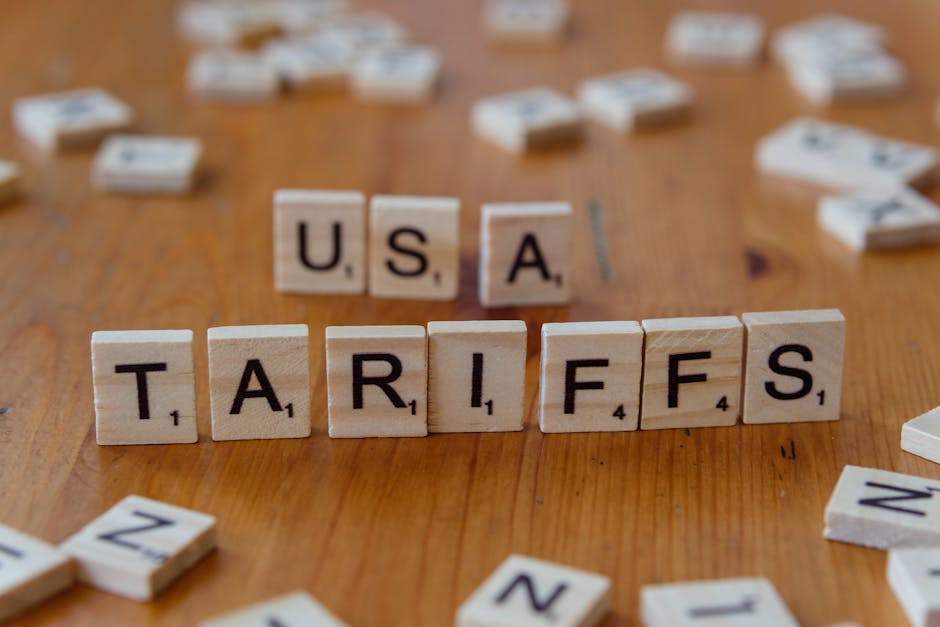
In the economy, the Bank of Korea sent a signal against inflation and record debt with its first interest rate hike in three and a half years, even as many central banks are leaning toward cuts. Trump announced new 25 percent tariffs on Brazil, replacing levies struck down by the Supreme Court, and China's electric-car offensive continues to pressure Western manufacturers, visible also in the fact that Germany's EV subsidy mainly benefits Tesla and Chinese brands.

In technology, the AI boom is showing its strong side: TSMC is heading for a fifth record quarter in a row, Nvidia brought leading Japanese automation firms into its robotics initiative, and Hyundai took full control of Boston Dynamics. China cleared Apple Intelligence with partners Alibaba and Baidu, and the European Commission, after a multimillion-euro fine, accepted improvements from Elon Musk's platform X. AI and robotics thus appear as an engine of growth that at the same time raises new questions of market power and regulation.

Hormus-Iran-KriseNahostÖlmarktRusslandUkraine-KriegUSA

Top story of the day

Geopolitics
Symbolic image

US-Iran war escalates further: second wave of strikes, naval blockade, and threat of "existential war"

Hormus-Iran-KriseNahostÖlmarkt

Within a single day, the US military flew a second wave of strikes against Iranian coastal defenses and missile positions and reimposed the naval blockade of Iran's ports. Tehran spoke of an "existential war" with America, threatened to halt further energy exports, and reported drone attacks on US bases in Jordan. For the first time, targets in northern Iran were also hit.+ more perspectives

According to US Central Command, on Wednesday the US military launched a second wave of strikes on the same day, hitting Iranian coastal defense installations and missile positions after having earlier renewed the naval blockade of Iranian ports. Iran declared it was in an "existential war" with the United States and threatened to cut off further regional energy exports; on Thursday morning the Iranian army reported drone attacks on US military installations in Jordan. The Western-oriented sources (Daily Maverick, FAZ, Haaretz) emphasize the growing US firepower, the pressure on Tehran, the first-time expansion of the strikes into the north of the country, and the disabling of an oil tanker. Al Jazeera, by contrast, highlights the civilian damage and quotes an Iranian doctor as saying a US strike damaged a children's cancer clinic; this account comes from an Iranian source and could not be independently confirmed. Serbia's B92 speaks matter-of-factly of a "second strike" and reports the CENTCOM statement. In parallel, Trump praised Tehran's release of a US citizen, which points to narrow channels amid the escalation. The ceasefire brokered by Washington the previous week is now definitively history.

Daily MaverickLe MondeFAZAl JazeeraB92

Geopolitics

Amid the fighting: Iran releases US citizen held since 2024

Hormus-Iran-KriseNahost

Iran has released Iranian-American dual national Dena Karari, who had been held on espionage charges since December 2024. President Trump said she was "safely out of Iran and in good condition" and thanked Tehran. The release comes in the middle of the military escalation between the two states.+ more perspectives

Dena Karari, an Iranian-American dual citizen whose passport had been confiscated in December 2024 and who had since been barred from leaving the country, has been released, according to Washington. Trump announced the news on Truth Social, describing a wrongfully detained person who was now safe, and expressly thanked Iran. The New York Times and the Guardian frame the move as a rare signal of limited understanding, even as US fighter jets continue to strike Iranian targets. The conservative Welt links the release to the simultaneous explosions near Tehran and the disabling of an oil tanker, stressing the contrast between the humanitarian gesture and the ongoing war. Tehran itself gave no detailed rationale, leaving room for interpretation as to whether it was a show of trust, a negotiating signal, or an isolated humanitarian decision. The sourcing on the precise circumstances of the release remains thin.

New York TimesThe GuardianDie Welt

Russian missiles hit Kyiv, fires in the capital

RusslandUkraine-Krieg

Russia again struck Kyiv with ballistic missiles; explosions were heard in the city during the air-raid alert, and Mayor Klitschko reported several fires. The attacks came shortly after the signing of a drone agreement between the EU and Ukraine. At the same time, Russia accused Kyiv of killing a nuclear plant's chief engineer.+ more perspectives

Overnight, Russian ballistic missiles again struck Kyiv; the news agency AFP reported explosions during a missile alert, and Mayor Vitali Klitschko said emergency services were fighting fires in the capital. Al Jazeera places the shelling in the context of a freshly signed drone agreement between the EU and Ukraine intended to bolster Ukrainian arms production. The FAZ additionally points to renewed deaths after Russian strikes in Zaporizhzhia and to the Russian accusation that Ukraine killed the chief engineer of a nuclear power plant; Kyiv responded cautiously, and the accusation is not independently confirmed. The Western and Ukrainian accounts emphasize the continued Russian terror against civilian infrastructure, while Moscow frames its attacks as a response to Ukrainian strikes. The shelling underscores that the war of attrition continues unabated despite diplomatic movement in Europe.

Al JazeeraFAZAFP

Zelensky dismisses Defense Minister Fedorov in the midst of war

RusslandUkraine-Krieg

The Ukrainian president has unexpectedly pushed out Defense Minister Mykhailo Fedorov, a champion of drone warfare, after six months in office. Interior Minister Ihor Klymenko is reportedly in line to succeed him. The move triggered bewilderment and protests, with a prominent volunteer calling it a "fatal mistake."+ more perspectives

In a surprise cabinet reshuffle, President Volodymyr Zelensky has removed Defense Minister Mykhailo Fedorov, regarded as a reformer and driving force of Ukraine's drone and robotic warfare. The New York Times attributes the departure to ongoing conflicts with the military top brass and with defense firms over the role of innovative weapons. Politico quotes a prominent military volunteer as saying this was "a fatal mistake that will cost us dearly," and describes Fedorov as a popular reformer. The Russian exile newspaper Meduza reports matter-of-factly that Interior Minister Ihor Klymenko is to take over the post, stressing the short six-month tenure. Le Monde highlights that the departure of the very popular minister comes in the middle of a Ukrainian offensive in Crimea and has triggered bewilderment nationwide as well as solidarity rallies announced for Thursday. Government-aligned voices interpret the move as a consolidation of Zelensky's control, critics as a weakening of a successful arms policy; an official justification from the president is still pending.

Politico EuropeNew York TimesLe MondeMeduzaDie Zeit

Epstein files: Vance concedes the government "completely botched" their release

Epstein-AktenTrump und die JustizUSA

US Vice President J.D. Vance conceded on Joe Rogan's podcast that his administration had "absolutely botched" the release of the Epstein files, laying much of the blame on former Attorney General Pam Bondi. At the same time, the Justice Department denied the state of New Mexico files for its own investigation. The dispute over withheld documents keeps piling pressure on Trump's camp.+ more perspectives

Vice President J.D. Vance told podcaster Joe Rogan that the Trump administration had "completely botched" the communication around the Epstein files and should have released all the documents from the outset; former Attorney General Pam Bondi had "overstated what we had." Politico and the Guardian read this as a rare admission from the top of government, reflecting the persistent discontent even within Trump's own base. Al Jazeera reports at the same time that the US Justice Department is denying the state of New Mexico files that it considers crucial for its criminal investigation into alleged abuse on Epstein's ranch. The conservative Welt emphasizes Vance's assignment of blame to Bondi, while left-liberal papers foreground the fundamental charge of a lack of transparency. The dispute goes back to Bondi's suggestion of a client list in early 2025 and a contested memo stating that no such list existed and that there was no evidence of blackmail. How much is actually being withheld remains contested between the camps.

PoliticoThe GuardianDie WeltAl Jazeera

Wildfires in Canada: Toronto briefly has the world's worst air

Kanadas WaldbrändeKatastrophenschutz

Smoke from wildfires in northwestern Ontario has enveloped Toronto in a dense smog; the metropolis briefly had the worst air quality in the world, ahead of Kinshasa and New Delhi. Authorities urged people to stay indoors. The northeast and Midwest of the United States are also affected by the smoke.+ more perspectives

Persistent wildfires in the Canadian province of Ontario blanketed Toronto in dense smoke in the evening; according to measurements, air quality there was briefly the worst in the world, surpassing cities such as Kinshasa and New Delhi. Authorities urged the population not to go outdoors. Deutschlandfunk and Le Monde describe the health burden and the issuing of warning levels, while the Wall Street Journal emphasizes the cross-border dimension: the smoke is also settling over the northeast and Midwest of the United States. Al Jazeera points to Toronto's top position in the global air quality ranking. Coverage across the political spectrum is largely consistent and factual; the only point of contention is how strongly climate change is emphasized as a cause. The fires fit into a series of severe wildfire seasons since the record year 2023, whose smoke repeatedly reaches North American metropolitan areas.

DeutschlandfunkLe MondeAl JazeeraWall Street Journal

France passes assisted-dying law

Frankreichs Sterbehilfe-Gesetz

After years of debate, the French National Assembly has given final passage to a law on active assisted dying. Seriously and terminally ill adults will gain a right to assisted dying under strict conditions. A constitutional challenge is expected before it takes effect.+ more perspectives

With the final vote of the National Assembly, France has passed a law on assisted dying for seriously and terminally ill people that allows assisted suicide under strict conditions. Die Zeit and Deutschlandfunk describe the conclusion of a long parliamentary path that traces back to a campaign promise by President Macron and was preceded by an intense ethical debate. Politico notes that a constitutional challenge is expected against the law before it can take effect; the government intends to have the Constitutional Council review it. Because the National Assembly and the more conservative Senate could not agree, the lower house was given the final word after several readings, as the constitution permits. Supporters celebrate an advance for self-determination, while conservative and church-aligned critics warn of a slippery slope; coverage by the liberal and public-service sources remains largely factual. The exact entry into force now depends on the Constitutional Council's decision.

Die ZeitPolitico EuropeDeutschlandfunk

Cuba: third nationwide power outage within a week

Kuba-Krise

Cuba has been hit by a nationwide power outage for the third time in just over a week. Because of a fuel shortage, farmers must in part revert to oxen instead of tractors. The island's energy and economic crisis continues to deepen.+ more perspectives

Cuba is experiencing another collapse of its power supply: according to the Global Times, it is the third nationwide blackout in just over a week. The news agency AFP illustrates the depth of the crisis with the return to ox teams on fuel-starved Cuban fields, because there is no diesel for tractors. Both sources paint a picture of a dilapidated, chronically underfunded power grid and an acute fuel shortage. The state-aligned Chinese source stresses the frequency of the outages, the Western agency the consequences for agriculture and daily life; a detailed Cuban government account does not appear in these reports. The crisis fits into a series of blackouts ongoing since October 2024, blamed on dilapidated oil-fired power plants, failing oil deliveries from allies, and the US embargo. The sourcing remains sparse, but the basic thrust of the reports is consistent.

AFP / France 24Global Times

Economy

South Korea's central bank raises rates for the first time in three and a half years

Südkoreas Notenbank

The Bank of Korea has raised its key rate from 2.5 to 2.75 percent, the first increase since early 2023, and signaled further steps. It aims to curb rising inflation and record-high household debt. South Korea's stock market fell sharply after the decision.+ more perspectives

South Korea's central bank has raised its key interest rate for the first time in three and a half years, from 2.5 to 2.75 percent, and signaled further tightening. The Associated Press and Reuters attribute the move to the goal of curbing inflation and record-high private debt. The Financial Times highlights that it is the first rate step under the new central bank governor Shin Hyun-song and that it comes against the backdrop of a weak national currency and a strong dependence on energy imports; the stock market fell sharply after the decision. The market-liberal FT emphasizes the market nervousness, while the agencies stress the monetary policy shift away from the loose policy of previous years. The increase is notable because many central banks have recently been leaning toward rate cuts, whereas Seoul is pushing back because of property prices, debt load, and the won's weakness. How far the tightening will go was left open by the central bank, which made it dependent on the data.

Associated PressReutersFinancial Times

Trump announces new tariffs on Brazil

USAUSA-Handelskonflikt

The US administration plans to impose 25 percent tariffs on certain imports from Brazil, citing allegedly unfair trade practices. The new levies replace earlier tariffs that the Supreme Court had struck down. Similar investigations are reportedly also underway against Germany.+ more perspectives

The Trump administration has announced new tariffs of 25 percent on a range of Brazilian products, accusing Brazil of unfair trade practices. The New York Times frames the move as one in which the new levies replace earlier tariffs that the Supreme Court had previously declared impermissible, meaning Washington is seeking a new legal route. Handelsblatt reports that similar investigations are also underway against Germany and frames the measure as part of a broader protectionist line. The left-liberal NYT emphasizes the legal backstory and the political conflict with Brazil, while the market-liberal German view stresses the danger to European exporters. Brazilian reactions are not yet extensively reflected in the available reports, so the opposing perspective remains thin for now. The push fits into Trump's ongoing trade conflict with numerous partners, whose concrete shape repeatedly depends on courts and negotiations.

New York TimesHandelsblatt

Oil and gas prices rise on the Middle East escalation

Hormus-Iran-KriseÖlmarkt

Oil prices rose for the fourth day in a row as US strikes on Iran stoke fears of a wider conflict. Asian gas prices reached their highest level since late March. The reason is the fear that shipping through the Strait of Hormuz will remain disrupted for longer.+ more perspectives

Oil prices rose for the fourth trading day in a row, as the renewed US strikes on Iran heighten fears of an expansion of the conflict; this is reported by Reuters. Bloomberg reports that Asian prices for liquefied natural gas reached their highest level since late March, because market participants fear a longer-lasting disruption of shipping through the strategically important Strait of Hormuz. Both independent and market-liberal sources clearly link the price movement to the military escalation in the Gulf. A full price shock with Brent well above 100 dollars is not yet described in the reports, but rather a heightened, nervous market situation. For importing countries this sharpens inflation worries, while oil and gas exporters benefit in the short term. How much further prices rise depends largely on whether the strait is actually blockaded.

ReutersBloomberg

China's EV offensive pressures Western manufacturers

Chinas E-Auto-OffensiveChinas WirtschaftVW-Krise

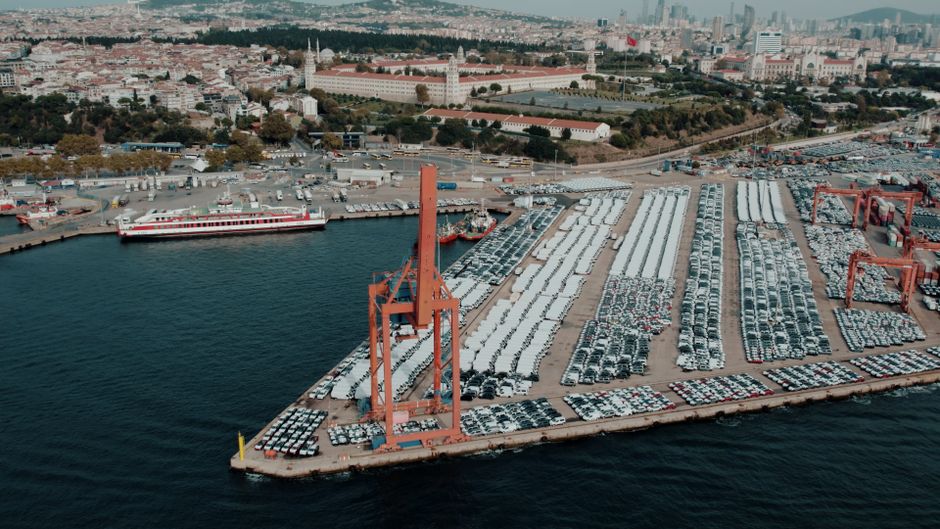
Chinese electric-car groups such as BYD are pushing rapidly into global markets and pressuring Western manufacturers; the US has so far kept BYD out. In Germany, the weakness shows in the fact that the EV subsidy mainly benefits Tesla and Chinese brands, while VW falls behind.+ more perspectives

A commentary by Politico describes China's EV groups as a "pirate ship" steering toward Western automakers: only the US has so far kept market leader BYD at bay, but that will not end well unless the West joins forces. The Berliner Zeitung shows the flip side in Germany: the new EV subsidy was meant to strengthen VW and others, yet so far it is mainly Tesla and Chinese brands that benefit, because German electric cars are bought less often. The liberal European and the independent German views complement each other but emphasize different aspects, the West's strategic pressure to act on the one hand, the concrete consumer decision on the other. Chinese perspectives are absent in these two sources, keeping the account one-sidedly Western. The background is the rapid rise of BYD, which sold around 4.6 million vehicles in 2025, and the EU's additional tariffs on EVs built in China. Whether tariffs and subsidies protect the European manufacturers or merely mask their lag remains contested.

Politico EuropeBerliner Zeitung

Technology

Nvidia advances AI robots in Japan, Hyundai takes full control of Boston Dynamics

Humanoide RoboterKI-Boom

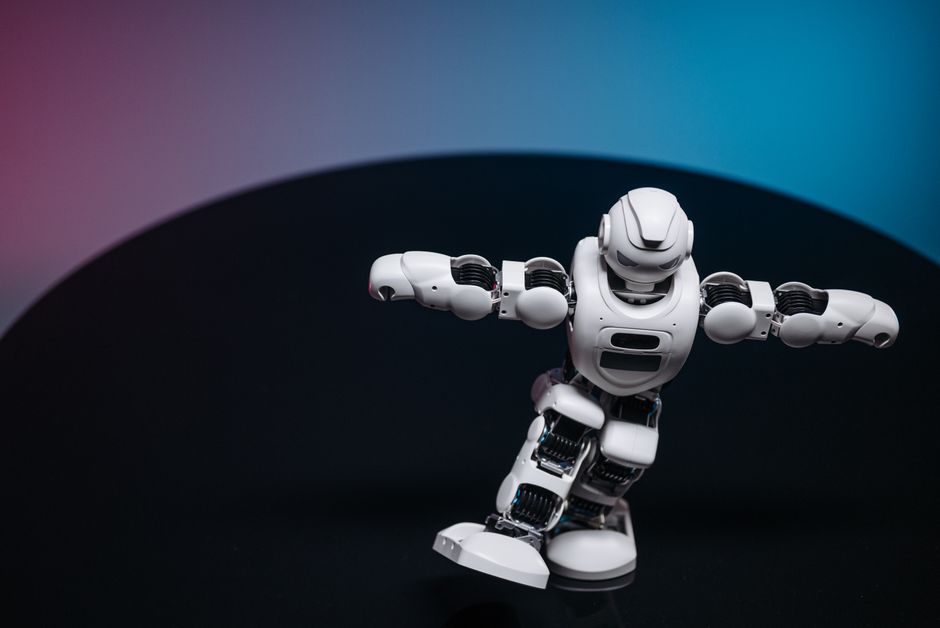
Nvidia and four leading Japanese automation groups are expanding their cooperation on AI-driven robots; CEO Jensen Huang is courting Japanese suppliers in Tokyo. At the same time, Hyundai is buying SoftBank's remaining stake in Boston Dynamics to bring the humanoid robot Atlas to market readiness.+ more perspectives

Nvidia and four of Japan's leading industrial automation firms want to expand their cooperation on robot development and are joining Nvidia's coalition for so-called Physical AI around the Cosmos platform; this bolsters CEO Jensen Huang's push into AI-capable hardware. Bloomberg describes how Huang, in Tokyo's Kanda district, is deliberately courting small, little-known Japanese suppliers that form the backbone of the AI supply chain. At the same time, Hyundai, together with affiliated companies, is taking over SoftBank's remaining stake in Boston Dynamics in order to accelerate the commercialization of the humanoid robot Atlas. All three reports come from Bloomberg and paint a consistent picture of a rapidly industrializing robotics market; a critical or contrary perspective is absent in this sourcing. The background is the boom in humanoid robots, which Nvidia is fueling with platforms for Physical AI and into which Chinese providers are also pushing with affordable models. How quickly the technology pays off economically remains open.

Bloomberg (Nvidia Cosmos)Bloomberg (Huang Tokio)Bloomberg (Hyundai/Boston Dynamics)

China clears Apple Intelligence, with Alibaba and Baidu as partners

Chinas WirtschaftKI-Regulierung

Chinese authorities have added Apple Intelligence to the list of approved AI services. Apple is working with Alibaba and Baidu in the country to that end. This removes a central regulatory hurdle for the AI features on the important Chinese iPhone market.+ more perspectives

China's regulators have granted Apple the long-awaited permission to roll out its AI service Apple Intelligence on iPhones in the country; Handelsblatt reports that the service was added to the list of approved AIs and that Apple is cooperating with Alibaba and Baidu for it. According to Bloomberg and the South China Morning Post, Alibaba's Qwen model is to provide the core language capabilities including content filtering, while Baidu supplies functions for image recognition and visual search. Approval by the cyberspace authority removes one of the most important political hurdles that had so far prevented Apple from closing the AI gap between Chinese and international iPhones. The Western and the Hong Kong-based views largely align and emphasize the strategic importance for Apple's business in China, where iPhone shipments have recently picked up again. No specific launch date was given. The move shows how foreign tech groups depend on domestic AI partners and regulatory approval for market access in China.

HandelsblattBloombergSouth China Morning Post

TSMC heads for record profit thanks to AI boom

Chip-ExportkontrollenKI-Boom

The world's largest contract chipmaker, TSMC, expects a record profit for the second quarter, driven by booming demand for AI chips. Revenue rose sharply year over year. It would be the fifth record quarter in a row.+ more perspectives

Taiwanese contract chipmaker TSMC is likely to have posted a record profit in the second quarter, Reuters reported ahead of the earnings release; the driver is the continued strong global demand for artificial intelligence infrastructure. Revenue climbed sharply year over year to a peak, and analysts expected a strong jump in net profit, the fifth record quarter in a row. Advanced manufacturing processes in the few-nanometer range as well as modern packaging technology for AI chips are seen as the demand drivers. The report comes from an independent business source and is largely numbers-driven, so no pronounced partisan divides emerge here; what is contested is rather the fundamental question of whether the AI boom is sustainable. For the chip industry and the AI-driven stock markets, TSMC is regarded as a bellwether. The full quarterly figures were expected on July 16.

ReutersThe Star

EU accepts improvements from Musk's platform X

EU-PlattformaufsichtKI-Regulierung

After a fine of 120 million euros, the European Commission has accepted the changes proposed by Elon Musk's platform X. At issue are violations of the Digital Services Act, including the misleading verification system. The legal dispute is not over, however, as X has appealed the fine.+ more perspectives

The European Commission has accepted the remedial measures announced by the platform X after imposing a fine of 120 million euros on the company for violations of the Digital Services Act (DSA). Die Zeit reports that the Commission is satisfied with the proposals, including on the contested blue verification check mark. Le Monde quotes Commission spokesman Thomas Regnier as saying this is "an important step in the right direction," but stresses that the dispute is not over, since X appealed the European fine in February. The liberal German and the left-liberal French sources agree on the substance; X itself and Musk-aligned voices are absent in these reports, so the platform's perspective is visible mainly through its appeal. The background is the first formal DSA proceeding ever, which the Commission opened against X at the end of 2023. Whether the improvements are sufficient and how the court will rule on the appeal is still open.

Die ZeitLe Monde