Thursday, 16 July 2026 · GeopoliticsWildfires in Canada: Toronto briefly has the world's worst air
Smoke from wildfires in northwestern Ontario has enveloped Toronto in a dense smog; the metropolis briefly had the worst air quality in the world, ahead of Kinshasa and New Delhi. Authorities urged people to stay indoors. The northeast and Midwest of the United States are also affected by the smoke.
Persistent wildfires in the Canadian province of Ontario blanketed Toronto in dense smoke in the evening; according to measurements, air quality there was briefly the worst in the world, surpassing cities such as Kinshasa and New Delhi. Authorities urged the population not to go outdoors. Deutschlandfunk and Le Monde describe the health burden and the issuing of warning levels, while the Wall Street Journal emphasizes the cross-border dimension: the smoke is also settling over the northeast and Midwest of the United States. Al Jazeera points to Toronto's top position in the global air quality ranking. Coverage across the political spectrum is largely consistent and factual; the only point of contention is how strongly climate change is emphasized as a cause. The fires fit into a series of severe wildfire seasons since the record year 2023, whose smoke repeatedly reaches North American metropolitan areas.
Deutschlandfunk · Le Monde · Al Jazeera · Wall Street Journal
Tuesday, 14 July 2026 · GeopoliticsFive years since the Ahr Valley flood: Schnieder apologizes for state failure
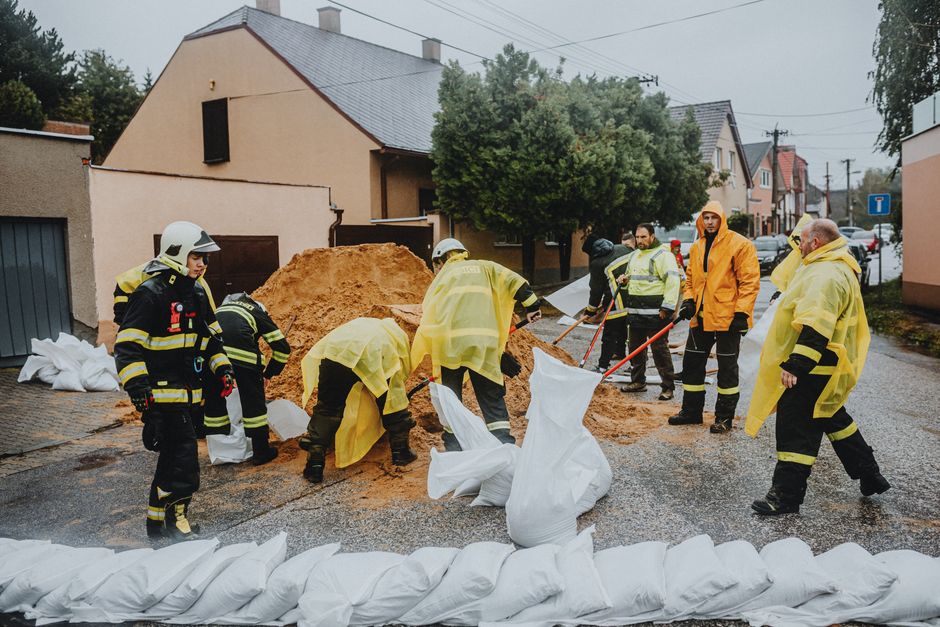
Five years since the Ahr Valley flood: Schnieder apologizes for state failure
On the fifth anniversary of the flood disaster in the Ahr Valley, Chancellor Merz and President Steinmeier commemorated the more than 130 victims. Rhineland-Palatinate's Minister-President Schnieder issued an explicit apology for state failure for the first time.
All German sources agree on the facts: five years after the 2021 flood, a central commemoration ceremony was held in Bad Neuenahr, and Minister-President Gordon Schnieder apologized for the state's failures. The conservative FAZ foregrounds the admission of state failure and quotes Steinmeier saying the disaster had been an unmistakable warning. The left-liberal Süddeutsche, by contrast, emphasizes Steinmeier's tribute to solidarity and civic cohesion. Der Spiegel frames the apology as a long-awaited signal to those affected. The public broadcaster Deutschlandfunk highlights Merz's praise for helpers and reconstruction progress. The papers differ in emphasis: failure and warning versus solidarity and reconstruction. The common core remains the belated, official acceptance of state responsibility.
FAZ · Süddeutsche Zeitung · Der Spiegel · Deutschlandfunk
Forecast · Assessment
●Most likely60%
The apology calms the debate in the short term, but concrete reforms of disaster management remain slow going.
▲Worst case15%
Without structural consequences, the failures of warning and coordination will repeat themselves during the next extreme weather event.
▼Best case25%
The admission leads to a binding, nationwide uniform warning and protection system.