US-Iran war escalates further: second wave of strikes, naval blockade, and threat of "existential war"Amid the fighting: Iran releases US citizen held since 2024Russian missiles hit Kyiv, fires in the capitalZelensky dismisses Defense Minister Fedorov in the midst of warEpstein files: Vance concedes the government "completely botched" their releaseWildfires in Canada: Toronto briefly has the world's worst airFrance passes assisted-dying lawCuba: third nationwide power outage within a weekSouth Korea's central bank raises rates for the first time in three and a half yearsTrump announces new tariffs on BrazilOil and gas prices rise on the Middle East escalationChina's EV offensive pressures Western manufacturersNvidia advances AI robots in Japan, Hyundai takes full control of Boston DynamicsChina clears Apple Intelligence, with Alibaba and Baidu as partnersTSMC heads for record profit thanks to AI boomEU accepts improvements from Musk's platform XUS-Iran war escalates further: second wave of strikes, naval blockade, and threat of "existential war"Amid the fighting: Iran releases US citizen held since 2024Russian missiles hit Kyiv, fires in the capitalZelensky dismisses Defense Minister Fedorov in the midst of warEpstein files: Vance concedes the government "completely botched" their releaseWildfires in Canada: Toronto briefly has the world's worst airFrance passes assisted-dying lawCuba: third nationwide power outage within a weekSouth Korea's central bank raises rates for the first time in three and a half yearsTrump announces new tariffs on BrazilOil and gas prices rise on the Middle East escalationChina's EV offensive pressures Western manufacturersNvidia advances AI robots in Japan, Hyundai takes full control of Boston DynamicsChina clears Apple Intelligence, with Alibaba and Baidu as partnersTSMC heads for record profit thanks to AI boomEU accepts improvements from Musk's platform X
Thema.alleThemen

Narrative thread · 5 events

Chip Export Controls

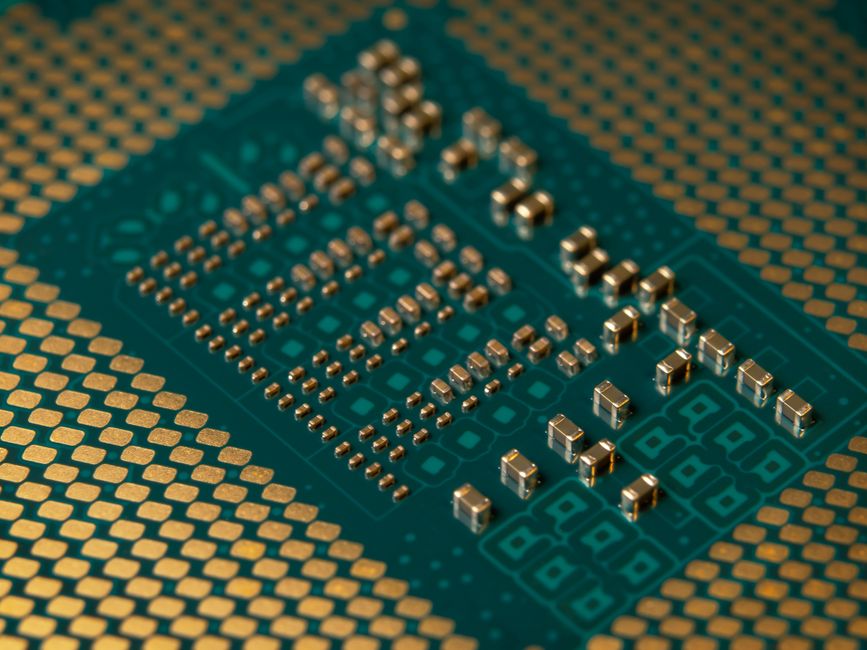
Symbolic image

In October 2022, under President Biden, the United States imposed sweeping export controls on advanced semiconductors and chip manufacturing equipment targeting China, aiming to limit Beijing's access to cutting-edge technology for military and artificial intelligence use. The Trump administration tightened the approach in April 2025, initially with a licensing requirement for Nvidia's H20 chip, but reversed course in July 2025 and allowed its resale to China. In December 2025, Trump additionally approved exports of the considerably more powerful H200 chip, which the US Commerce Department has been licensing on a case-by-case basis since January 2026 to about ten major Chinese corporations such as Alibaba, Tencent, ByteDance and JD.com, capped at 75,000 units per customer and subject to the condition that at least half of production remain reserved for the US market. In mid-July 2026, the Commerce Department confirmed that so far only a vanishingly small quantity of H200 chips had actually been shipped to China, while the shipments are at the same time subject to a 25 percent import tariff.

BloombergSouth China Morning PostCRN Asia

Timeline in detail

Thursday, 16 July 2026Technology

TSMC heads for record profit thanks to AI boom

The world's largest contract chipmaker, TSMC, expects a record profit for the second quarter, driven by booming demand for AI chips. Revenue rose sharply year over year. It would be the fifth record quarter in a row.

Taiwanese contract chipmaker TSMC is likely to have posted a record profit in the second quarter, Reuters reported ahead of the earnings release; the driver is the continued strong global demand for artificial intelligence infrastructure. Revenue climbed sharply year over year to a peak, and analysts expected a strong jump in net profit, the fifth record quarter in a row. Advanced manufacturing processes in the few-nanometer range as well as modern packaging technology for AI chips are seen as the demand drivers. The report comes from an independent business source and is largely numbers-driven, so no pronounced partisan divides emerge here; what is contested is rather the fundamental question of whether the AI boom is sustainable. For the chip industry and the AI-driven stock markets, TSMC is regarded as a bellwether. The full quarterly figures were expected on July 16.

ReutersThe Star

Wednesday, 15 July 2026TechnologyAI boom drives chip and memory stocks: SK Hynix jumps 13 percent

AI boom drives chip and memory stocks: SK Hynix jumps 13 percent

The persistent AI demand is lifting the semiconductor sector: SK Hynix shares jumped 13 percent, Japan's Kioxia is benefiting from memory demand, and Singapore's chip exports have nearly doubled. The AI cloud provider CoreWeave is looking for ways to hedge the price risk on memory chips.

The sources paint a uniform picture of an AI-driven upswing but illuminate different fronts. Reuters reports SK Hynix's 13 percent jump as U.S. tech stocks move higher again, a marked recovery after the previous week's sell-off. AFP reports how AI demand is igniting a previously "ignored sector" at Japan's Kioxia, and the Handelsblatt shows, using the example of Singapore, whose chip exports nearly doubled, how entire economies are cashing in on the boom. Reuters at the same time documents the flip side: the AI cloud provider CoreWeave is examining Wall Street instruments to hedge against fluctuating memory-chip prices, a hint of growing scarcity and price risk. The strong, broadly based AI demand is a fact; the background warning of overheating and concentration in a few stocks persists but recedes on this day of recovery.

ReutersAFPHandelsblatt

Forecast · Assessment
  • Most likely60%

    AI demand continues to carry chip and memory stocks, accompanied by high volatility and ever-louder overheating warnings.

  • Worst case20%

    A repricing of the few dominant AI stocks triggers a broad sell-off that drags supplier countries down with it.

  • Best case20%

    Demand translates into sustainable profits and productivity gains beyond the chip sector.

Tuesday, 14 July 2026TechnologyUS approves Nvidia H200 chip deliveries to China

US approves Nvidia H200 chip deliveries to China

The US government has granted licenses for the sale of Nvidia's H200 AI chips to Chinese companies, including ZTE. A US official confirmed that deliveries have already begun.

Both raw reports come from the independent agency Reuters and cover two facets of the same development. In an exclusive report, Reuters shows on the basis of documents that Chinese companies, including the telecom group ZTE, have received licenses to purchase Nvidia's H200 chips. A second report quotes a US official confirming that deliveries of the H200 chips to China have already begun. Since both sources are the same news agency, a contrasting perspective is missing: neither a Chinese framing as a sign of détente nor a US national security critique of the loosening of export controls is present. The granted approval and the started shipment are treated as fact; the strategic assessment of whether this represents an opening or a security risk remains open in the raw reports.

Reuters (Exklusiv)Reuters

Forecast · Assessment
  • Most likely55%

    Deliveries continue in a controlled manner and serve as bargaining leverage in the trade conflict.

  • Worst case20%

    The chips strengthen China's military and AI capacities and provoke sharp criticism in the US Congress.

  • Best case25%

    The controlled export eases trade relations without security policy damage.

Monday, 13 July 2026TechnologyAI boom drives chip demand: Son predicts five-trillion-dollar requirement

AI boom drives chip demand: Son predicts five-trillion-dollar requirement

SoftBank founder Masayoshi Son declared that artificial intelligence will require five trillion dollars annually by 2040, and dismissed warnings of a bubble. TSMC is heading for its fifth record quarter in a row thanks to AI demand, and South Korea raised its growth forecast because of Samsung and SK Hynix. At the same time, a black market for banned AI chips bound for China is growing.

Reuters and the Financial Times report that Son mocked critics of AI technology ("spitting upward") and puts the AI capital requirement from 2040 at five trillion dollars a year; he sees nuclear fusion as the key to the AI future. TSMC is likely, according to Reuters, to deliver its fifth record quarter in a row, and South Korea, according to the Handelsblatt, raised its growth forecast markedly, supported by the memory chip giants Samsung and SK Hynix. At the same time, an FT feature examines the flourishing black market through which advanced AI semiconductors reach China despite US export controls. The sources are predominantly economically liberal and share the growth euphoria; cautionary voices on the danger of a bubble appear almost only as the target of Son's mockery, which skews the picture optimistically.

ReutersFinancial TimesReutersHandelsblatt

Forecast · Assessment
  • Most likely55%

    Chip demand and the record profits of the manufacturers persist, while warnings of overheating grow louder in the background.

  • Worst case20%

    Investment outruns real demand, an AI valuation bubble bursts and drags down chip stocks and supplier countries with it.

  • Best case25%

    The AI boom translates into broad productivity gains and carries sustainable growth in Asia and beyond.

Saturday, 4 July 2026TechnologyUS Eases AI Chip Exports for the UAE

US Eases AI Chip Exports for the UAE

In a notice published on Friday, the US administration stated that the United Arab Emirates will in future find it easier to buy advanced technologies, including AI semiconductors. The Commerce Department cited measures by the UAE to protect sensitive US technology. At the same time, data show that China’s chip exports nearly doubled in the first half of the year.

Around 4 July 2026, it emerged that the Trump administration is easing export restrictions for the United Arab Emirates, thereby clearing the way for the purchase of advanced technologies, including the semiconductors needed for AI. According to a notice published on Friday by the US Commerce Department, the UAE now qualifies for eased treatment under US export control laws, justified by steps taken by the Emirates to protect sensitive American technology. In parallel, foreign trade data show that China’s chip exports nearly doubled in the first half of 2026: 179.44 billion integrated circuits worth around 177 billion dollars, an increase of more than 96 percent over the previous year. The move shows how the United States is using access to AI chips as a geopolitical instrument. The information relies on reports by Bloomberg and the South China Morning Post; the concrete design of the easing was not yet public in all its details at the time of reporting.

BloombergSouth China Morning Post

Forecast · Assessment
  • Most likely55%

    Clear protective conditions for the UAE become a model that enables legitimate AI trade and effectively curbs abuse.

  • Most likely20%

    Clear protective conditions for the UAE become a model that enables legitimate AI trade and effectively curbs abuse.

  • Most likely25%

    Clear protective conditions for the UAE become a model that enables legitimate AI trade and effectively curbs abuse.