
Ninth night of the US-Iran war: third US soldier dead, tanker ablaze in HormuzUkraine war: more than 400 drones on the Moscow region, Russia shells KyivPutin receives North Korea's foreign minister and thanks her for wartime supportAfter Spahn's resignation: conservative bloc seeks parliamentary leader, Merz mulls cabinet reshuffleAndy Burnham becomes British prime ministerHungary: Magyar wants chess legend Judit Polgar as presidentNetanyahu attacks New York mayor Mamdani after arrest threatThousands of Israelis march to the Gaza border and demand new settlementsTaiwan reports more Chinese ships, concern over Pacific supply routesOil above 90 dollars: Iran war weighs on currencies and stock marketsStudy: electric cars significantly cheaper since 2020, combustion engines slightly pricierEarnings in Germany rose 5.1 percent in 2025Europe's rearmament: raw-material dependence and dispute over the fighter-jet legacyChina's luxury tax and price pressure hurt German carmakersChina's AI offensive: IPOs, robots and maxed-out data centersAI skepticism on the markets: investors seek new favorites, chip worries growNinth night of the US-Iran war: third US soldier dead, tanker ablaze in HormuzUkraine war: more than 400 drones on the Moscow region, Russia shells KyivPutin receives North Korea's foreign minister and thanks her for wartime supportAfter Spahn's resignation: conservative bloc seeks parliamentary leader, Merz mulls cabinet reshuffleAndy Burnham becomes British prime ministerHungary: Magyar wants chess legend Judit Polgar as presidentNetanyahu attacks New York mayor Mamdani after arrest threatThousands of Israelis march to the Gaza border and demand new settlementsTaiwan reports more Chinese ships, concern over Pacific supply routesOil above 90 dollars: Iran war weighs on currencies and stock marketsStudy: electric cars significantly cheaper since 2020, combustion engines slightly pricierEarnings in Germany rose 5.1 percent in 2025Europe's rearmament: raw-material dependence and dispute over the fighter-jet legacyChina's luxury tax and price pressure hurt German carmakersChina's AI offensive: IPOs, robots and maxed-out data centersAI skepticism on the markets: investors seek new favorites, chip worries grow
← Archive

The Situation · Edition 20

Monday, 20 July 2026

The war between the United States and Iran has dominated the global picture for the ninth day running. Overnight the US military again launched strikes, a third US soldier was killed in northern Iraq, and Iran fired on US bases in Kuwait and Jordan. In the Strait of Hormuz another tanker was ablaze, yet roughly two-thirds of shipping traffic continues to flow. A preliminary peace plan has collapsed, and diplomats warn of a slide into an all-out regional war. The war is being felt immediately on the markets: the price of oil rose above 90 dollars a barrel, putting pressure on currencies, equities and inflation expectations.

In Ukraine, Kyiv responded to one of the heaviest Russian missile attacks since the start of the war with more than 400 drones aimed at the Moscow region; at the same time, by receiving North Korea's foreign minister, Putin is deepening the Moscow-Pyongyang-Beijing axis. In Europe, politics is realigning: Britain gets a new prime minister in the Labour politician Andy Burnham, in Hungary the chess legend Judit Polgar is set to become president, and in Germany the conservative bloc is looking for a parliamentary leader after the resignation of Jens Spahn. In the Middle East, thousands of Israelis are marching to the Gaza border for new settlements, and China's pressure on Taiwan is mounting.

In the economy, alongside the oil price, worry over German industry dominates: China's luxury tax is hurting the premium carmakers, and Europe's costly rearmament threatens to founder on its dependence on Chinese raw materials. At the same time there are positive signals: earnings rose 5.1 percent in 2025, outpacing inflation, and electric cars have become significantly cheaper since 2020, according to a study.

In technology the balance of power is shifting. China is driving its AI industry forward with stock-market listings and more than 400 humanoid robots, but is running up against limits in computing capacity. On the stock markets, meanwhile, skepticism is growing: investors are rotating out of the big tech names into new favorites, and in the memory-chip market fear of a new boom-and-bust cycle is spreading. The underlying question remains how sustainable the AI-driven upswing is.

Middle EastEurope's economyHormuz-Iran crisisOil marketRussiaChina's economy

Top story of the day

Geopolitics
Symbolic image

Ninth night of the US-Iran war: third US soldier dead, tanker ablaze in Hormuz

Hormuz-Iran crisisMiddle EastOil market

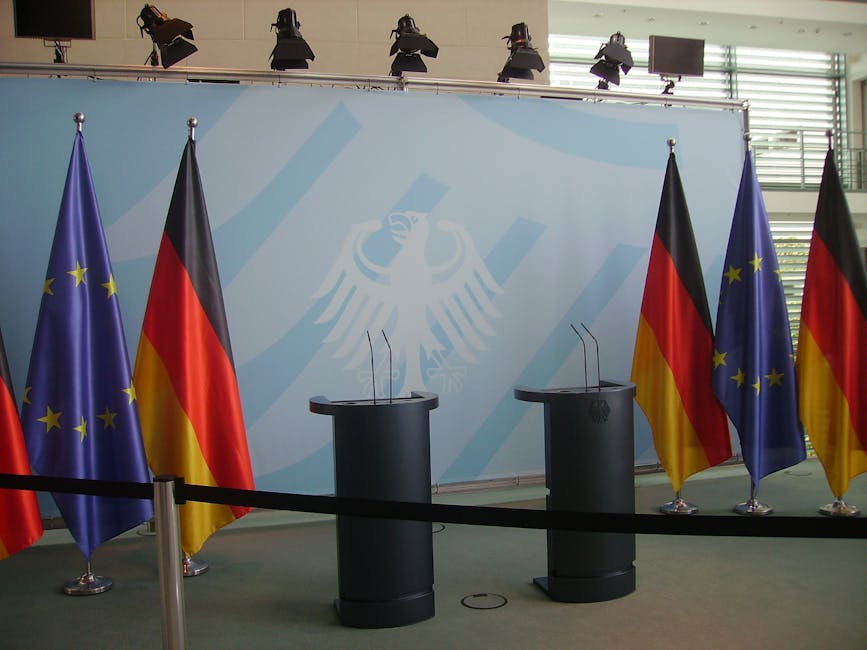
For the ninth night running, US forces struck targets in Iran; in northern Iraq another US soldier was killed while detonating an Iranian drone. Tehran reported attacks on US bases in Kuwait and an aerial target in Jordan, while in the Strait of Hormuz a ship was once again on fire. The oil price rose above 90 dollars.+ more perspectives

For the ninth night in a row the US military said it carried out strikes against command centers and communications networks in Iran; President Trump declared the attacks were carried out 'in honor of' fallen soldiers. Confirmed is the death of another US soldier while detonating an Iranian drone in northern Iraq, bringing the number of recent US dead to three (Al Jazeera counts 17 since the start of the war). Western outlets such as the Guardian and the New York Times stress that a preliminary peace plan foundered over the dispute about the Strait of Hormuz and that, according to Energy Secretary Wright, the US mission has shifted primarily to securing oil flows; critics speak of a 'war of choice.' Iranian and state-aligned sources such as Global Times and Serbia's Politika report explosions in several cities and accuse the US of hitting civilian facilities and the Darkhovin nuclear power plant. Tehran reported missile attacks on the Ali Al Salem air base in Kuwait and on US aircraft at Jordan's Aqaba airport; according to B92, Iran is even weighing a ground push against US bases in Kuwait. In the Strait of Hormuz another tanker was ablaze, yet Washington insists that around two-thirds of shipping traffic continues to run. The US is deploying additional fighter jets to the region, and diplomats warn, according to Haaretz, of a slide into an all-out regional war.
Die WeltThe GuardianAl JazeeraPolitikaHandelsblatt

Geopolitics

Ukraine war: more than 400 drones on the Moscow region, Russia shells Kyiv

RussiaUkraine war

After one of the heaviest Russian missile attacks on Kyiv since the war began, more than 400 Ukrainian drones targeted the Moscow region overnight; according to the mayor, they were 'largely' intercepted. Ukrainian strikes on Wildberries warehouses near Moscow killed at least eight people. The EU, meanwhile, is wrangling over new sanctions on Russia.+ more perspectives

Russia hit Kyiv overnight into Sunday with one of the largest ballistic waves of attacks since the war began; residents told the taz of impacts 'coming by the minute.' The following night, according to Moscow's mayor, more than 400 Ukrainian drones targeted the capital region and were 'largely' intercepted. Ukrainian and Western sources such as Le Monde and Le Figaro stress the increasingly effective drone strategy against Russian logistics and the 'shadow fleet'; the independent Russian outlet Meduza describes chaos and a lack of compensation after fires at two Wildberries warehouses near Moscow and in Tambov, where at least eight people died and more than 80 were injured. Serbia's state-aligned Politika, by contrast, highlights three children injured in a drone attack on the Russian village of Razumnoye and reports that Russia shot down more than 5,000 Ukrainian drones. Each side foregrounds the civilian casualties of the other. The attacks are overshadowed by a domestic crisis in Kyiv surrounding the overhaul of the military and government leadership. The Financial Times also reports that EU support for a new sanctions package is crumbling, because individual capitals reject measures against large corporations.

Le MondetazMeduzaPolitikaFinancial Times

Putin receives North Korea's foreign minister and thanks her for wartime support

North Korea and ChinaRussia

Kremlin leader Putin received North Korea's foreign minister in Moscow and explicitly thanked Pyongyang for its support in the Ukraine war. The meeting follows a visit by a senior Chinese official to North Korea. Observers see it as a sign of the tightening Moscow-Pyongyang-Beijing axis.+ more perspectives

In talks at the Kremlin, Vladimir Putin thanked North Korea for its help in the war against Ukraine, as China's state agency Xinhua and the US agency Bloomberg report in agreement. Bloomberg frames the meeting as part of a deepening cooperation, flanked shortly beforehand by a visit from China's number four to Pyongyang. According to Western sources, Pyongyang has supplied Russia with soldiers and munitions, making the war more sustainable for Moscow. Western observers read this as a threatening bloc-building among authoritarian states; the state-aligned Chinese account, by contrast, emphasizes the character of normal diplomatic relations. In the same context, Le Monde notes that a Turkish grain freighter in the Black Sea was hit by Russian missiles and five people died. The evidence on concrete agreements from the meeting is thin and rests mainly on official statements.

BloombergLe MondeXinhua

After Spahn's resignation: conservative bloc seeks parliamentary leader, Merz mulls cabinet reshuffle

Spahn's resignation

A day after Jens Spahn's resignation as leader of the conservative parliamentary group, the CDU/CSU leadership is deliberating over his successor; Chancellor Merz does not rule out a cabinet reshuffle. Spahn fell over the debate on surrogacy. Until a decision is made, deputy group leaders Bilger and Hoffmann take over.+ more perspectives

The conservative parliamentary group is searching for a successor after the surprise resignation of its chairman Jens Spahn; on Monday the presidium and group executive committee met in Berlin. Conservative voices such as Die Welt and the CDU member of parliament Mattfeldt (Cicero) press for a swift decision to spare the party damage, and see the timing as an opportunity for a cabinet reshuffle. Chancellor Friedrich Merz, in a ZDF summer interview, did not dismiss speculation about a reshuffle ('It could be an opportunity'). Left-leaning and liberal outlets such as the taz and Die Zeit read the fall as the end of a power player and partly rate the resignation as a chance for Merz to free himself of 'craftsmanship weaknesses.' The trigger was outrage over the surrogacy debate, in which the former minister Renate Kunast drew attention with the claim that Spahn and others wanted to create their 'own elite' via surrogate mothers; the taz criticizes surrogacy on principle as exploitation. According to Der Spiegel, several names are circulating as possible successors. The Berliner Zeitung accuses Merz of preferring, in the crisis, to talk about external adversities rather than lost trust.

Die WeltDie ZeittazSüddeutsche ZeitungHandelsblatt

Andy Burnham becomes British prime minister

United Kingdom

The outgoing mayor of Greater Manchester, Andy Burnham, is being appointed the new British prime minister this Monday. The Labour politician is seen as a left-wing populist who wants to push back the 'imperial' role of the Treasury and build a strengthened control center in Downing Street.+ more perspectives

After his election as Labour leader, Andy Burnham, for years the mayor of Greater Manchester and known as the 'King of the North,' takes over the office of prime minister. Al Jazeera and Deutschlandfunk soberly describe the formal handover of power this Monday. The Financial Times reports that Burnham wants to create a more powerful control center in Downing Street and make himself less dependent on the 'imperial' Treasury in order to restore trust in the government. The liberal Politico draws parallels to Donald Trump: Burnham loves social media, despises 'snobbish elites' and wants to speak for those left behind. Critics ask whether this style is enough to stabilize a flagging Labour government and a strained economic situation. Among his first announcements is the halt of the controversial digital ID project.

Politico EuropeAl JazeeraFinancial TimesDeutschlandfunk

Hungary: Magyar wants chess legend Judit Polgar as president

Hungary power struggle

Hungary's prime minister Peter Magyar wants to nominate the former world-class chess player Judit Polgar as the new head of state. She is to hold the office until a new constitution is adopted, after the previous president Sulyok was voted out. Parliament still has to approve.+ more perspectives

After the removal of President Tamas Sulyok, head of government Peter Magyar is proposing the former world's best chess player Judit Polgar for the highest state office; according to Serbia's B92, she is to hold the role on an interim basis until a new constitution is adopted. Conservative and liberal German outlets such as the FAZ and Die Zeit highlight Polgar's prominence and independence and read the appointment as a symbolic step by the new man in power. The move is part of the overhaul with which Magyar's Tisza camp is refilling the institutions after the end of the Fidesz era. Observers see in it, on the one hand, an orderly changing of the elites, while on the other, legal and rhetorical resistance from Fidesz circles remains a risk. The nomination still has to be confirmed by parliament. The available evidence so far rests mainly on Magyar's own announcement.

FAZDie ZeitDeutschlandfunkB92

Netanyahu attacks New York mayor Mamdani after arrest threat

Middle EastUSA

After New York mayor Zohran Mamdani said he would have a possible arrest of Benjamin Netanyahu examined during a visit, the Israeli head of government hit back sharply. Mamdani had earlier called Netanyahu a 'war criminal' who 'belongs in The Hague.'+ more perspectives

The dispute between the Israeli prime minister and the New York mayor escalated after Mamdani announced he would have Netanyahu's arrest examined in the event of a visit. Conservative outlets such as the FAZ and Die Welt mainly reflect Netanyahu's view: his office accused Mamdani of trying to distract from his 'own missteps' with the move, and called the International Criminal Court a 'sham court' with no jurisdiction over Americans or Israelis. Mamdani, for his part, called Netanyahu a 'war criminal' who 'belongs in The Hague.' The left-liberal New York Times places the exchange within a longer conversation with the mayor, in which he also speaks about Andy Burnham. Serbia's B92 soberly recounts the Israeli outrage. The backdrop is the ICC arrest warrant against Netanyahu over his conduct in Gaza, whose reach and legitimacy are fiercely contested between the camps.

FAZDie WeltNew York TimesB92

Thousands of Israelis march to the Gaza border and demand new settlements

Israel's settlement policyMiddle East

Thousands of Israelis, including settlers and right-wing activists, marched to the Gaza Strip border and demanded the rebuilding of Jewish settlements in the territory. At the same time, Israeli media report deadly settler violence in the West Bank. Figures on the number of participants diverge widely.+ more perspectives

The settler organization Nachala called for a 'march of thousands' to the Gaza border to press the government to bring back Jewish settlements more than two decades after the 2005 withdrawal; according to Le Monde, right-wing ministers also took part. Figures on the size vary widely: the organizers spoke of more than 10,000 participants, Israeli media of only a few hundred. In parallel, the left-liberal Israeli daily Haaretz reports deadly incidents in the West Bank: in a settler assault, according to army figures, two Palestinians were shot dead, and an editorial calls on the army to stop the killing of children. Turkey's state-aligned Daily Sabah foregrounds the death of a 17-year-old Palestinian footballer after a settler attack. Human-rights groups and a UN report interpret the accelerated settlement expansion as a strategy of displacement, while the Israeli right presents it as a matter of security and return. Critics within Israel itself warn, according to Haaretz, of a looming clash in the West Bank.

Le MondeHaaretzDaily Sabah

Taiwan reports more Chinese ships, concern over Pacific supply routes

South China SeaTaiwan

Taiwan is recording a sharp rise in Chinese ship activity and is warning of risks to Pacific supply routes. At the same time, Western reports decry a campaign by Beijing to economically and socially 'suffocate' Taiwan. US Secretary of State Rubio nonetheless affirmed that Xi Jinping's planned US visit stands.+ more perspectives

Taiwan's authorities, according to Reuters, report a marked rise in Chinese ship movements near the island, stoking fears over the security of Pacific supply routes. The conservative Wall Street Journal describes a broadly conceived campaign by Beijing to 'suffocate' Taiwan, extending as far as children's choirs and cafe operators. Both accounts fit Taipei's warning of an escalating 'gray zone' coercion below the threshold of war. Beijing regards Taiwan as part of the People's Republic and treats such voyages as routine, while Western observers see in them a targeted wearing-down. Despite the tensions, US Secretary of State Marco Rubio said, according to Bloomberg, that President Xi's planned visit to the US remains on track, even after Washington accused China of interfering in the elections. The situation shows the coexistence of economic rapprochement at the highest level and mounting everyday pressure.

ReutersWall Street JournalBloomberg

Economy

Oil above 90 dollars: Iran war weighs on currencies and stock markets

Hormuz-Iran crisisOil market

The oil price topped the 90-dollar-a-barrel mark because of the widening US-Iran conflict. Asian currencies and equities came under pressure, while gold fell and bets on continued high US interest rates increased. Agricultural commodities also gained.+ more perspectives

With the escalation in the US-Iran war, the global oil benchmark Brent, according to the New York Times, climbed more than three percent above 90 dollars. The conservative Wall Street Journal and Reuters report that the price jump is likely to weigh on Asian currencies and make equities in the region hesitate, while caution prevails ahead of key quarterly results. Gold fell because expectations of higher US interest rates ('higher for longer') intensified and some voices even floated rate hikes. Bloomberg points to record short-selling against the New Zealand dollar, with which hedge funds are betting on economic pressure from the oil price. At the same time, according to Bloomberg, prices for soybeans and corn rose, since pricier oil makes biofuels more attractive. The camps agree on the diagnosis: the war acts as a factor of inflation and uncertainty; contested is how durable the price surge is. Analysts point out that around two-thirds of traffic through the Strait of Hormuz continues to run.

New York TimesBloombergWall Street JournalReuters

Study: electric cars significantly cheaper since 2020, combustion engines slightly pricier

China's EV offensiveEurope's economy

A study by the Fraunhofer Institute and the ICCT shows that inflation-adjusted list prices for electric cars have fallen significantly since 2020, while combustion-engine cars have become slightly more expensive. If the trend continues, EVs in Europe could cost as much as comparable combustion cars by 2030.+ more perspectives

According to a joint study by the Fraunhofer Institute and the ICCT, the inflation-adjusted list prices of electric cars have shifted markedly downward since 2020, while combustion cars have become slightly more expensive. The authors expect this development to continue; the conservative Die Welt and the business-friendly Handelsblatt highlight that, if the trend holds, EVs in Europe could reach price parity with combustion cars by 2030. The left-liberal Sueddeutsche Zeitung stresses the same finding of a 'clear shift.' The camps report the study largely in agreement but differ in interpretation: for some it proves the success of electric mobility, for others the growing price pressure from Chinese manufacturers. It remains open how strongly falling battery costs and competition from China will push prices further down. The study refers to list prices, not to prices actually paid including discounts and incentives.

Die WeltSüddeutsche ZeitungHandelsblatt

Earnings in Germany rose 5.1 percent in 2025

Germany's tax policyEurope's economy

Median gross earnings in Germany rose 5.1 percent in 2025, according to the Federal Employment Agency, thus outpacing inflation. The median gained more than 200 euros, and the gap between the sexes shrank slightly. Significant regional differences remain.+ more perspectives

According to data from the Federal Employment Agency, median gross pay rose strongly in 2025; the conservative Die Welt puts the increase at 5.1 percent and more than 200 euros at the median. Higher collective-bargaining settlements drove incomes up in real terms, according to the Sueddeutsche Zeitung, that is, more than inflation. The liberal Die Zeit and the SZ at the same time stress persistent differences: women continue to earn less than men, though the gap shrank slightly, and a marked divide yawns between the federal states. The camps report the figures in agreement but set different accents: business-friendly voices point to risen labor costs, while socially oriented outlets highlight the real-wage gains of employees. The finding lands in a debate in which the SPD is making wealth and inheritance taxes a topic and Chancellor Merz is calling for more working hours. It remains open whether the real-wage gains will hold up as the economy slows.

Die WeltDie ZeitSüddeutsche Zeitung

Europe's rearmament: raw-material dependence and dispute over the fighter-jet legacy

Europe's defenseEurope's economy

Europe is investing billions in defense, yet critical raw materials still come predominantly from China. At the same time, Germany, France and the companies involved are quarreling over the legacy of the failed joint fighter jet. The Bundeswehr wants to massively expand its homeland-defense division.+ more perspectives

After the Russian threat, Europe is pouring billions into defense, yet the Sueddeutsche Zeitung warns the undertaking could founder on a lack of critical raw materials, which still come for the most part from China; industry is stuck in a 'prisoner's dilemma.' In parallel, the SZ describes the dispute over the legacy of the failed German-French fighter jet: after both countries and the companies involved had invested 3.2 billion euros, the partners are now squabbling over the exploitation and are seeking new allies. The liberal Die Zeit also reports that the Bundeswehr wants to double, within ten years, its homeland-defense division responsible for protecting airports and energy facilities. The reports share the diagnosis of a security-policy turning point but stress the gap between ambitious goals and industrial reality. Contested is whether Europe can reduce its dependencies on China quickly enough. The available evidence here mainly bundles German perspectives on a shared structural problem.

Süddeutsche ZeitungDie Zeit

China's luxury tax and price pressure hurt German carmakers

China's economyVW crisis

A Chinese luxury tax changed just over a year ago is hitting the German premium manufacturers Mercedes, BMW, Porsche and Audi hard. A China expert warns that Beijing is putting the German economy under ever greater pressure, and considers Volkswagen's course in particular to be risky.+ more perspectives

For the German premium carmakers, business in China has been poor for some time, and the luxury tax changed just over a year ago is aggravating the situation; the FAZ analyzes the consequences for Mercedes, BMW, Porsche and Audi. The conservative Die Welt quotes the China expert Mikko Huotari, according to whom Beijing is increasingly putting the German economy under pressure; he sketches four elements of a counterstrategy, urges haste and considers Volkswagen's course to be especially risky for Germany as a business location. Both papers share the diagnosis that the German manufacturers' decades-long China business is coming under pressure, fed by tax policy, domestic competition and geopolitical tensions. Contested is the right answer: more localization in China or a reduction of the dependence. The available evidence here rests mainly on German business perspectives. The case stands as an example of the difficult recalibration of German-Chinese economic relations.

FAZDie Welt

Technology

China's AI offensive: IPOs, robots and maxed-out data centers

China's economyHumanoid robotsAI boom

China is driving its AI industry forward with stock-market plans and robotics: the model provider Moonshot is aiming for an early IPO, and at the World Conference on AI the country is showing more than 400 humanoid robots. At the same time, Moonshot had to halt new subscriptions for its Kimi K3 model after a surge in demand.+ more perspectives

China's AI sector is in an upbeat mood: according to Taiwan's Taipei Times, the model provider Moonshot plans an IPO within six months, and the US agency Bloomberg reports that the startup of AI pioneer Kai-Fu Lee is aiming for an IPO in Hong Kong. The state-aligned Global Times celebrates that China leads global development with more than 400 complete humanoid robots and highlights the product showcase at the World Conference on AI 2026. At the same time, according to Global Times, Moonshot had to suspend new subscriptions for its Kimi K3 model after a rush, because computing capacity was overloaded. Western observers read the offensive as proof of China's strength in applied AI and robotics, while the US remains ahead in the most expensive top-tier models. The state account emphasizes China's claim to leadership and international cooperation, Western sources rather the race and commercialization. It remains contested how sustainable the boom is given questions of capacity and financing.

Taipei TimesGlobal TimesBloomberg

AI skepticism on the markets: investors seek new favorites, chip worries grow

Chip export controlsAI boom

Skepticism toward the AI boom is growing on the stock markets: according to the Wall Street Journal, retail investors are turning away from the 'Magnificent Seven' and betting on new AI names. In China, investors unwound their leveraged bets faster than at any time since 2016, and in the memory-chip market fear of a new boom-and-bust cycle is spreading.+ more perspectives

Sentiment on the stock markets toward the AI boom is turning more cautious: the conservative Wall Street Journal describes how retail investors are shunning the big tech corporations (the 'Magnificent Seven') and turning to new AI favorites as well as lean, 'AI-native' firms with little staff. Bloomberg reports that Chinese investors have wound down leveraged positions faster than at any time since the crash of 2015/2016, out of fear that the AI-driven rally is overstretched; this triggered a worldwide sell-off. The Financial Times warns that the massive investments in memory chips could set off a new boom-and-bust cycle in the already cyclical sector. The camps agree that AI demand is fundamentally robust but disagree over the valuations: optimists see a healthy consolidation, pessimists a looming bubble. Whether it stops at individual corrections or a broad crash follows is open. Investors are anxiously awaiting the upcoming quarterly results of the big chip and tech corporations.

Wall Street JournalBloombergFinancial Times