
Eighth night of the US-Iran war: fresh retaliatory strikes after two US soldiers killedMassive Russian missile attack on Kiev, a day after a Ukrainian strike inside RussiaZelensky weighs removing army chief Syrsky after protestsCivilian casualties in Israeli air strikes on the Gaza StripHungary's President Sulyok seals the end of his own term under pressure from MagyarSerbia: Pride caravan in Pirot cancelled, journalists attackedCanadian wildfires shroud US cities in smoke, Trump threatens tariffsCDU/CSU parliamentary group leader Spahn resigns over surrogacy debateAfD launches its Saxony-Anhalt campaign with confidenceBritain's new prime minister Burnham scraps the digital ID schemeEU bans large companies from destroying unsold clothingSouth Korea's AI-heavy stock market sets the pace, Seoul opens the wonUkrainian drone attack on Wildberries depot kills eight in RussiaChina's world AI conference shows humanoid robots in ShanghaiRevelation: CIA agent and the Emirates' AI riseSemiconductor stocks swing: Apple overtakes Nvidia amid AI scepticismEighth night of the US-Iran war: fresh retaliatory strikes after two US soldiers killedMassive Russian missile attack on Kiev, a day after a Ukrainian strike inside RussiaZelensky weighs removing army chief Syrsky after protestsCivilian casualties in Israeli air strikes on the Gaza StripHungary's President Sulyok seals the end of his own term under pressure from MagyarSerbia: Pride caravan in Pirot cancelled, journalists attackedCanadian wildfires shroud US cities in smoke, Trump threatens tariffsCDU/CSU parliamentary group leader Spahn resigns over surrogacy debateAfD launches its Saxony-Anhalt campaign with confidenceBritain's new prime minister Burnham scraps the digital ID schemeEU bans large companies from destroying unsold clothingSouth Korea's AI-heavy stock market sets the pace, Seoul opens the wonUkrainian drone attack on Wildberries depot kills eight in RussiaChina's world AI conference shows humanoid robots in ShanghaiRevelation: CIA agent and the Emirates' AI riseSemiconductor stocks swing: Apple overtakes Nvidia amid AI scepticism
← Archive

The Situation · Edition 19

Sunday, 19 July 2026

The war between the United States and Iran has entered its eighth night and remains the dominant story of the day. After two US soldiers were killed in an Iranian attack in Jordan, Washington launched fresh retaliatory strikes against southern Iran, while Tehran shelled US-linked targets in Kuwait and, for the first time in months, struck Saudi Arabia again. The number of American dead rose to 16. Western, Iranian and Chinese sources paint the same picture of escalation but read it in opposite ways: for Washington it is punishment, for Tehran self-defence, while the ceasefire agreed in June is effectively dead and buried.

Elsewhere too, the situation is worsening. Russia struck Kiev with ballistic missiles, a day after Ukrainian drones fatally hit logistics warehouses belonging to the Russian online retailer Wildberries. In Kiev, Zelensky is weighing the removal of his army chief following protests. In Gaza, Israeli strikes once again killed civilians. Hungary's President Sulyok, under pressure from head of government Magyar, sealed the end of his own term, a turning point in the dismantling of the Orban era. In Germany, parliamentary group leader Spahn of the CDU/CSU stepped down over a surrogacy debate, while the AfD launched its campaign in Saxony-Anhalt with visible confidence. Britain's new prime minister, Burnham, scrapped a controversial digital ID scheme.

Economically, the war is drawing closer to the markets: the blow against Wildberries lays bare how tightly civilian commerce and armament are interwoven in Russia. The EU will in future bar large fashion companies from destroying unsold clothing. And South Korea's AI-heavy stock market is now setting the pace for the world's exchanges, even as Seoul opens the won to foreign investors.

In technology, the struggle over artificial intelligence is intensifying. In Shanghai, China's world conference showcased humanoid robots as a symbol of catching up, while on the markets doubts about the AI boom pushed Apple back ahead of Nvidia. Finally, a revelation about a CIA agent shows just how closely intelligence services, chips and the Gulf states' AI rise are entangled.

RussiaUkraine warAI boomMiddle EastChip export controlsHormuz-Iran crisis

Top story of the day

Geopolitics
Symbolic image

Eighth night of the US-Iran war: fresh retaliatory strikes after two US soldiers killed

Hormuz-Iran crisisMiddle EastOil market

After two American soldiers were killed in an Iranian attack in Jordan, the US carried out fresh air strikes on southern Iran for the eighth night running. Tehran shelled US-linked targets in Kuwait and, according to the FT, struck Saudi Arabia again for the first time in months. The number of US soldiers killed rose to 16.+ more perspectives

Overnight into Sunday, US forces continued their strikes on Iranian targets, damaging a tunnel and three bridges in Hormozgan province according to the governor's office and hitting drinking-water facilities in the south. The trigger for the latest escalation was the death of two US soldiers in an Iranian missile and drone attack on Jordan, with a third soldier reported missing. President Trump announced retaliation, and US Central Command reported that another round of strikes had been completed. Western outlets such as the Sueddeutsche Zeitung and the New York Times stress the growing fear of the war widening and Trump's baffled search for a strategy. Iranian and Chinese state media emphasise that Tehran is deliberately striking US military bases in Kuwait and adapting to American air defences, while the Serbian paper Politika reports on an alleged order from Trump for CENTCOM to open the „gates of hell“. Turkey's Daily Sabah foregrounds the civilian toll, reporting that the US strikes have left at least 10,000 people in southern Iran without drinking water. The camps agree that the ceasefire agreed in June is effectively dead and that neither side has so far backed down.

Süddeutsche ZeitungNew York TimesFinancial TimesDaily SabahPolitika

Geopolitics

Massive Russian missile attack on Kiev, a day after a Ukrainian strike inside Russia

RussiaUkraine war

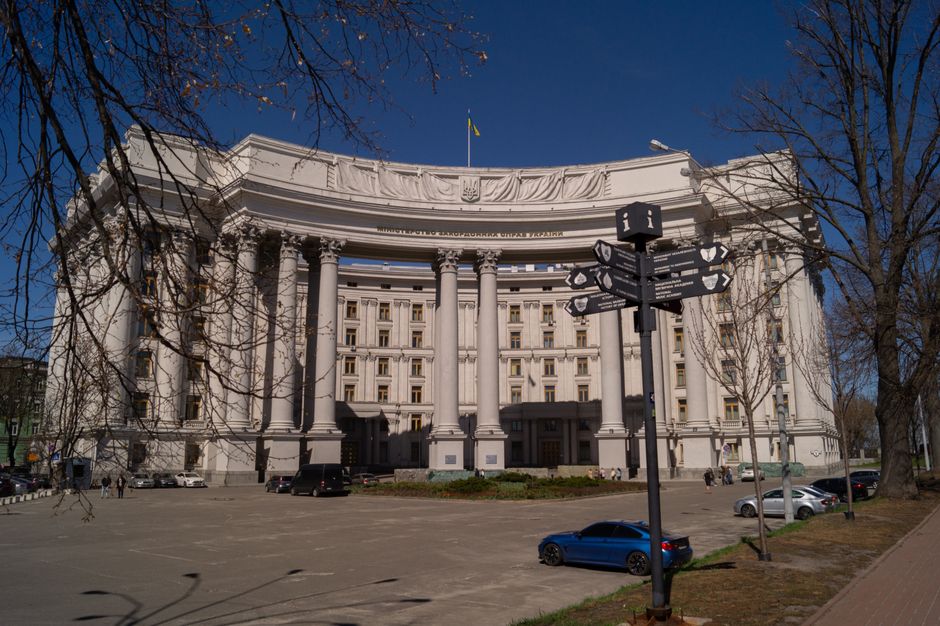
Russia has again attacked Kiev with ballistic missiles; at least one person was killed, several were injured and fires broke out. The attack came a day after deadly Ukrainian drone strikes on Russian logistics depots. Since June, Russia has increasingly hit the capital with missiles that are hard to intercept.+ more perspectives

Overnight, according to Ukrainian sources, ballistic missiles struck Kiev, setting off several fires and causing deaths and injuries. Le Monde places the attack in a wider series: since June the capital has been regularly shelled with fast, hard-to-intercept missiles, and the latest strike follows directly on deadly Ukrainian drone attacks on Russian soil. Germany's Handelsblatt stresses the force of the massive attack and the despair of residents who cannot find any respite. China's state agency Xinhua reports tersely of „massive explosions“ in the Ukrainian capital, without assigning blame. At their core, the accounts from all camps agree that the war is in a phase of mutual long-range strikes, with both sides targeting the other's infrastructure and logistics. What remains disputed is only how responsibility and proportionality are interpreted.

Le MondeHandelsblattDeutschlandfunk

Zelensky weighs removing army chief Syrsky after protests

RussiaUkraine war

After the dismissal of popular defence minister Fedorov and days of street protests, President Zelensky is weighing the removal of commander-in-chief Syrsky, according to the FT and Meduza. Zelensky announced decisions on the army's leadership and is meeting commanders. The government crisis is also alarming the EU.+ more perspectives

The dismissal of defence minister Mykhailo Fedorov, the architect of Ukraine's drone strategy, has triggered a wave of protests now directed against commander-in-chief Oleksandr Syrsky, with whom Fedorov had clashed in office. According to the Financial Times and the Russian exile outlet Meduza, Zelensky is weighing whether to dismiss Syrsky as commander-in-chief and is gathering military commanders over the weekend. The conservative FAZ quotes Zelensky promising to listen to the demonstrators and to decide soon on the army's leadership. The Serbian paper Politika highlights the military crisis and the mass protests, while the independent B92 reads Zelensky's appearance as a climbdown. From an EU perspective, the Berliner Zeitung warns that with Fedorov's departure Brussels loses its most important partner for drones and accession talks. Across the camps, the reshuffle is seen as a make-or-break test for Kiev's leadership in the middle of the war, with interpretations swinging between necessary renewal and dangerous self-weakening.

Frankfurter Allgemeine ZeitungMeduzaFinancial TimesPolitikaBerliner Zeitung

Civilian casualties in Israeli air strikes on the Gaza Strip

Israel's settlement policyMiddle East

Israeli air strikes on the Gaza Strip killed at least ten people, including three children and five members of one family, according to Palestinian sources. One strike hit a funeral gathering, rescue workers said. Israel's military points to a Hamas target.+ more perspectives

The Hamas-run civil defence authority reported that Israeli strikes over the weekend killed at least ten to eleven people in Gaza City and the centre of the territory, among them three children and five members of one family. The conservative FAZ relays the Israeli account, according to which the target was a Hamas terrorist. Le Monde cites the casualty figure on the authority of the civil defence agency and the receiving hospital, noting that the rescue services report to Hamas. Turkey's Daily Sabah foregrounds a deadly strike on a funeral gathering with seven killed and 22 injured. The evidence remains difficult to assess, as independent verification on the ground is barely possible and the casualty figures come from Palestinian sources. The reports agree that civilians are once again among the dead; what remains disputed is who bears responsibility and whether those hit were fighters.

Frankfurter Allgemeine ZeitungLe MondeDaily SabahDeutschlandfunk

Hungary's President Sulyok seals the end of his own term under pressure from Magyar

Hungary power struggle

Tamas Sulyok, the president close to Orban, signed a constitutional amendment ending his term at midnight on Sunday. Head of government Peter Magyar had threatened him with impeachment. The move is seen as a turning point in the dismantling of the Orban era.+ more perspectives

After months of pressure from Prime Minister Peter Magyar, President Tamas Sulyok, appointed by Viktor Orban, signed a constitutional amendment adopted by the governing Tisza alliance that declares a serious loss of confidence and ends his mandate at midnight on Sunday. Bloomberg reads the move as the culmination of Magyar's rapid effort to dismantle the load-bearing pillars of the Orban era. Until a successor is elected, the speaker of parliament takes over on an interim basis, according to Le Monde. The state-aligned Serbian Politika and the independent B92 relay the view of the now-opposition Fidesz party, which speaks of open tyranny in Hungary. Western outlets such as the Guardian, by contrast, describe the process as an orderly, if unprecedented, transfer of power by legislative change. The camps agree on the sequence of events; the assessment ranges from democratic renewal to a dangerous precedent.

BloombergLe MondeThe GuardianPolitikaB92

Serbia: Pride caravan in Pirot cancelled, journalists attacked

Pride in SerbiaWestern Balkans

In the southern Serbian town of Pirot, a Pride caravan was called off after opponents gathered on the central square and the safety of participants was at risk. Journalists, including an N1 reporter, were attacked. Activists and the opposition accuse the police of failing.+ more perspectives

According to the independent broadcaster N1, police in Pirot cancelled the Pride caravan planned for the day because men who were protesting against the event had gathered on the local square and the safety of participants could no longer be guaranteed. The organisation „Da se zna!“ sharply condemned the decision and accused the police of letting hooligans endanger the lives of journalists. The Serbian journalists' association UNS condemned the attack on N1 reporter Gordana Bjeletic and the obstruction of other reporters. The opposition movement PSG spoke of an open retreat by the institutions in the face of violence. The coverage here comes largely from independent Serbian sources, with no state-aligned counter-account available, which makes the one-sided evidence base plain. The incident fits into the history of Pride events in Serbia, marked by resistance and violence, and at the same time touches on the question of press freedom in an EU accession candidate.

N1 (Da se zna!)N1 (UNS)N1

Canadian wildfires shroud US cities in smoke, Trump threatens tariffs

Canada's wildfiresUSAUS trade conflict

Smoke from hundreds of Canadian wildfires settled over a dozen US states; millions of Americans were told to stay indoors. President Trump threatened Canada with higher tariffs to offset the economic cost of the smoke. In Ontario alone almost 200 fires are burning.+ more perspectives

Soot from nearly a thousand active fires in Canada drifted into the US and clouded the air on Friday over the Great Lakes, the Northeast and the Mid-Atlantic; authorities warned millions of people of harmful air. Politico and Turkey's Daily Sabah report that President Trump threatened to raise tariffs on Canada to offset the cost of the smoke. The New York Times frames the almost 200 fires in Ontario alone as part of an increasingly frequent run of disasters. Le Monde looks at the long-term destruction of the boreal forests and quotes experts saying that the recurring mega-fires are permanently altering the forest. Across the camps, the smoke is regarded as a cross-border problem; what is disputed is Trump's attempt to turn it into a trade-policy lever against Ottawa.

PoliticoNew York TimesLe MondeDaily Sabah

CDU/CSU parliamentary group leader Spahn resigns over surrogacy debate

Spahn's resignation

Jens Spahn has resigned as chairman of the CDU/CSU parliamentary group after his fatherhood via a surrogacy arrangement banned in Germany triggered a credibility debate. Chancellor Merz called the resignation unavoidable and is pressing for a swift succession. CSU regional group leader Hoffmann takes over on an interim basis.+ more perspectives

Former federal health minister Jens Spahn, who has led the CDU/CSU parliamentary group since 2025, announced his resignation on Saturday in a letter to the group, a step that Chancellor Friedrich Merz had, according to Spiegel, demanded in an earlier phone call. The trigger was the debate over his child, born to a surrogate mother in the US; surrogacy is banned in Germany, and critics accused Spahn of double standards, since he had helped support such bans. The left-leaning taz called the resignation the only correct consequence, while conservative voices such as Cicero accused him of a lack of insight. Spiegel points to earlier affairs, including overpriced Covid mask deals and a villa purchase, and reads the resignation as one scandal too many. The Berliner Zeitung, by contrast, criticises the country for debating morality instead of solutions to demographic change. Internationally, the New York Times, the BBC and the Financial Times took up the case as a charge of hypocrisy against one of Merz's leading figures. For the black-red coalition, the loss of a group leader seen as an anchor of stability comes at an awkward moment, as Merz quickly looks for a successor.

tazCiceroDer SpiegelFinancial TimesNew York Times

AfD launches its Saxony-Anhalt campaign with confidence

AfD

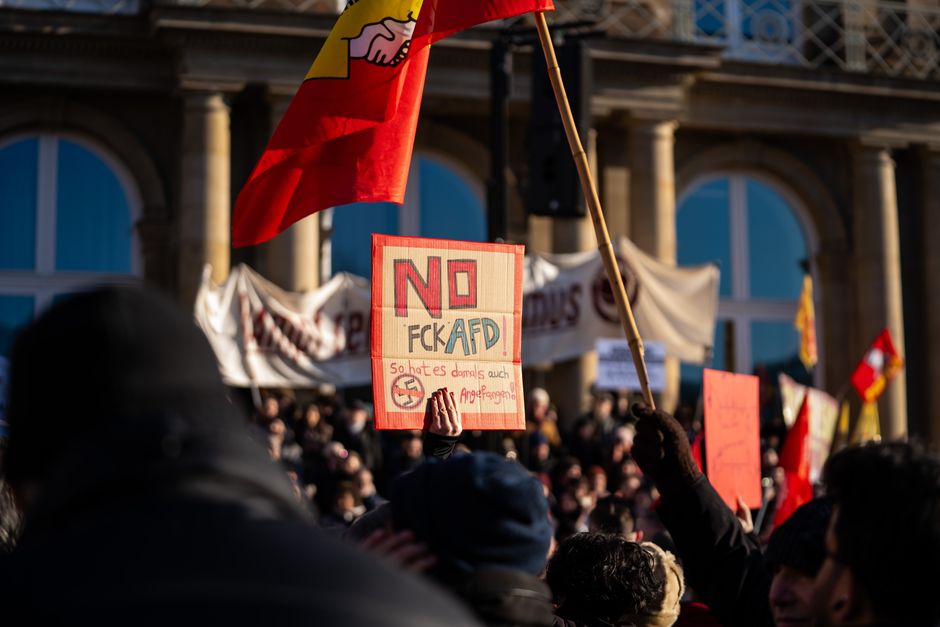
The AfD opened its campaign for the Saxony-Anhalt state election in Magdeburg; lead candidate Ulrich Siegmund was already talking about a term as state premier. In the polls the party widened its lead over the CDU/CSU again. Hundreds demonstrated against the event.+ more perspectives

Around 50 days before the Saxony-Anhalt state election, the AfD celebrated itself as the election winner at its campaign launch in Magdeburg, according to Welt; lead candidate Ulrich Siegmund spoke of „45 percent plus X“ and his first official act as a possible state premier. Party leader Alice Weidel sharply attacked the federal government and described the simultaneous resignation of Jens Spahn as overdue. The left-liberal Sueddeutsche Zeitung turns its attention to an internal power struggle behind Weidel's laboured good cheer. Die Zeit and the Berliner Zeitung highlight the hundreds of counter-demonstrators at the exhibition grounds. Across the camps, the election is regarded as a mood test; what is disputed is whether the AfD can translate its poll ratings into governing power, while the domestic intelligence service classifies the party as confirmed right-wing extremist.

Die WeltSüddeutsche ZeitungDie ZeitBerliner Zeitung

Britain's new prime minister Burnham scraps the digital ID scheme

United Kingdom

Andy Burnham, who takes over as prime minister as the new Labour leader, wants to scrap the digital ID system planned by his predecessor Starmer. The scheme, budgeted at around 1.8 billion pounds, was to control access to the labour market by 2029. The money saved is to go towards the cost of living.+ more perspectives

The former mayor of Greater Manchester, Andy Burnham, takes over as prime minister as the new Labour leader and announces a reset of priorities. As one of his first measures he intends, according to the Guardian and the Financial Times, to stop his predecessor Keir Starmer's unpopular digital ID scheme. Le Monde puts the cost of the system, planned to run to 2029 and intended to check the right to work, at around 1.8 billion pounds. The freed-up funds are to go towards tackling the cost of living. The left-leaning taz asks, with „Andy who?“, what the new head of government actually stands for. Across the camps, the move is seen as a deliberate signal of a change of course; what remains open is whether Burnham can use it to stabilise the embattled Labour government.

The GuardianFinancial TimesLe Mondetaz

Economy

EU bans large companies from destroying unsold clothing

EU circular economy

Under an EU rule, large companies may no longer destroy unsold or returned clothing and shoes. The rule is part of the Ecodesign Regulation and is meant to conserve resources. Environmentalists warn, however, that the ban is easy to circumvent.+ more perspectives

An EU rule will in future bar large fashion companies from destroying unsold or returned clothing, shoes and textiles; the rule is part of the Ecodesign for Sustainable Products Regulation adopted in 2024 and of Europe's circular-economy course. The conservative FAZ and the public broadcaster Deutschlandfunk present the change as a win for consumers and the environment, since a lot of new goods have so far ended up in the bin. Die Zeit relays the warning from environmentalists that companies could easily circumvent the ban, for instance through generous exemptions or workarounds. Smaller firms are exempt for now, and the ban is to be extended over time, accompanied by transparency and reporting obligations. Across the camps, the goal of reducing textile waste and the associated emissions is regarded as sensible; what is disputed is how effective and enforceable the rule will prove in practice.

Frankfurter Allgemeine ZeitungDie ZeitDeutschlandfunk

South Korea's AI-heavy stock market sets the pace, Seoul opens the won

South Korea's central bank

South Korea's AI-driven stock market has become a leading indicator for global fund managers, according to Bloomberg. At the same time, Seoul put forward a plan to make the won freely tradable for foreign investors. Observers also warn of the risks of leveraged funds.+ more perspectives

For fund managers in London, New York and Tokyo a new ritual has emerged, according to Bloomberg: a look at South Korean stocks before the trading day begins, because the market, heavily shaped by AI and semiconductor stocks, increasingly sets the tone for the world's exchanges. In parallel, Seoul announced its boldest step yet towards liberalising its foreign-exchange market, aiming to make the won largely freely tradable for foreign investors, closer to full convertibility. The Taipei Times, looking at leveraged South Korean ETFs, cautions that their poor timing shows the downside of the boom. The market-liberal view of Bloomberg, by contrast, stresses the opportunities for capital inflows and integration into global markets. The sources agree that South Korea is benefiting from the AI boom; what remains disputed is how vulnerable the concentrated market is to a setback.

BloombergTaipei Times

Ukrainian drone attack on Wildberries depot kills eight in Russia

RussiaUkraine war

Ukrainian drones hit two logistics centres of the Russian online retailer Wildberries in the Moscow and Tambov regions; eight night-shift workers were killed and more than 50 injured. Kiev described the depots as major logistics facilities holding sanctioned components. The damage is estimated at 50 billion roubles.+ more perspectives

In the early hours of 18 July, Ukrainian drones hit two Wildberries logistics centres in the Moscow and Tambov regions; at the plant in Kotovsk, according to the Russian exile outlet Meduza, seven night-shift workers were killed and 25 injured, with a total of eight people dead and more than 50 injured. President Zelensky said the attacks had hit depots holding components for drone production; the BBC quotes him describing them as major logistics facilities for sanctioned components. Meduza puts the damage at around 50 billion roubles and up to 15 percent of the storage space, noting that Wildberries and its rival Ozon contractually pass compensation for war damage on to the small traders. Turkey's Daily Sabah foregrounds the killed warehouse workers and an additional fire at an oil depot near Moscow. Across the camps, the case shows how tightly civilian online retail and military supply chains are interwoven in Russia; what is disputed is whether the depots were legitimate military targets. The civilian casualties among the night-shift workers also raise questions of proportionality.

MeduzaBBC NewsDaily Sabah

Technology

China's world AI conference shows humanoid robots in Shanghai

China's economyAI boom

At the World Artificial Intelligence Conference (WAIC) in Shanghai, humanoid and four-legged robots took centre stage. Chinese state media are celebrating a new phase of human-machine cooperation. The show underlines China's claim to be catching up in applied AI and robotics.+ more perspectives

At the World Artificial Intelligence Conference in Shanghai, exhibitors presented, according to the state-aligned Global Times, four-legged robots and applications said to mark a new phase of human-machine cooperation. The news agency AFP documented the show with a photo series of robots and AI innovations. The conference is part of China's effort to present itself as a centre of applied AI and robotics and to gain influence over global standards. For Beijing, the showcase is a symbol of technological catch-up and self-assertion in the competition with the US. The evidence here is thin and relies chiefly on one Chinese state source and a photo series; a critical Western assessment of the specific conference day is not available. In the larger context, the fair stands for the struggle between China and the US over leadership in artificial intelligence.

Global TimesAFP

Revelation: CIA agent and the Emirates' AI rise

Chip export controlsAI boom

The Wall Street Journal describes how a CIA agent spied on the United Arab Emirates while also playing a role in the Gulf state's AI rise. The report sheds light on the close interweaving of intelligence services, chips and the Gulf's AI strategy. The evidence rests on a single piece of reporting.+ more perspectives

In an investigative piece, the Wall Street Journal recounts the story of a CIA agent who spied on the United Arab Emirates while at the same time contributing to their rise as an AI hub. The report links espionage, access to advanced chips and the Emirates' multibillion-dollar AI strategy, which positions them as a global centre for computing power. It fits into the larger context of the recent easing of American chip-export rules for the Gulf states, which made it easier for the Emirates to buy advanced AI chips. The evidence here is expressly thin: the account rests on a single, conservative, market-liberal US source, with no independent counter-perspective or statement from Abu Dhabi available. The case nonetheless shows how closely technological ambition, geopolitical interests and intelligence work mesh in the race for AI.

Wall Street JournalWall Street Journal (Teil 2)

Semiconductor stocks swing: Apple overtakes Nvidia amid AI scepticism

Chip export controlsAI boom

After a sell-off in semiconductor stocks, Apple briefly displaced AI giant Nvidia on Friday from its throne as the world's most valuable company. Chip stocks swing almost five times as much as the overall market, according to the FT. Growing doubts about the AI boom are fuelling the nervousness.+ more perspectives

A sell-off in semiconductor stocks temporarily cost Nvidia the title of the world's most valuable listed company, which Apple reclaimed according to Turkey's Daily Sabah. The Financial Times describes the extreme volatility of the sector: chip stocks are now almost five times as volatile as the broad market. Behind this lie growing doubts about whether the enormous investments in artificial intelligence will bring the hoped-for returns. The market-liberal FT stresses the risk of overheating, while the Daily Sabah frames the change at the top of the stock market as a symbol of AI nervousness. The sources agree on the high volatility; what remains disputed is whether this is a healthy correction or the harbinger of a broader slump.

Financial TimesDaily Sabah