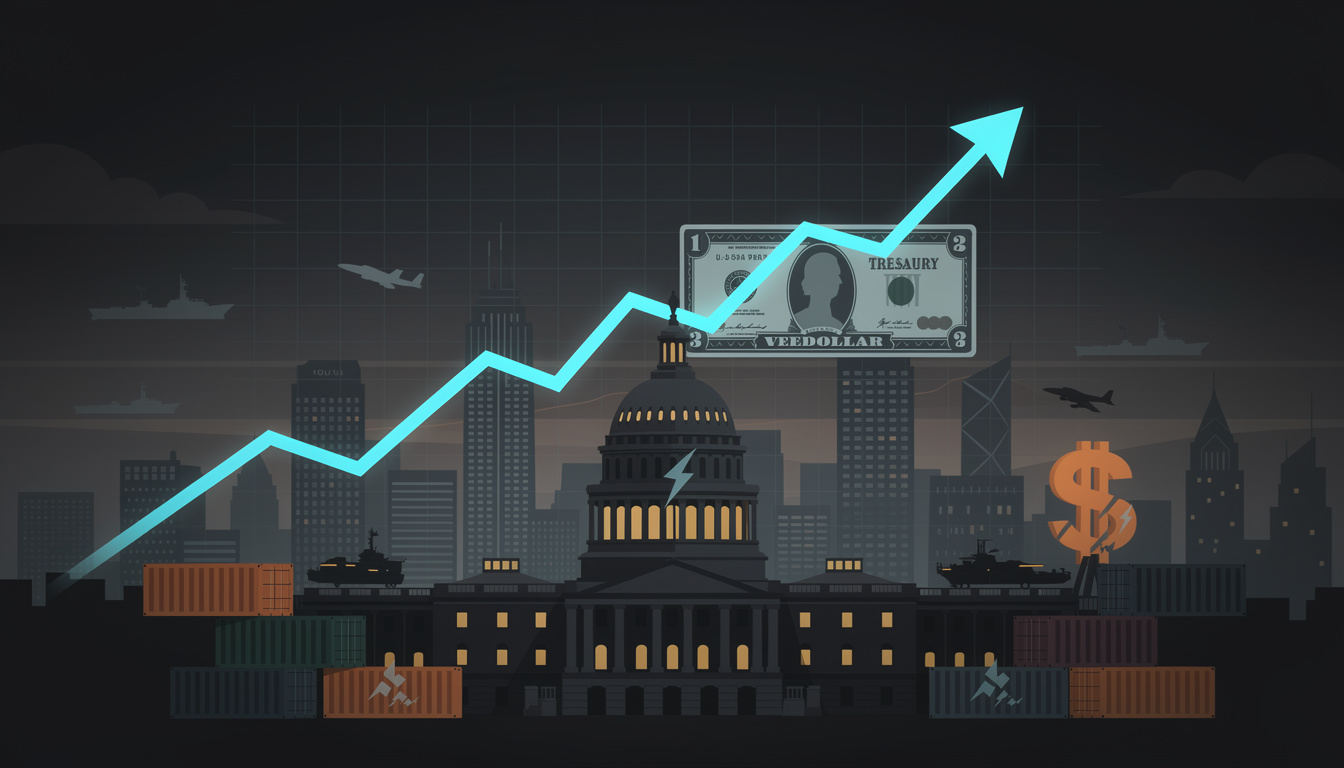
 Symbolic image
Fed opens second Warsh meeting with markets split between hold and hike
The US Federal Reserve begins its second policy meeting under Chair Kevin Warsh on Tuesday, with a decision due Wednesday at 2 p.m. in Washington. Most investors expect rates to stay at 3.50%–3.75% for a fifth consecutive meeting, but inflation at 3.5% and oil back above $100 a barrel have put a rate increase back into the debate. Bond traders are positioning for the possibility of a hike even as the White House keeps demanding cuts.
What happened
The Federal Open Market Committee convenes on Tuesday for the second policy meeting since Kevin Warsh took over as chair of the US Federal Reserve. After two days of closed-door sessions, the decision is due on Wednesday at 2 p.m. in Washington (6 p.m. GMT), followed by a news conference by Warsh, according to AFP, whose report was carried by Daily Sabah. Most investors expect the target range to remain at 3.50%–3.75% for the fifth meeting in a row, based on CME's FedWatch tool. US consumer inflation eased to 3.5% on an annual basis last month, but remains well above the Fed's 2% long-term target, which has not been met for more than five years. The immediate backdrop is an escalation abroad: since last week, intense US strikes on Iran and Iranian retaliation against Washington's allies in the region, together with Houthi threats to blockade the Red Sea oil route, have pushed the benchmark oil futures contract above $100 per barrel for the first time since late May. Warsh was chosen for the post by President Donald Trump and testified before the House Financial Services Committee on 14 July.
The camps
Inside the Fed, several policymakers have signalled impatience with persistent inflation. Governor Chris Waller said last week that the central bank "has to be ready to tighten monetary policy to prevent a repeat of the 2021-to-2022 inflation episode", adding that "sternly staring at inflation until it melts before our withering gaze is not an option". Warsh has spoken of a "resolute commitment" to price stability but, according to AFP, has not set out how he intends to deliver it; he has also pledged to reduce or eliminate the Fed's forward guidance, arguing that it locks policymakers into positions they may later need to change. Some analysts counter that less transparency creates more uncertainty for markets. The White House stands on the opposite side: Trump has made his demand for lower interest rates explicit and, as AFP puts it, has exerted unprecedented pressure on the independent policymaking body. In the markets, Bloomberg reports that bond traders are on edge as the risk of a hike mounts and that the Fed faces growing pressure to raise rates as price risks rebound. The Financial Times frames the outcome as genuinely open, asking whether the Fed will raise rates at Warsh's second meeting.
The view from outside
Coverage from outside the United States focuses less on the rate level than on the institutional question. The Turkish outlet Daily Sabah runs the AFP account under the expectation of another hold, foregrounding both the pressure Trump has placed on the Fed's independence and the way the Iran conflict feeds back into energy prices and the Red Sea shipping route — channels that matter directly for oil-importing economies. The Financial Times, writing from London, treats a hike as a live possibility rather than a tail risk.
What's new
In recent days the story had centred on US borrowing costs in the market rather than the policy rate: the 10-year Treasury yield reached the highest level of Trump's second term, which the New York Times attributed to the war with Iran, concern over government spending and a surge of investment in artificial intelligence. What has changed is the direction of the policy debate itself. Oil breaching $100 for the first time since late May, Waller's explicit readiness to tighten and Bloomberg's reporting on hike risk have moved the question from whether the Fed will cut to whether it will hold or raise.
What could happen next
If the committee holds at 3.50%–3.75% as most investors expect, attention shifts to the news conference and to how much guidance Warsh is willing to give, given his stated intention to provide less of it; markets would then have to price the next steps largely from incoming inflation data. A rate increase, which Bloomberg reports traders are no longer ruling out, would be the first tightening under the new chair and would collide directly with the president's demand for lower rates, sharpening the dispute over the Fed's independence. Should the conflict with Iran continue to push energy prices higher and the Red Sea route stay under threat, headline inflation could rise further from last month's 3.5%, keeping the tightening question open at meetings beyond this one.