
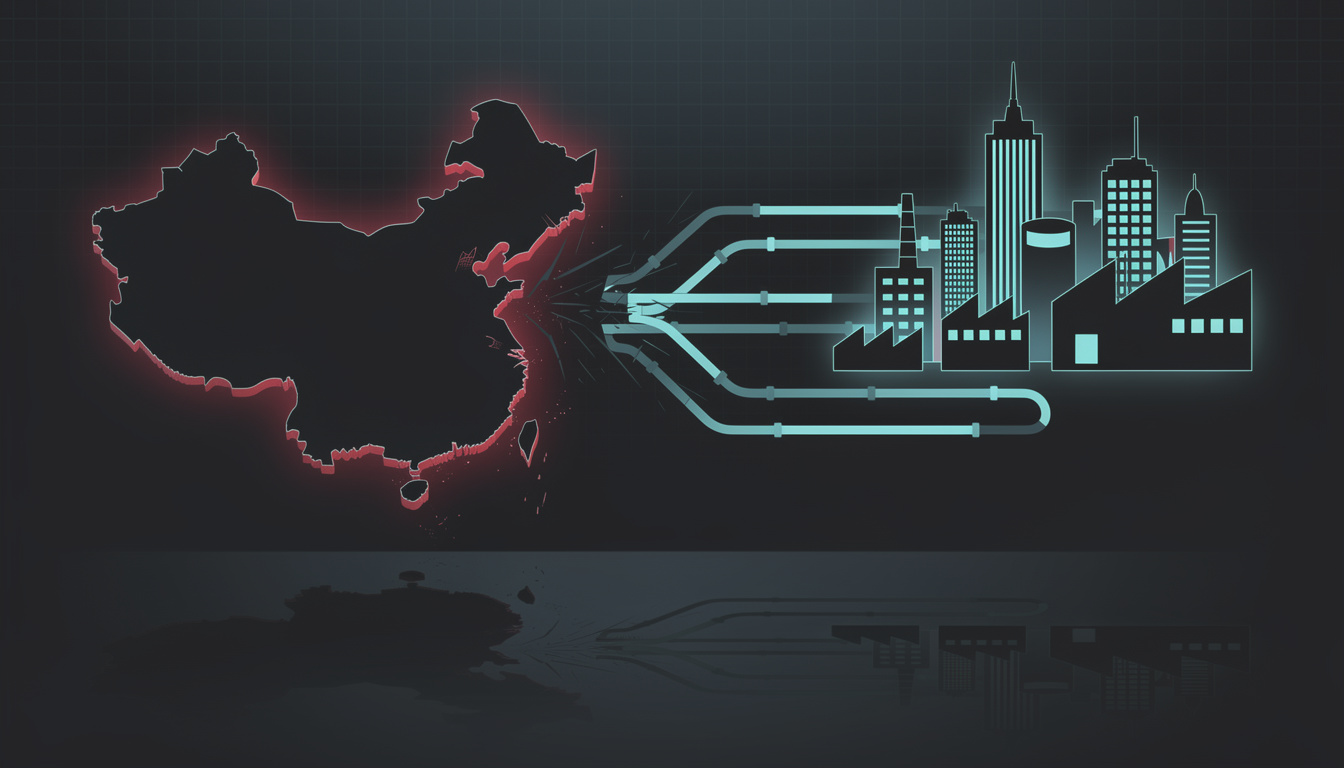
 Symbolic image
China bars rare-earth exports to 14 European companies
Beijing has banned shipments of rare earths and related supplies to 14 companies in Europe working in chemicals processing, electric motors and defence, according to reporting by the New York Times published on 24 July 2026. The measure applies China's dominance of rare-earth supply directly to named European industrial and defence firms. The available source does not identify the companies or the exact date the controls take effect.
What happened
China's government has prohibited exports of rare earths and related materials to 14 companies in Europe, according to the New York Times of 24 July 2026. The report describes the affected firms as active in chemicals processing, electric motors and defence — three sectors in which rare-earth elements are used in catalysts, permanent magnets and precision components. The measure is described as a new set of export controls, that is, an administrative restriction on outbound shipments rather than a tariff or a general embargo, and as targeting specific named companies rather than a country or an entire sector. The single source available for this report does not name the 14 companies, does not state which European countries they are based in, does not give the date on which the controls enter into force, and does not quantify the volumes or the contract values involved. It also does not state whether the controls cover raw rare-earth ores, processed oxides and metals, finished magnets, or the processing equipment and know-how associated with them. Those points should be treated as unconfirmed.
The camps
No direct statements from the parties involved are contained in the source material available for this edition. Neither a justification from Beijing — for example a reference to national security, export-control law or dual-use rules — nor a response from the European Commission, from national governments or from the affected companies is documented in the source. The characterisation of the step as leverage over Europe's industrial and defence base is the framing of the reporting outlet, not an attributed statement by either side.
The view from outside
The only available account comes from a United States outlet, the New York Times, which is not a party to the China–Europe dispute. It places the measure in the context of China's dominance of rare-earth supply chains and reads the targeting of chemicals, electric-motor and defence firms as the exercise of that dominance. No reporting from Chinese, European, Gulf, or Global South outlets was available for this edition, so no comparison of framings is possible.
What's new
This is the first entry on this topic in Bota; there is no prior reporting in this thread to compare it against. What is new relative to general export-control practice, as described in the source, is the selection of individual European firms in cutting-edge chemicals processing, electric motors and defence as the addressees of the restriction.
What could happen next
The affected companies could seek supply outside China, through existing stockpiles, recycling, or producers and processors in other countries, in which case the practical effect would depend on how quickly substitutes for the specific grades and materials can be qualified. European authorities could respond at the political level, through consultations with Beijing or through their own trade and supply-security instruments, which would move the matter from a company-level restriction to an intergovernmental one. Alternatively the controls could remain narrow and case-by-case, with licences granted or withheld individually, leaving the wider trade relationship unchanged while the named firms adjust their sourcing.
China: Beijing has imposed export controls barring rare earths and related supplies from reaching 14 named European companies; no public justification is documented in the available source.
Europe: European chemicals, electric-motor and defence firms are the addressees of the restriction; no response from the companies or European governments is documented in the available source.
Also involved