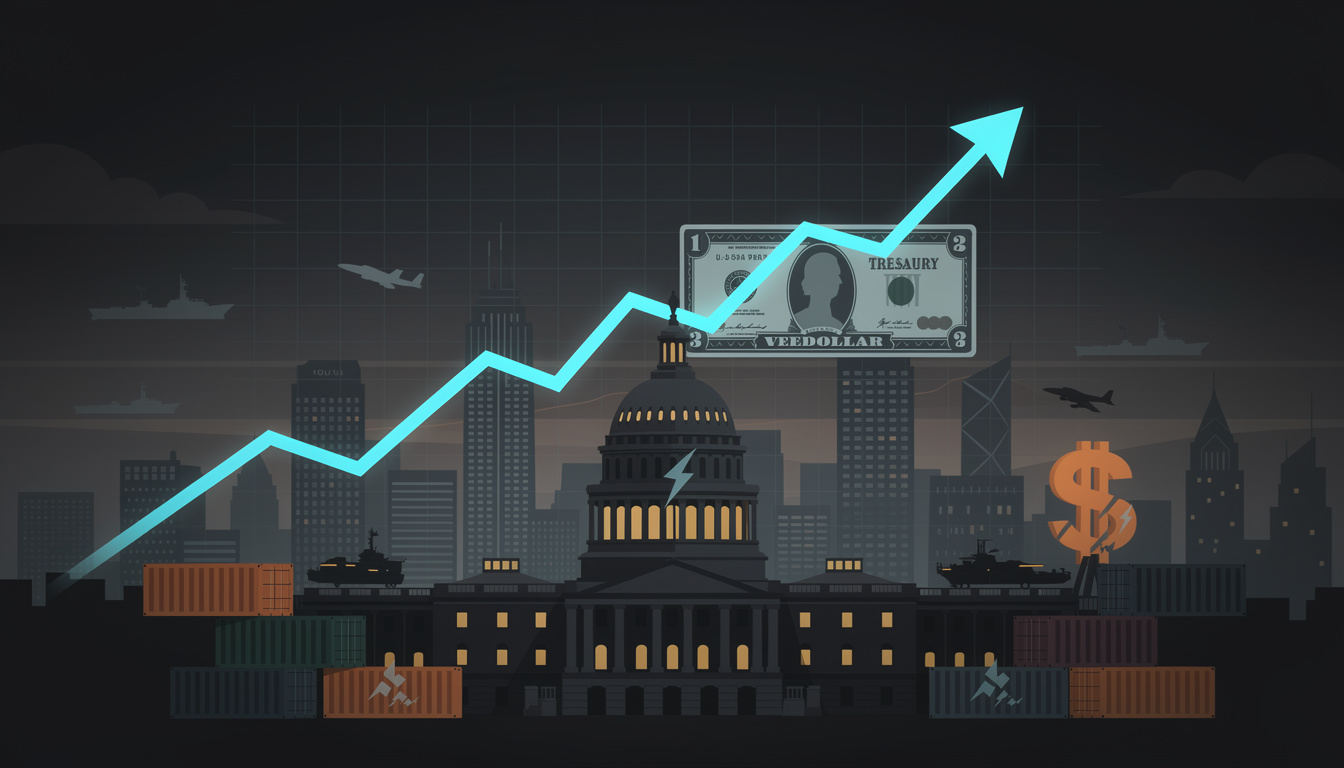
 Symbolic image
Fed's new chairman faces first rate decision as markets split on a hike
The Federal Open Market Committee meets this week for the first policy decision under new chairman Kevin Warsh, who has said the Federal Reserve has "no tolerance" for elevated inflation. Derivatives markets are divided, pricing a minority chance of an interest-rate increase and a majority chance that rates stay where they are. The dollar, the equity rally and a run of Big Tech earnings are all being read against the outcome.
What happened
The Federal Open Market Committee holds its policy meeting this week, and all sources agree the decision is genuinely open between an increase in the federal funds target rate and no change at all. The New York Times reports that Warsh, who has said the Fed has "no tolerance" for elevated inflation, must decide whether to push for an increase at this meeting. The Financial Times and the Wall Street Journal describe investors as split between hike and hold.
On the pricing, Breitbart cites the CME Group's FedWatch tool, which derives implied odds from federal funds derivatives, showing a 37.9 percent chance of a hike and a 62.1 percent chance of a hold. The underlying data are not in dispute across the outlets that cite them: the consumer price index rose 3.5 percent year on year in June while the monthly headline figure fell 0.4 percent, unemployment stood at 4.2 percent in June, payrolls grew by 57,000, and jobless claims came in at 187,000 for the week ended July 18. Breitbart estimates the Fed's targeted personal consumption expenditures index is running near 3.3 percent year on year, which is its own calculation rather than an official figure.
The camps
The argument for tightening rests on inflation still sitting above target alongside a labour market that has not cracked. Breitbart relays the case made by Neil Dutta of Renaissance Macro, who reads the minutes of the last meeting as setting out three triggers for a hike: persistent artificial-intelligence-related demand, pressure on price indexes from the conflict with Iran, and tariff effects that many Fed officials believe push consumer prices up. On that reading, all three conditions are currently met.
The argument for standing still points to the softer June data. Headline CPI fell on the month, driven by lower energy prices, and the underlying measures were subdued: median CPI rose 0.2 percent on the month and 2.7 percent year on year. Breitbart, whose own position is that the Fed should stay on the sidelines, argues this took the urgency out of acting now.
Breitbart also raises a political reading that it concedes officials will formally deny: that a move now would avoid a rate change in September on the eve of the midterm elections, echoing the criticism the Fed drew for cutting in September 2024. It further reports the view, attributed to unnamed observers, that the committee may be more hawkish than Warsh himself and that he might accept a hike to establish credibility and independence early. These are interpretations, not confirmed positions of the Fed.
The view from outside
Among the sources here, only the Financial Times sits outside the United States. Its framing is narrower than the American commentary and stays with the market question: investors are split ahead of the decision. No Gulf, Chinese or other Global South outlets are represented in this set, so there is no material on how the decision is being read outside the transatlantic financial press.
What's new
The shift is in what the market is arguing about. This thread previously centred on the price of US borrowing set by investors, with the 10-year Treasury yield at the highest level of Donald Trump's second term, a rise the New York Times attributed to the continuing war with Iran, concern over government spending and a surge of investment in artificial intelligence. Attention has now moved to the policy rate itself.
The repricing has been fast. Breitbart notes that the implied odds of a hike were around 16 percent a week ago and are now near 38 percent, roughly unchanged from Friday. It is also the first meeting Warsh chairs, so his stated intolerance of elevated inflation is being tested against a decision rather than a speech.
What could happen next
If the committee raises rates, the immediate read-across runs through the currency and equities. The Wall Street Journal argues the dollar is unlikely to rise much unless the Fed moves, which implies a hike would be the condition for a stronger dollar rather than a guaranteed consequence of one, and the same paper frames the stock rally as being tested this week by the decision and by Big Tech earnings arriving alongside it.
If rates are held, the questions raised in the sources do not disappear: inflation stays above target, the triggers identified in the minutes stay in place, and the decision moves to a later meeting, with September already flagged in the commentary as politically awkward.
A third path runs through the committee rather than the rate. Should the vote be visibly divided, or should the outcome sit at odds with the chairman's stated stance, the debate would turn to how much of Fed policy Warsh actually controls.