US-Iran war escalates further: second wave of strikes, naval blockade, and threat of "existential war"Amid the fighting: Iran releases US citizen held since 2024Russian missiles hit Kyiv, fires in the capitalZelensky dismisses Defense Minister Fedorov in the midst of warEpstein files: Vance concedes the government "completely botched" their releaseWildfires in Canada: Toronto briefly has the world's worst airFrance passes assisted-dying lawCuba: third nationwide power outage within a weekSouth Korea's central bank raises rates for the first time in three and a half yearsTrump announces new tariffs on BrazilOil and gas prices rise on the Middle East escalationChina's EV offensive pressures Western manufacturersNvidia advances AI robots in Japan, Hyundai takes full control of Boston DynamicsChina clears Apple Intelligence, with Alibaba and Baidu as partnersTSMC heads for record profit thanks to AI boomEU accepts improvements from Musk's platform XUS-Iran war escalates further: second wave of strikes, naval blockade, and threat of "existential war"Amid the fighting: Iran releases US citizen held since 2024Russian missiles hit Kyiv, fires in the capitalZelensky dismisses Defense Minister Fedorov in the midst of warEpstein files: Vance concedes the government "completely botched" their releaseWildfires in Canada: Toronto briefly has the world's worst airFrance passes assisted-dying lawCuba: third nationwide power outage within a weekSouth Korea's central bank raises rates for the first time in three and a half yearsTrump announces new tariffs on BrazilOil and gas prices rise on the Middle East escalationChina's EV offensive pressures Western manufacturersNvidia advances AI robots in Japan, Hyundai takes full control of Boston DynamicsChina clears Apple Intelligence, with Alibaba and Baidu as partnersTSMC heads for record profit thanks to AI boomEU accepts improvements from Musk's platform X
← Archive

The Situation · Edition 5

Sunday, 5 July 2026

The OPEC+ states agreed on a further production increase for August, continuing their expansion course even though oil prices are already falling. This is possible because shipping traffic through the Strait of Hormuz is increasingly returning to normal following the war between Israel, the United States and Iran. For the producing countries, the combination of higher volumes and falling prices means lower revenue per barrel, while India, as a major importer, is expanding its domestic oil exploration in order to reduce its dependence on the Gulf.

Geopolitically, The Economist paints a sobering picture of European rearmament: while most citizens support stronger armies, their willingness to bear higher spending for it remains low, and pledged defense funds are flowing only slowly. European Commission President von der Leyen and NATO Secretary General Rutte warned in a guest article that the defense industry must now produce faster and in greater quantities, further exposing the gap between political rhetoric and the actual state of the budget.

Economically, the electronics contract manufacturer Foxconn reported a revenue jump of almost 40 percent thanks to demand for AI servers, but at the same time warned of geopolitical risks stemming from tensions between the United States and China as well as Taiwan's vulnerable position. Uber, meanwhile, paused its European expansion in order to keep capacity free for a possible merger with the Berlin-based delivery service Delivery Hero, a move that could reshape Europe's delivery landscape.

In the technology field, The Economist examined signs that China could be on the way to its own capability to manufacture EUV lithography machines, the heart of chip production that has so far been shielded by Western export controls. Should Beijing clear this hurdle, it would considerably weaken the effect of America's technology containment, even though enormous obstacles still lie between a prototype and industrial mass production.

KI-BoomHormus-Iran-KriseÖlmarktEuropas VerteidigungNATOChinas Chipfertigung

Top story of the day

Economy
Symbolic image

OPEC+ raises output again as the Strait of Hormuz calms down

Hormus-Iran-KriseÖlmarkt

OPEC+ has agreed another oil-production increase for August, pumping additional volumes into a market with falling prices. At the same time, shipping traffic through the Strait of Hormuz is gradually returning to normal after the Iran war. Energy-dependent India is responding by expanding its domestic output.+ more perspectives

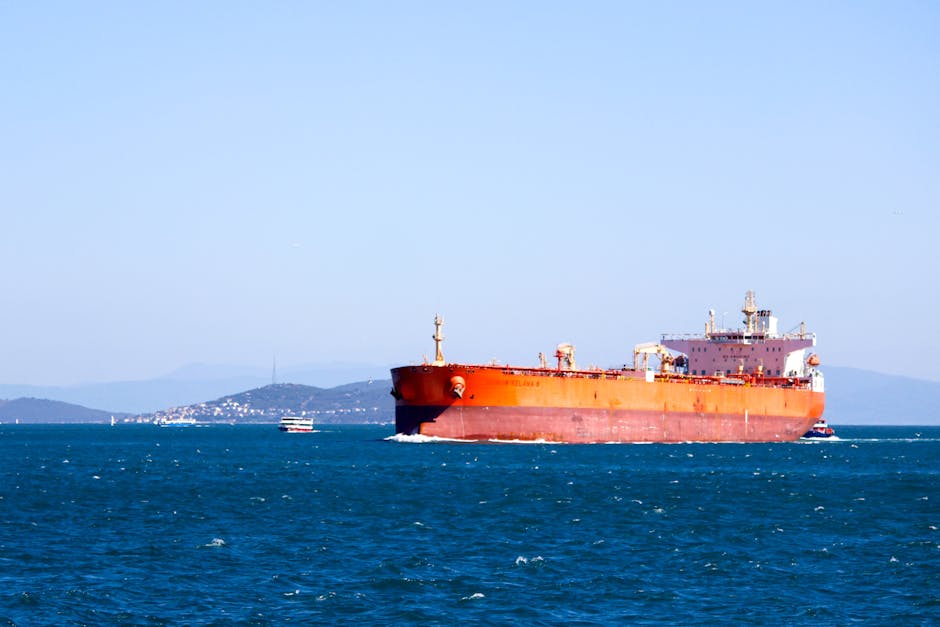
According to a statement issued on Sunday, the OPEC+ group has agreed a further production increase for August, continuing its course of supply expansion even though oil prices are already falling. From the perspective of the state-aligned Turkish outlet Daily Sabah, this is possible because traffic through the Strait of Hormuz is gradually returning to normal after the war between Israel, the United States and Iran, easing the acute fear of a blockade. For producer nations, the combination of higher volumes and lower prices means declining revenue per barrel, a sign that market share currently takes priority over price support. India, one of the largest importers, is drawing consequences from the war's supply shock and, according to its oil minister, is expanding its domestic exploration to reduce its dependence on the Gulf. The sources here are one-sided and close to the Turkish state, which stresses the relaxed reading of the Hormuz situation; independent confirmation of the extent of the normalization is lacking. What is clear is that energy markets are trying to reorganize themselves after the extreme weeks of June.

Daily SabahDaily Sabah

Geopolitics

Europe promises billions for defense but fails to deliver the money

Europas VerteidigungNATO

Most Europeans want stronger armed forces but are not willing to pay for them, the Economist analyzes. At the same time, von der Leyen and Rutte are calling on industry to produce more, better and faster. A widening gap is opening up between political promises and actual funding.+ more perspectives

The Economist paints a sobering picture of European rearmament: while polls show that most citizens support stronger armies, their willingness to bear higher spending or taxes for it remains low. The promised funds are flowing slowly, with budget constraints and political resistance holding up implementation. In an accompanying guest essay, European Commission President Ursula von der Leyen and NATO Secretary General Mark Rutte argue that defense is indeed being revitalized, but that the arms industry must now produce more, better and faster. This pits two camps against each other: the political leadership, which stresses urgency and progress, and the sober analysis, which points to the gap between rhetoric and the state of the coffers. Both texts come from the liberal Economist; a broader source base is missing on this day. The core remains: Europe's defense capability will be decided less by declarations of intent than by the question of who foots the bill.

The EconomistThe Economist (Gastbeitrag von der Leyen/Rutte)

Economy

Foxconn warns of geopolitical risks despite 40 percent revenue jump

KI-BoomLieferketten-Geopolitik

Taiwanese contract manufacturer Foxconn reports a revenue jump of nearly 40 percent for the second quarter, driven by the AI-server boom. At the same time, the company explicitly warns of geopolitical uncertainties. The key Apple and Nvidia supplier sees its supply chains under mounting pressure.+ more perspectives

Foxconn, the world's largest electronics contract manufacturer and a key supplier to Apple and Nvidia, recorded a revenue increase of nearly 40 percent in the second quarter, driven above all by demand for AI servers. Despite the strong figures, management is sounding unusually clear warnings, according to Daily Sabah, pointing to geopolitical risks that could weigh on the business. It is referring to tensions between the United States and China, possible tariffs and the vulnerable position of Taiwan, from where much of the world's high-tech production is directed. This puts the boom in AI hardware in contrast with the fragility of the supply chains on which it rests. The report comes from a single source close to the Turkish state, which summarizes Foxconn's statements without broader context. The case is a prime example of how dependent even highly profitable tech companies have become on world politics.

Daily Sabah

Uber halts European expansion and eyes takeover of Delivery Hero

Europas WirtschaftUber und Lieferdienste

According to the Financial Times, Uber is putting its expansion in Europe on hold for now. The reason: the group is pursuing a deal with delivery service Delivery Hero. A merger would substantially reshape Europe's food-delivery sector.+ more perspectives

Uber is pausing its European expansion to keep capacity free for a possible merger with the Berlin-based delivery group Delivery Hero, the Financial Times reports. Rather than continuing to push organically into new markets, the US company is apparently betting on consolidation through acquisition to strengthen its position in the fiercely contested food-delivery business. A deal of this magnitude would reorder Europe's delivery-service landscape and is likely to attract the attention of competition authorities, which would scrutinize an excessive market share critically. For Delivery Hero, which has recently struggled with profitability pressure, joining forces with Uber could mean a strategic realignment. The information rests on an FT report picked up by Daily Sabah; official confirmations from the companies involved are still pending, so the situation is correspondingly provisional. If the deal is confirmed, it would be one of the year's largest industry consolidations.

Daily Sabah

Technology

Has China gotten its hands on the world's most important machine?

Chinas ChipfertigungKI-Boom

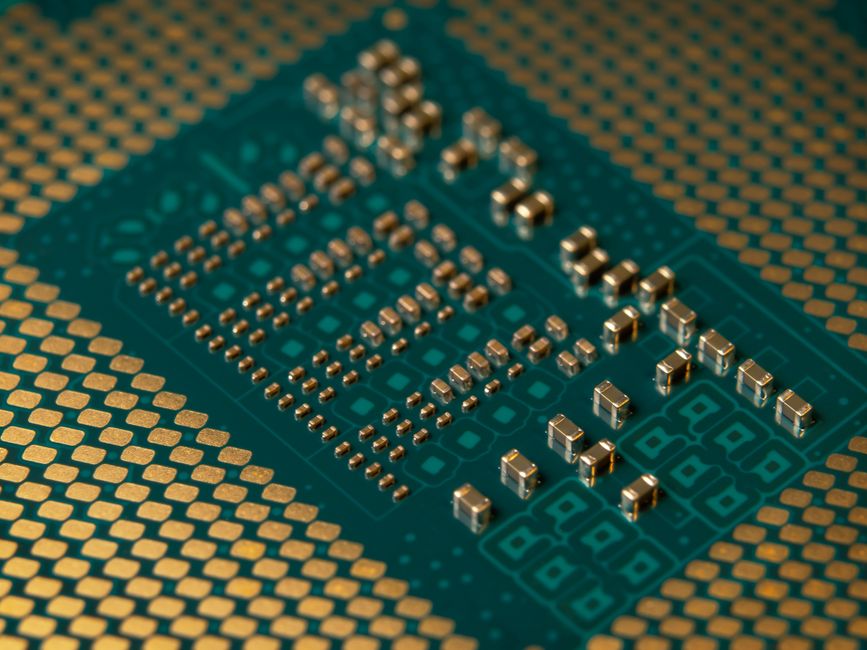
The Economist explores whether China has gained access to the most advanced chip-manufacturing technology, until now considered a Western monopoly. At stake is extreme ultraviolet lithography, without which cutting-edge chips cannot be made. A breakthrough would undermine Western export controls.+ more perspectives

At the heart of the analysis is extreme ultraviolet lithography (EUV), the most complex and expensive machine in semiconductor manufacturing, so far made only by the Dutch group ASML and meant to be kept away from China thanks to Western export controls. The Economist examines indications that China could be on the way to developing its own capability or obtaining one by other means, which would shake the foundation of America's technological containment. If Beijing clears this hurdle, it could produce cutting-edge chips independently and neutralize the effect of the sanctions, a strategic turning point in the tech race. Opposing voices point out that in this precision class there are still enormous hurdles between a prototype and industrial mass production. The article comes from the liberal Economist and remains deliberately cautious in assessing the actual level of maturity, as hard evidence is naturally difficult to obtain. The outcome will help decide whether the West's chip blockade holds.

The Economist