
US-Iran war escalates further: second wave of strikes, naval blockade, and threat of "existential war"Amid the fighting: Iran releases US citizen held since 2024Russian missiles hit Kyiv, fires in the capitalZelensky dismisses Defense Minister Fedorov in the midst of warEpstein files: Vance concedes the government "completely botched" their releaseWildfires in Canada: Toronto briefly has the world's worst airFrance passes assisted-dying lawCuba: third nationwide power outage within a weekSouth Korea's central bank raises rates for the first time in three and a half yearsTrump announces new tariffs on BrazilOil and gas prices rise on the Middle East escalationChina's EV offensive pressures Western manufacturersNvidia advances AI robots in Japan, Hyundai takes full control of Boston DynamicsChina clears Apple Intelligence, with Alibaba and Baidu as partnersTSMC heads for record profit thanks to AI boomEU accepts improvements from Musk's platform XUS-Iran war escalates further: second wave of strikes, naval blockade, and threat of "existential war"Amid the fighting: Iran releases US citizen held since 2024Russian missiles hit Kyiv, fires in the capitalZelensky dismisses Defense Minister Fedorov in the midst of warEpstein files: Vance concedes the government "completely botched" their releaseWildfires in Canada: Toronto briefly has the world's worst airFrance passes assisted-dying lawCuba: third nationwide power outage within a weekSouth Korea's central bank raises rates for the first time in three and a half yearsTrump announces new tariffs on BrazilOil and gas prices rise on the Middle East escalationChina's EV offensive pressures Western manufacturersNvidia advances AI robots in Japan, Hyundai takes full control of Boston DynamicsChina clears Apple Intelligence, with Alibaba and Baidu as partnersTSMC heads for record profit thanks to AI boomEU accepts improvements from Musk's platform X
← Archive

The Situation · Edition 1

Wednesday, 1 July 2026

According to a report by The Economist, a small aircraft crashed into the tallest building in Beijing. Rather than an official investigation, what followed was a deliberate control of the news, a pattern that characterizes Chinese information policy around sensitive incidents in the capital.

In the Balkans, political tensions are mounting. In Serbia, opposition leader Zdravko Ponoš was questioned by police after he accused the authorities of deploying a sound cannon against demonstrators, an episode the opposition regards as intimidation. In Greece, the anti-terrorism unit is investigating explosive attacks on the homes of government politicians in Thessaloniki, which left five people injured. Elsewhere in the Western Balkans, meanwhile, it is becoming clear how slowly reforms are progressing: North Macedonia's Prime Minister Mickoski carried out only a cosmetic cabinet reshuffle, while Montenegro has so far failed to honor a promise to the West to remove Chinese telecom equipment from its networks.

Economically, Turkey is moving deeper into international financial flows. Foreign Minister Fidan reaffirmed the country's interest in linking up with the EU payment system, while the Kazakh financial services firm Freedom Holding received the green light to acquire a Turkish bank. At the same time, the conglomerate IC Holding, together with the US company ARC, announced the construction of up to twenty small modular nuclear reactors in Turkey and neighboring countries.

In the technology sector, a Swedish court ordered Google to pay around 1.5 billion dollars to Klarna's subsidiary PriceRunner for abusing its market power in product search. In parallel, the global AI race underscored its momentum: Japan announced its own AI model and the widespread use of robots by 2040, while Anthropic, following eased US export restrictions, plans to restore worldwide access to its most powerful models.

Serbien-ProtesteAnschläge in GriechenlandChinas InformationskontrolleWestbalkanTürkei-FinanzenKleine Atomreaktoren

Top story of the day

Geopolitics
Symbolic image

China covers up plane crash in Beijing's tallest skyscraper

Chinas Informationskontrolle

A small aircraft flew into Beijing's tallest skyscraper. Instead of clarifying the incident, the Chinese authorities imposed a news blackout.+ more perspectives

According to a report by the Economist, a small aircraft flew into Beijing's tallest building in the center of the Chinese capital. The accident was followed not by an official investigation but by a news blackout: reports and images were suppressed in the state-controlled media and on social networks. The incident is a textbook example of how the leadership in Beijing handles events that could raise questions about safety or control over the capital's airspace. Independent information on the cause, the number of victims and any intent is not yet available. The sourcing is one-sided: so far there is only the Economist's Western account, and a Chinese counter-account is naturally absent precisely because of the news blackout. Whether this was an accident or a deliberate act therefore remains open.

The Economist

Geopolitics

Serbia: Opposition leader Ponoš questioned over sonic-weapon allegation

Serbien-Proteste

Serbian opposition politician Zdravko Ponoš was questioned by police. The reason was his allegation that the authorities had used a sound weapon against protesters in March 2025.+ more perspectives

According to a report by Balkan Insight, Serbian opposition leader Zdravko Ponoš was interrogated by officers. The background is his claim that the Serbian authorities used an acoustic weapon (sound cannon) against demonstrators during the protests in March 2025. The government denies any such deployment; the police summons of the critic feeds the opposition's suspicion that an inconvenient whistleblower is being intimidated here. The case fits into the larger context of the ongoing tensions between the Serbian leadership and a protest movement that accuses the state of authoritarian methods. The available sourcing is presented from a one-sided, pro-opposition angle; an independent clarification of whether and which technology was deployed is still pending.

Balkan Insight

Greece: Explosive devices outside the homes of government politicians

Anschläge in Griechenland

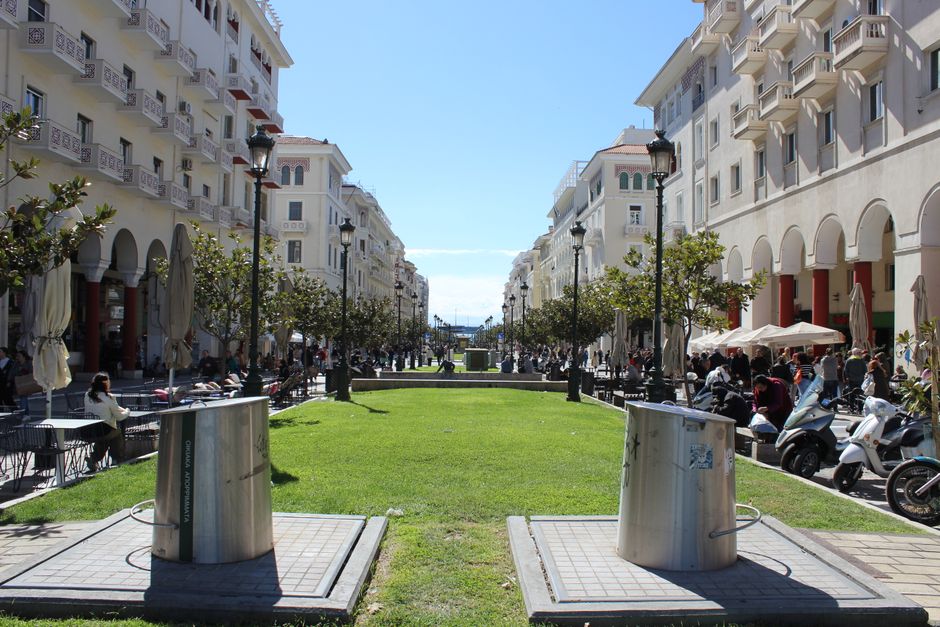
In Thessaloniki, gas-canister bombs were placed outside the homes of politicians from the governing party. Five people were injured, and the anti-terror police are investigating.+ more perspectives

As Balkan Insight reports, Greece's anti-terror unit is investigating attacks on the homes of officials of the governing party in Thessaloniki. Explosive devices made from gas canisters had been placed outside the houses; five people were injured in the explosions. The authorities are treating the acts as terrorist attacks and are searching for those responsible. A letter claiming responsibility or a clear motive was not initially made public. The incident is part of a longer history of politically motivated violence and militant small groups in Greece. At this point, the account relies on police statements; the perpetrators and the background remain unresolved.

Balkan Insight

Western Balkans between token reforms and great-power pressure

Westbalkan

North Macedonia's Prime Minister Mickoski presents a limited cabinet reshuffle that the opposition dismisses as “theater.” At the same time, Montenegro continues to hesitate to remove Chinese telecom equipment despite US and EU pressure.+ more perspectives

Two reports by Balkan Insight paint the picture of a Western Balkans caught between domestic political stagnation and geopolitical pressure. In North Macedonia, Prime Minister Mickoski announced a modest cabinet reshuffle at the midpoint of his four-year term, one that brings barely any substantive changes; the opposition sees it as mere stagecraft. In Montenegro, meanwhile, the difficulty of balancing between the West and China becomes apparent: at the end of last year, the government promised under US and EU pressure to remove Chinese telecom equipment from its networks, yet to date nothing has happened, as BIRN reveals. Both cases illustrate how slowly reforms and foreign-policy commitments are implemented in the region. Here, the Western push for security and reform steps stands opposed to local governments' effective insistence on the status quo.

Balkan Insight (Nordmazedonien)Balkan Insight (Montenegro)

Economy

Turkey seeks connection to the EU financial system

Türkei-Finanzen

Foreign Minister Fidan declares that Turkey is interested in joining the EU payment system. At the same time, Kazakhstan's Freedom Holding receives the green light to acquire a Turkish bank.+ more perspectives

According to reports by Daily Sabah, Turkey is making moves on financial policy: Foreign Minister Hakan Fidan stated that the country is interested in connecting to the EU's payment system and that the responsible financial institutions were working on it. In parallel, the Kazakh financial services provider Freedom Holding announced that it had received approval from the Turkish banking regulator and the competition authority to acquire around 99.3 percent of a Turkish bank. Both announcements point to a stronger integration of Turkey into international financial flows, both toward the EU and into the Central Asian region. Since both reports come from the pro-government Turkish source Daily Sabah, the account is likely to be colored in a government-friendly way; independent assessments or EU reactions are not yet available.

Daily Sabah (EU-Zahlungssystem)Daily Sabah (Freedom Holding)

Turkey plans up to 20 small nuclear reactors with US firm ARC

Kleine Atomreaktoren

The Turkish conglomerate IC Holding plans to build up to 20 small modular nuclear reactors (SMRs) together with the US company ARC. The facilities are to be built in Turkey and neighboring countries.+ more perspectives

According to Daily Sabah, the Turkish conglomerate IC Holding plans to develop up to 20 small modular nuclear reactors (SMRs) as part of a strategic partnership with the US company ARC. Sites are envisaged in Turkey as well as in neighboring countries. The project aligns with the growing international interest in SMRs, which are seen as a more compact, faster-to-build alternative to classic large power plants and are meant to cover rising energy demand. Whether and when the ambitious figure of 20 reactors will be realized is open at this point: permits, financing and the still young SMR technology are considerable uncertainty factors. The report comes from the pro-government source Daily Sabah and mainly reflects the announcement by the companies involved.

Daily Sabah

Technology

Swedish court: Google must pay Klarna subsidiary 1.5 billion dollars

Google-Kartellrecht

A Swedish court has ordered Google to pay around 14.3 billion kronor (about 1.5 billion dollars) in damages. The plaintiff was the price-comparison service PriceRunner, which belongs to Klarna, in an antitrust case.+ more perspectives

As Daily Sabah reports, a Swedish court has ordered the US technology group Google to pay the equivalent of around 1.5 billion dollars (about 14.3 billion Swedish kronor). The damages go to the price-comparison service PriceRunner, which belongs to the Swedish payment provider Klarna. The basis is an antitrust case in which Google was accused of having exploited its dominant market position in product search to the detriment of competitors. The ruling is part of a series of European antitrust decisions against Google that accuse the group of favoring its own services in search. Whether Google will appeal is open; a detailed statement from the group was not initially available. The report is based on a single agency/media report.

Daily Sabah

AI race: Japan's model offensive and an easing for Anthropic

KI-Boom

Japan wants to develop its own AI model and deploy up to 10 million AI robots by 2040. At the same time, the US government is again releasing worldwide access to Anthropic's most powerful models.+ more perspectives

Two reports by Daily Sabah show the momentum in the global AI race. Japan announced that it would develop its own homegrown AI model and deploy up to 10 million AI-equipped robots across more than a dozen sectors by 2040, a push for greater technological self-reliance. At the same time, the US company Anthropic announced that it would soon restore worldwide access to its most powerful models (named Fable 5 and Mythos 5), after the US government lifted previously imposed restrictions. Both events illustrate how strongly states now treat access to, and the buildup of, AI capabilities as a strategic question, caught between national sovereignty on one hand and state export control on the other. The information relies on announcements by the respective governments and companies; independent assessments of the ambitious goals are still pending.

Daily Sabah (Japan)Daily Sabah (Anthropic)