特朗普因欧盟对谷歌罚款威胁加征新关税
据《世界报》报道,美国总统唐纳德·特朗普威胁将对欧盟采取报复性关税措施,以回应该集团对谷歌的反垄断罚款。此番威胁发生在旨在带来稳定的跨大西洋贸易协议达成一年之后,令欧洲方面对持续缓和局势的期望蒙上阴影。
叙事线索 · 4 事件
 示意图
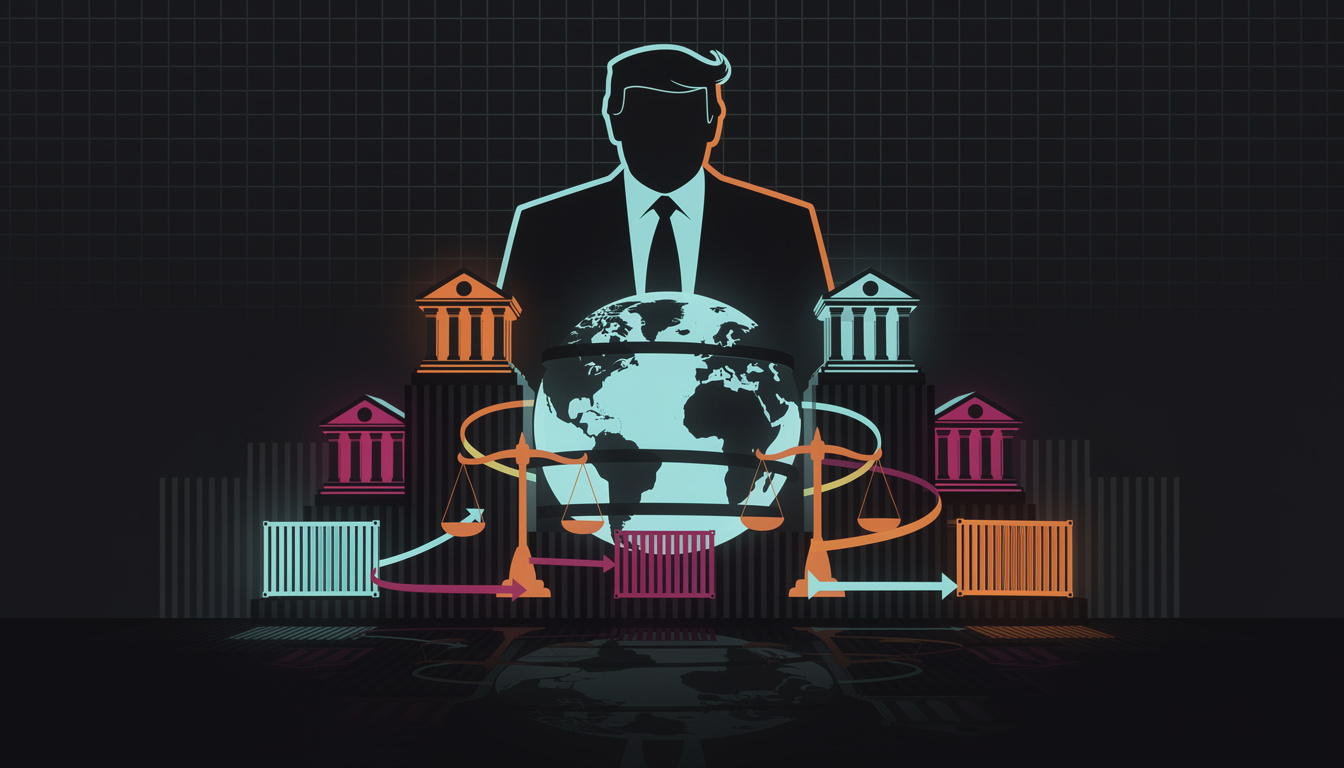
示意图The tariff regime has moved from a single contested measure to a widening system with its legal foundation still unsettled. The Section 301 duties of 10% to 12.5%, imposed on some sixty economies over what Washington calls weak enforcement of forced-labour bans, are in force and now cover 99.4% of US imports according to the US Trade Representative, even as the challenge to them proceeds in US courts months after the Supreme Court struck down an earlier round of tariffs. Pressure has increasingly shifted onto individual relationships rather than the regime as a whole. Switzerland has publicly rejected the forced-labour accusations used to justify its rate, disputing the factual basis rather than the level. Mexico is being pressed not merely to absorb US duties but to replicate them, adopting a steel tariff wall aimed at China. Canada remains the sharpest point of escalation, with Ontario's provincial leadership urging Ottawa to use oil, electricity and potash as leverage while the federal government has yet to settle on a response, and Trump has separately threatened fresh measures against the European Union over the bloc's antitrust fine on Google, according to Le Monde, a year after the transatlantic trade agreement meant to stabilise that relationship. Against China the pattern runs the other way: the New York Times reports the average weighted US tariff on Chinese goods has held roughly steady despite repeated White House threats, making the escalation there louder in rhetoric than in effect. Reuters describes a pipeline of further actions behind the current round, covering excess industrial capacity, Vietnam and intellectual property, and national-security measures in strategic sectors, which indicates this is a first instalment rather than an endpoint and gives partners weighing retaliation reason to expect more rather than less. That prospect lands on an already strained backdrop. Brent crude has closed above $100 a barrel for the first time since late May, with the Strait of Hormuz blocked by the US-Iran war and the Red Sea disrupted by Houthi attacks on Saudi oil vessels, removing the alternative export route that cushioned earlier phases of the conflict, and analysts quoted in the reporting warn the energy shock and the new duties compound rather than offset each other. Because the new rates sit only marginally above the universal 10% tariff they replaced, the decisive questions are less about their size than about whether the Section 301 basis survives judicial review after the earlier defeat, how far the administration presses the announced next rounds, and whether disputed justifications such as Switzerland's and coerced alignment such as Mexico's hold or break down.
Since last year the Trump administration has attempted three successive versions of a broad tariff on most US trading partners, each time under a different legal authority. The first, reciprocal duties of 10% to 50% justified as a way to shrink the trade deficit, rested on the International Emergency Economic Powers Act and was ruled unlawful by the Supreme Court in February, which held that the president cannot bypass Congress in this way. A universal 10% tariff introduced in January to replace it was then struck down by the US Court of International Trade, though the court allowed it to remain in force while an appeal proceeded; it lapsed on 24 July 2026. The latest measures were built on a different statute, Section 301 of the Trade Act of 1974, and on forced-labour enforcement grounds. The recurring issue across all three rounds is the limit of executive authority over trade policy, and each round has drawn both diplomatic protest from trading partners and lawsuits from US importers.
据《世界报》报道,美国总统唐纳德·特朗普威胁将对欧盟采取报复性关税措施,以回应该集团对谷歌的反垄断罚款。此番威胁发生在旨在带来稳定的跨大西洋贸易协议达成一年之后,令欧洲方面对持续缓和局势的期望蒙上阴影。
华盛顿升级了针对加拿大的贸易措施,安大略省政府正敦促联邦政府以石油、电力和钾肥作为筹码进行反制,而渥太华尚未就应对方案作出决定。与此同时,据《纽约时报》报道,尽管白宫多次发出威胁,美国对中国商品征收的加权平均关税却几乎没有变化。这两条线索都处于不到一年内美国第三套关税体制之中,如今该体制建立在《贸易法》第301条之上。
布伦特原油自五月末以来首次收于每桶100美元上方,霍尔木兹海峡因美伊战争而被封锁,红海也因胡塞武装袭击沙特石油船只而陷入混乱。就在同一周,美国开始对60多个经济体征收10%至12.5%的关税,这是不到一年内的第三套关税体制。分析人士警告,这两股冲击并未相互抵消,反而相互强化,加剧了全球范围内的通胀和增长风险。
2026年7月24日星期五凌晨12点01分,也就是此前实施的10%全面关税到期的那一刻,华盛顿对60多个经济体征收10%至12.5%的新关税。白宫将这些措施的依据定为1974年《贸易法》第301条,并指控被针对国家未能有效执行禁止强迫劳动产品进口的规定。从欧盟到中国、巴西和澳大利亚的贸易伙伴均提出反对,美国小企业当天即提起诉讼。