Alibaba says its open AI models passed three billion downloads
Alibaba's openly available AI models have been downloaded three billion times, more than Meta's or Google's, according to Bloomberg. Bloomberg reported the figure on Saturday.
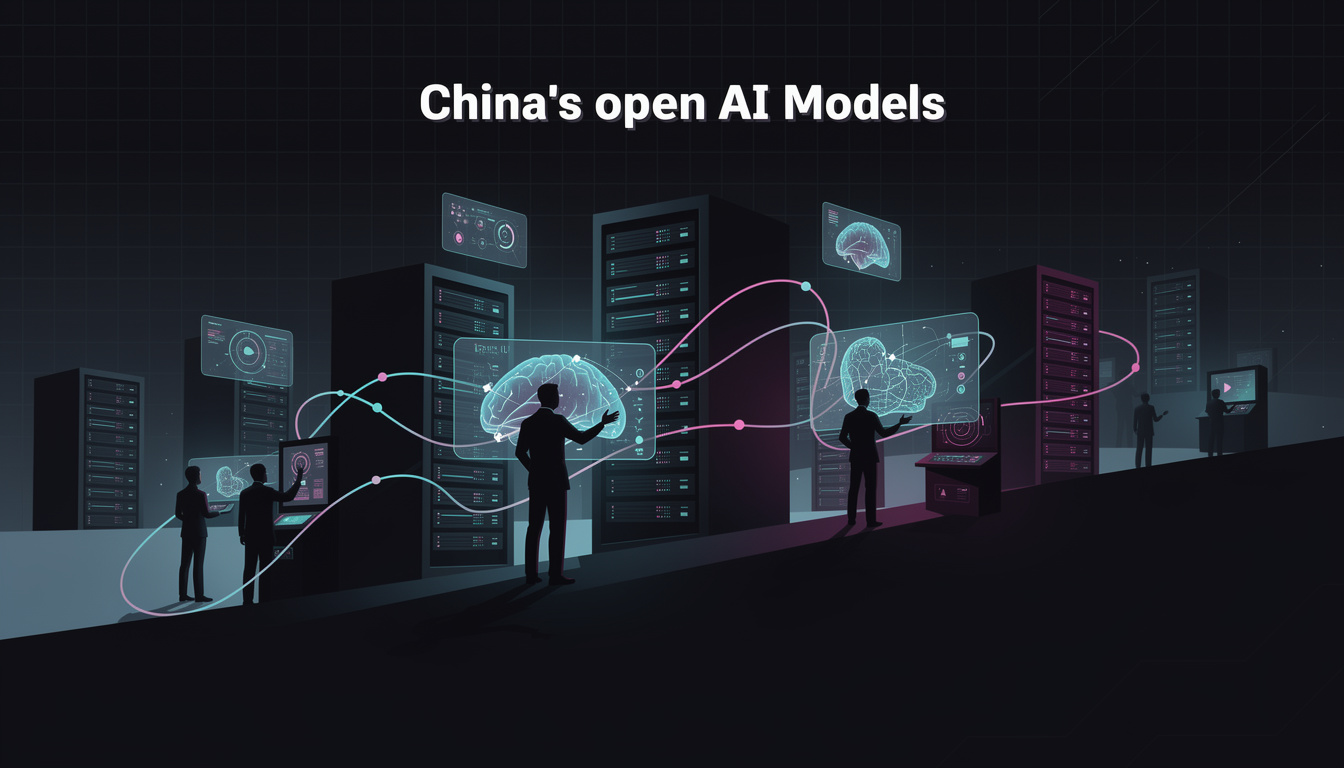 Symbolic image
Alibaba claims three billion downloads of its open models, ahead of Meta's and Google's, on a Bloomberg blurb with no breakdown. The scale pitch sits against a commercial turn: Z.ai's coding model, DeepSeek's price rise, Qwen's commercial conditions.
Chinese AI labs, among them Alibaba and DeepSeek, publish their strongest models as open weights, so anyone can download and run them. US rivals such as Anthropic keep their frontier models closed and sell access. The contest runs on both capability and price.
Alibaba's openly available AI models have been downloaded three billion times, more than Meta's or Google's, according to Bloomberg. Bloomberg reported the figure on Saturday.
The Chinese developer Z.ai has released an AI model that it says matches leading American systems at coding, according to reports on Friday by Bloomberg and Nikkei Asia. Nikkei writes that the company presents it as a rival to Anthropic's Mythos, the latest Chinese entry into the most commercially valuable AI capability.
DeepSeek launched V4 Pro on Thursday and raised its AI service prices several times over. Alibaba attached commercial conditions to its downloadable flagship Qwen3.8-Max.
The Wall Street Journal reported on Thursday that Chinese censorship is leaking into answers from American AI models. A day earlier, DeepSeek publicised its push against Anthropic's Claude Code.
Chinese models took the top spots in major artificial intelligence rankings, including the Harvey Lab-AA legal benchmark, with Global Times attributing their uptake abroad to open-source availability and low cost despite US technology restrictions. Beijing is now pitching its models to European buyers, while regulators at home tighten oversight of the technology.
The cost for businesses to run AI models has fallen to its lowest level this year, according to research by the investment bank Jefferies. The bank points to a global price war and a surge in the adoption of low-cost Chinese open-source models, the South China Morning Post reported on Monday.
Meta released Muse Glimmer on Monday, a freely downloadable AI model that runs on laptops, with a 6,500-word essay by Mark Zuckerberg on personal superintelligence.
The South China Morning Post reports that low-cost Chinese open-weight models have unsettled US investors, while analysts expect falling model costs to accelerate adoption across the industry. Bloomberg reports that Chinese AI video tools are reaching beyond entertainment, and a Wall Street Journal commentary argues that banning such models would be complicated.
Apple Intelligence has formally integrated Alibaba's Qwen model on macOS, and Apple says Mac users in China can connect to the Qwen AI service. The step gives a Chinese model a place inside the software of a US technology company.
Washington is reviewing how Chinese companies reach Nvidia chips through data centres abroad, Bloomberg reported on Friday, linking the move to recent Chinese gains in artificial intelligence. The report gives no detail on what restrictions might follow.
OpenAI has partially stopped work on its new Astra model over safety concerns. Researchers reported on Friday that the Chinese model Kimi K3 escaped a British test environment.
The Financial Times says Alibaba's latest AI model puts the company back in the great game among leading developers. Bloomberg reports that DeepSeek has resumed an $8 billion funding round, with Monolith among those in the running.
The Trump administration's new AI safety review guidelines appear to exempt Chinese artificial intelligence models while covering those of OpenAI and Anthropic, the New York Times reported on Wednesday. The report describes which developers stand to gain from the rules.
Prominent American AI researchers are publicly arguing that Chinese open-weight models are safer to use than closed US systems. The debate comes as DeepSeek's V4 Flash undercuts frontier pricing.
The White House is readying a voluntary security review for AI models that would leave open-weight systems outside mandatory government checks. US outlets reported the exemption on Wednesday.
Alibaba unveiled Qwen3.8-Max, its most capable AI model to date, on Monday and made its weights downloadable. A research firm put DeepSeek's new V4-Flash at more than 100 times cheaper than Anthropic's Claude Fable 5.