A che punto è il tema
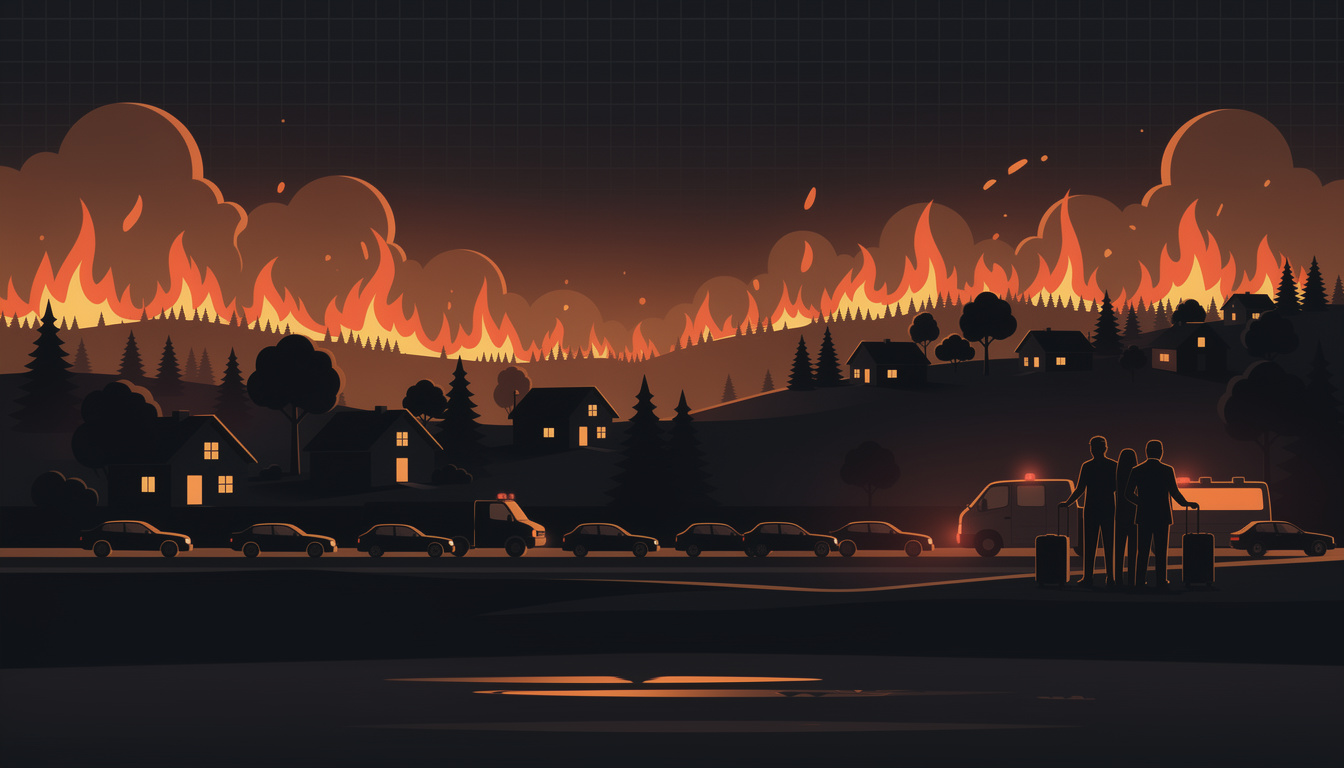
The fires around Bordeaux and in the mountains south-west of Madrid have driven more than 300,000 people from their homes, according to Bloomberg, an operation that French media and officials describe as the country's largest evacuation since the Second World War. In Gironde alone 220,000 people are now covered by evacuation orders and 42,000 hectares have burned, with the fire closing to within 15 to 17 kilometres of Bordeaux; the metropolitan evacuation plan has been activated and the military contingent doubled to 1,000 soldiers. In central Spain the two fires in the Madrid and Ávila regions, previously run as a single incident under one emergency command, have now merged into one blaze that FAZ calls the largest in the country's recent history, and the government has declared the Madrid region and Toledo province disaster areas. Spain remains on the national emergency footing declared earlier — according to authorities cited by Reuters, the first ever issued in the country over a wildfire, placing the response under the direct authority of the interior minister.
The first signs of relief are tentative and weather-dependent rather than the result of containment: the UME eased its alarm cautiously after the wind dropped on Sunday, and the night into Monday brought rain and a stable front in Gironde. Both governments have mobilised soldiers and aircraft, alongside the water-bombing planes dispatched through the European Union and the assistance sent to Spain by Turkey, Greece, Italy and Portugal, while the French military prepares its first genuine firefighting missions with a converted Airbus A400M and the Spanish air force plans to follow with another. The response is also drawing criticism from below, with evacuated residents in Spain accusing the authorities of neglect. The season's toll stands at more than 100,000 hectares burned in Spain this year, close to the average annual figure of the past decade, and 13 wildfire deaths that make 2026 one of the deadliest seasons in decades, after two firefighters died near Bordeaux Airport. Whether the merged Spanish blaze can be held short of the Madrid area, and whether the calmer conditions in Gironde hold long enough for residents and holidaymakers to return, remain open.
This topic follows a wave of wildfires burning simultaneously in southwestern France and in central Spain during the summer of 2026. The fires are being driven by a combination of extreme heat, drought and wind, conditions that allow them to move quickly through forested and coastal areas that are heavily populated in the holiday season. On the French side, the affected zone around Bordeaux and the Cap Ferret peninsula is the same region that burned severely in 2022, when about 50,000 people were evacuated. On the Spanish side, the fires come in a year in which more than 100,000 hectares have already burned and 13 people have died, one of the worst tolls in decades. Both countries have turned to the European Union's civil protection channels for aerial firefighting support, making this as much a story about cross-border emergency response as about the fires themselves.