خيط سردي · 1 حدث
US 10-year yield hits second-term high as war and tariffs strain the economy
صورة رمزيةأين يقف الموضوع الآن
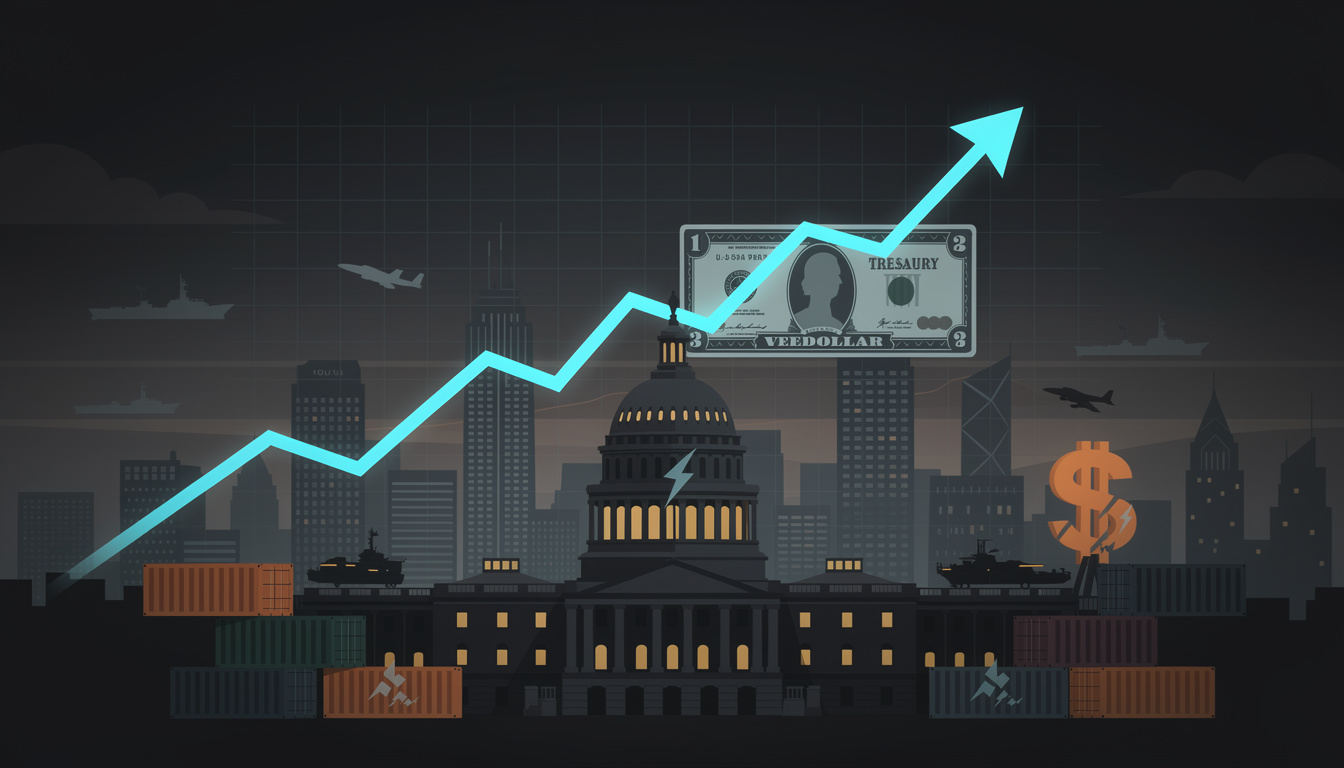
The thread's centre of gravity has shifted from the market's own pricing of US borrowing costs to the policy rate itself. The 10-year Treasury yield stands at the highest level of Donald Trump's second term, a rise the New York Times has attributed to the continuing war with Iran, mounting concern over government spending and a surge of investment in artificial intelligence that is adding to growth. That framing left an economy still expanding while the cost of financing government debt kept climbing, with the near-term risk sitting on prices rather than output as the fighting pushed oil and gas higher and newly imposed global tariffs threatened to push them higher still. Oil has now breached $100 a barrel for the first time since late May, and inflation is running at 3.5%.
Against that backdrop the Federal Reserve has opened its second policy meeting under Chair Kevin Warsh, with a decision due Wednesday at 2 p.m. in Washington. Most investors expect the target range to stay at 3.50%–3.75% for a fifth consecutive meeting, but the debate is no longer about whether a cut is coming: Waller's explicit readiness to tighten and Bloomberg's reporting on hike risk have moved the question to whether the Fed holds or raises, and bond traders are positioning for the possibility of an increase. The White House continues to demand cuts, leaving the political pressure pointed in the opposite direction to where the market is leaning. How the Fed resolves that split, and whether the yield keeps rising from here, remains open.
The 10-year Treasury yield is the interest rate the US government pays to borrow for a decade, and it serves as a benchmark for borrowing costs across the wider economy. It rises when investors demand more compensation to hold government debt, whether because they expect stronger growth, higher inflation, or heavier government borrowing. In Trump's second term all three of those forces have been in play at once, according to the New York Times, which cites the Iran war, concern over government spending and an artificial intelligence investment boom. Overlaying this are newly imposed global tariffs, which the same source says could push consumer prices higher. The topic tracks how these pressures move the benchmark yield and what that means for an economy the New York Times still describes as resilient.
المسار الزمني بالتفصيل
Samstag, 25. Juli 2026 · الاقتصادعائد سندات الخزانة الأمريكية لأجل 10 سنوات يبلغ أعلى مستوى له في ولاية ترامب الثانية
ارتفع عائد سندات الخزانة الأمريكية لأجل 10 سنوات بشكل مطرد هذا العام ليبلغ أعلى مستوى له في ولاية ترامب الثانية، في ظل استمرار الحرب مع إيران وتصاعد المخاوف بشأن الإنفاق الحكومي وتعزيز الإنفاق على الذكاء الاصطناعي للنمو الاقتصادي، بحسب صحيفة نيويورك تايمز. ويحذر المصدر نفسه من أن تجدد القتال مع إيران يدفع أسعار النفط والغاز إلى الارتفاع، في حين قد تؤدي التعريفات الجمركية العالمية المفروضة حديثاً إلى دفع الأسعار للارتفاع أكثر، مما يهدد الاقتصاد الأمريكي الذي أظهر مرونة حتى الآن.